


Canadian wireless audio company, Bluesound, has just announced one of the rarest events in the streaming music world: It now offers native integration of Apple Music on devices powered by BluOS, the software at the heart of wireless products from Bluesound, NAD, PSB Speakers, DALI Loudspeakers, Cyrus, and Monitor Audio.
If this integration had lived up to the precedent set by Sonos, Bluesound users would have tons to celebrate: unfettered access to Apple Music’s entire catalog of lossless, hi-res, and Dolby Atmos tracks. Given Bluesound’s superior hi-res audio capabilities, it might have even surpassed Sonos’ implementation.
Sadly, that is not the case. Bluesound published a press release earlier today announcing the integration, but when I followed up with a rep to confirm the details, I was given this statement from the company:
Our implementation represents another option and convenience for Apple Music fans to enjoy. This implementation sits nicely alongside our longtime support of Airplay 2, capable of Lossless CD Quality, depending on the source. BluOS will always advocate for the highest quality experience, and we will also comply with the rules and guidance of the music services available on BluOS. The BluOS app displays the bitrate and format of the audio being streamed. Our integration uses the same toolkit made available to the broader 3rd party developer community. Currently, these tools provide lossy versions of the audio.
The representative separately confirmed that the integration doesn’t support Apple Music’s Dolby Atmos Music catalog.
So, to reiterate: You can now access Apple Music from within the BluOS app, but from a sound format and quality perspective, the integration won’t be any better than streaming from the Apple Music app on an iPhone via AirPlay.
Considering the Bluesound community’s heavy audiophile makeup, this is going to be a bitter pill to swallow. To understand why, let’s take a look at the streaming/wireless music landscape.
Native Apple Music integration: almost mythological
How rare is a full, native Apple Music integration? Until today, only one wireless audio company has ever offered it: Sonos.
It has never been clear to me why Sonos has enjoyed most-favored-nation status with Apple since shortly after the launch of Apple Music, but it is a relationship that has endured for more than a decade.
During that time, we’ve seen lots of companies develop multiroom systems that compete with Sonos: Sony, Bose, Wiim, Denon (HEOS), Samsung, LG, Amazon, Google, and JBL. None have been able to offer their customers a truly native Apple Music experience with all the fixings.
Why does native matter?
You can play Apple Music on almost any set of wireless speakers. With Bluetooth or AirPlay, it’s easy — almost trivially easy — to do it. But these two methods usually* prevent you from enjoying two of Apple Music’s biggest selling points: lossless audio, with up to hi-res quality, and Dolby Atmos Music.
AirPlay and Bluetooth also come with a second limitation: They need your phone to act as the source of an Apple Music session. If you walk too far from your Bluetooth speaker (or leave the reach of your Wi-Fi network with AirPlay), the music stops.
A native integration has the potential to address both problems, which is why Sonos has historically been one of the only ways** to listen to Apple Music in hi-res and Dolby Atmos.
The direct-stream advantage
The reason a native integration like Sonos’ gets around these two restrictions is that it lets wireless speakers and streamers access Apple Music content directly from Apple’s servers, without any intermediaries.
When you play a track from Apple Music on Sonos, it doesn’t involve your phone or laptop at all. One of your Sonos products streams the music from Apple Music and then redistributes it to your other Sonos products.
Bluetooth and AirPlay work differently. When you play Apple Music using these wireless connections, your phone plays music from the Apple Music app. Bluetooth and AirPlay pass that music along to your connected speaker.
The catch is that before Bluetooth and AirPlay can do their wireless magic, they repackage your audio, making the stream much smaller in terms of bandwidth. The unfortunate cost of this repackaging — known as lossy compression — is lower audio quality and no support for spatial audio like Dolby Atmos.
Native integrations offer other benefits, too. With Sonos, Wiim, and Denon’s HEOS, natively integrated music services can be added to their universal search feature.
Is Bluesound better than Sonos?
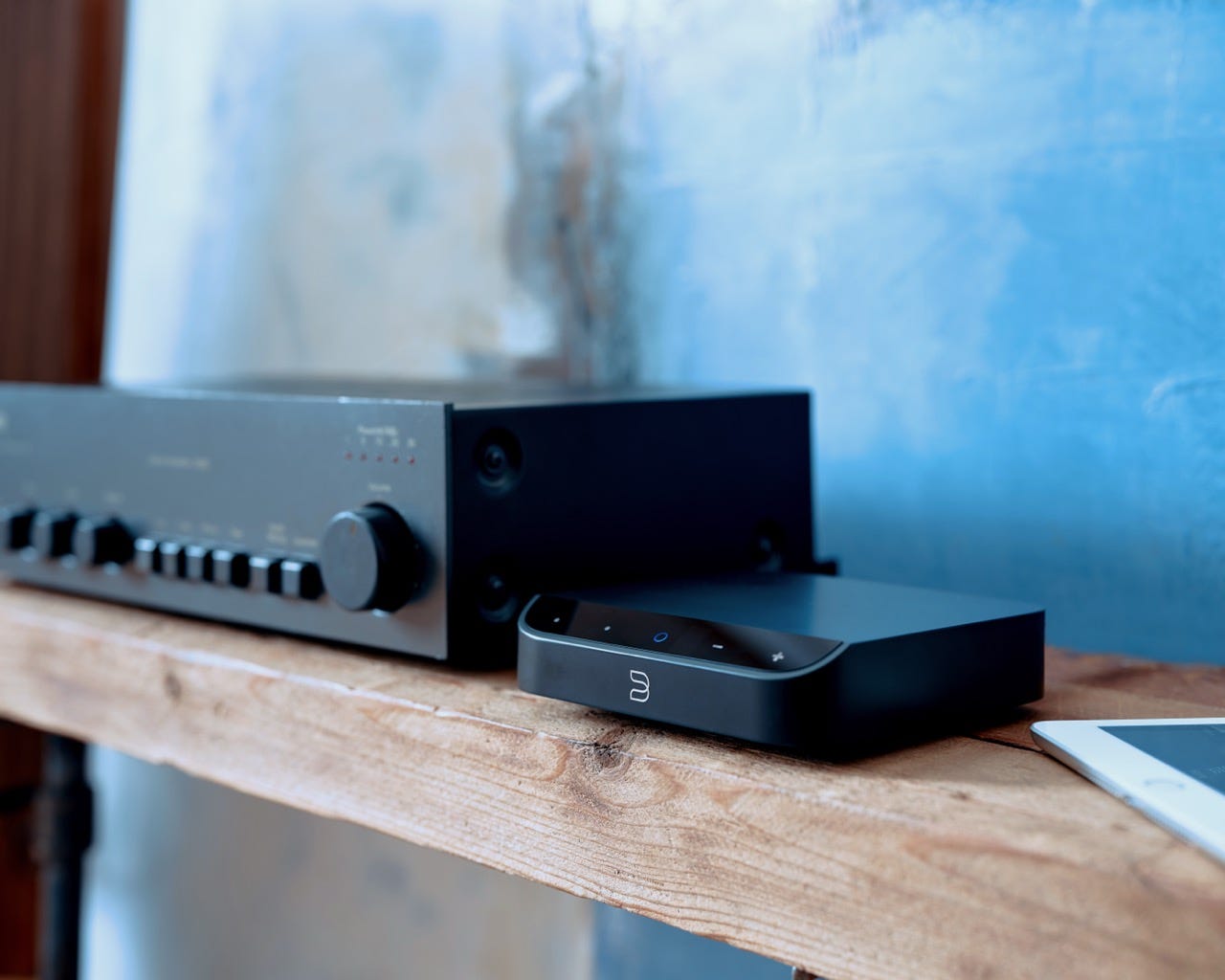
One of the biggest reasons Bluesound has developed a loyal following of audio enthusiasts, despite Sonos’ commanding lead in the wireless multiroom space, is its support of the very highest digital audio specifications.
For instance, Sonos’ support for hi-res audio tops out at 24-bit/48kHz. When retrieving stream information from music services, Sonos will grab the 24/48 version if available. If a service offers only higher-resolution versions, e.g., 24/96 or 24/192, Sonos will fall back to the best version it can find (often CD-quality, at 16-bit/44.1kHz).
Bluesound, by comparison, can natively handle up to 24-bit/192kHz, so in theory, it can play any version it has access to.
Can you hear the difference between 48kHz and 192kHz? Many would argue you can’t, but that’s almost beside the point. Since Apple Music streams its lossless catalog at up to 24-bit/192kHz, the argument has always been that Sonos prevents you from hearing Apple Music at its highest level of quality.
With its new native Apple Music integration, Bluesound should be the first wireless audio system that lets you play any stream at its maximum setting. It’s crushing to learn that, for now at least, it won’t even get the basic lossless level of CD quality.
Where is Apple Music’s version of Spotify Connect?
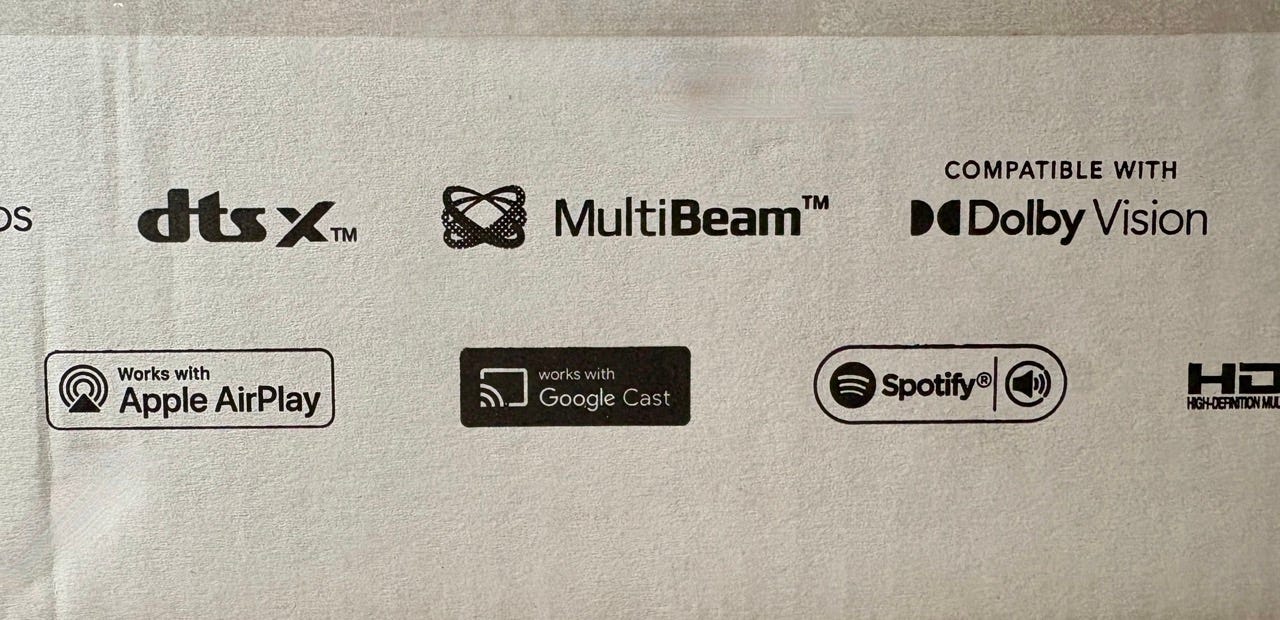
Native integrations are ideal for folks who like to manage and stream their music from dedicated system apps like Sonos, BluOS, or Wiim Home. However, in between the all-in approach of a native integration, and the easy but lossy approach of Bluetooth/AirPlay, there is a third approach that tries to combine the best of both worlds.
It’s informally known as the “Connect” solution since it was popularized by Spotify under the Spotify Connect brand.
When a wireless speaker or audio system is Spotify Connect compatible, you can stream Spotify content to it from your Spotify smartphone app, without the limitations of Bluetooth, AirPlay, or even Google Cast.
Connect works similarly to a native integration in that the compatible speaker receives its audio stream directly from Spotify, so audio quality can potentially be at the highest level that both Spotify and the speaker can mutually support.
However, the entire user experience never leaves the Spotify app, which, needless to say, Spotify loves.
The Spotify Connect model is so successful that it has been copied by Tidal and Qobuz, both of which have their own Connect programs. It’s worth noting that on some devices, Tidal Connect lets you stream Dolby Atmos Music.
Apple has never been shy about encouraging manufacturers to adopt its Made for iPhone (MFi) program, which now encompasses a wide variety of labels like Made for iPhone, Made for iPad, Made for Apple Watch, etc.
So why not take the next logical step and create a direct-stream equivalent of Spotify Connect? Since Apple has already used “Apple Music Connect” — twice! — once for its now-defunct social media service and, more recently, for its new label partnership program, perhaps Apple could call this one Made for Apple Music.
Given Apple’s proven track record of wanting absolute control over its products, and the quality-and-format-limited native Apple Music integration Bluesound just rolled out, maybe a direct-stream option is exactly what Apple is planning.
For now, however, Bluesound-owning Apple Music subscribers who want a simple way to hear their music have a new option. It just might not be music to their ears.
*As the Bluesound statement alludes to, AirPlay can be lossless, but only if you stream music from a Mac, and only if you set your Mac’s audio output to AirPlay.
**If you have an Apple TV 4K connected to a Dolby Atmos TV and a Dolby Atmos soundbar, you can stream lossless and Dolby Atmos Music from the Apple TV’s Apple Music app.
If you enjoyed this Loudmouth article, please consider subscribing. It supports my work and ensures you won’t miss out on future coverage.