


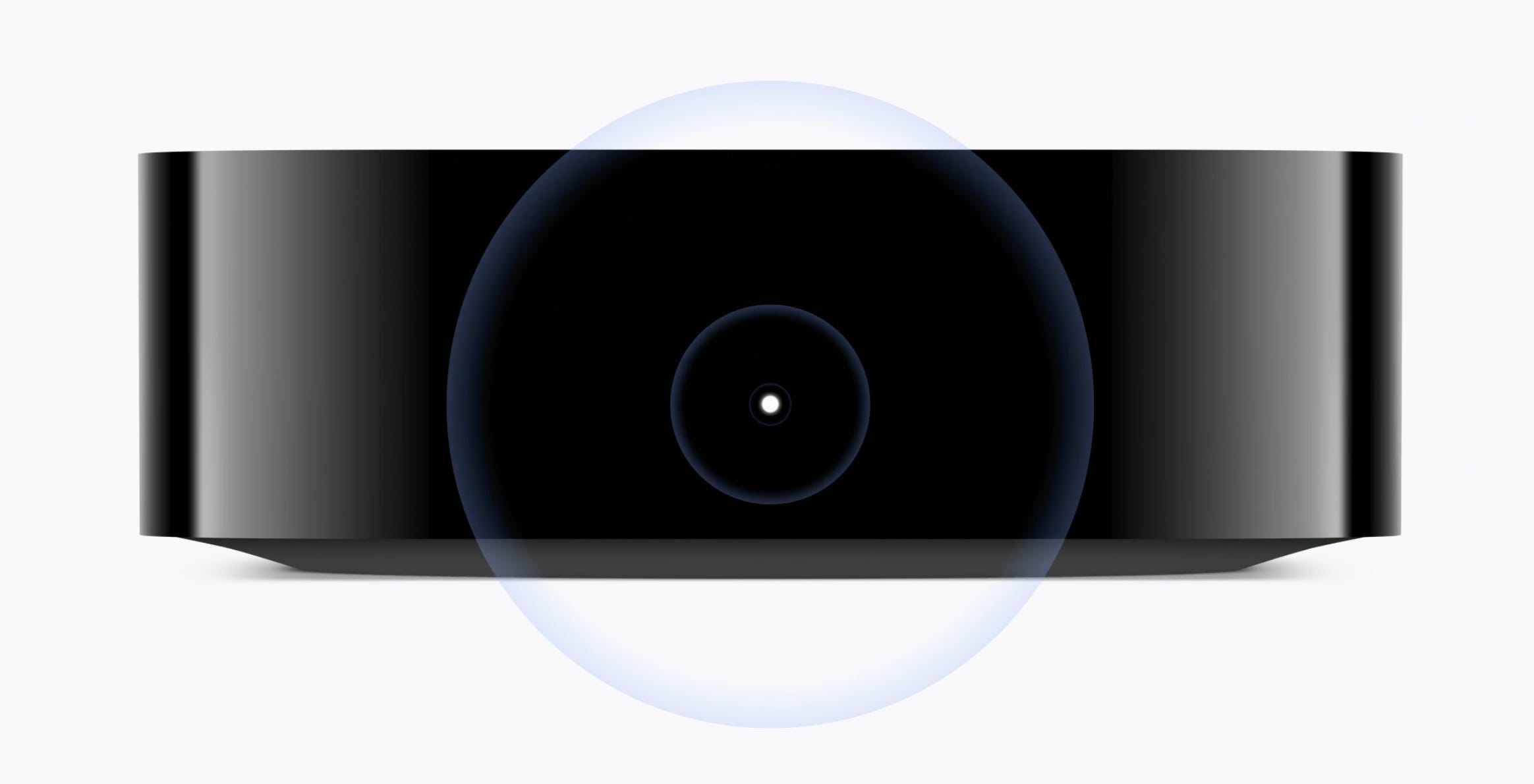
The fourth-gen Apple TV 4K is here. It packs a new, more powerful A19 processor, a suite of microphones for hands-free Siri AI, and a whopper of a price: $299 USD ($429 CAD).
For those who like to keep score, that’s twice the $149 USD the comparable third-gen model cost until June, when Apple raised it to $249 USD. Unlike the third generation, there’s only one version this time around (last time, you could spend $20 less if you were willing to settle for 64GB of storage instead of 128GB and give up the Ethernet port).
The price hike is shocking to see in real life, even though industry watchers have been warning of this for months, laying the blame mostly at the feet of AI companies and their insatiable appetite for chips (both processors and memory).
But the thing that rankles most — at least for those of us who care deeply about audio — is that despite the increased price and the presumably better performance of that A19 chip, the latest Apple TV 4K still doesn’t support audio passthrough.
The passthrough problem
Passthrough simply means that a device like the Apple TV 4K should preserve the audio (and video) quality of the source file you’re playing and hand it off, intact, to your downstream gear, like your TV, AV receiver, or soundbar. The device “passes it through” without alteration.
But that’s not what an Apple TV 4K does, or at least, not consistently. There are some formats, like Dolby Digital Plus, that it supports natively, with or without Dolby Atmos. That’s why Netflix, Disney+, and other Atmos streaming services work on Apple TV (they all use the Dolby Digital Plus version of Atmos).
However, the Apple TV 4K doesn’t support Dolby TrueHD (the hi-res, lossless format used on Blu-ray discs) at all. If an app like Plex tried to send it to the Apple TV’s playback system, it would fail and you’d get no audio.
As a workaround, Plex (or any other third-party video app) has to decode Dolby TrueHD before sending it to the Apple TV’s playback system. This generally works well … unless Dolby Atmos is involved: Apple doesn’t provide a pathway for both decoded TrueHD and Dolby Atmos information to be output together as a single package — something a TV, AV receiver, or soundbar requires.
The highly frustrating result: An Apple TV 4K lets you hear lossless audio or lossy Dolby Atmos, but not lossless Dolby Atmos.
Wow, that was nerdy. Seriously, who cares?
I admit, the anger over the ongoing lack of passthrough on an Apple TV 4K can feel like we’re making a mountain out of a molehill. And yet, I think most people can agree — at least in principle — that you should be able to play your media, regardless of its provenance, at the highest possible quality.
For a lot of folks, this means forgoing the otherwise excellent Apple TV experience for another streaming device. At the moment, it’s a choice between Nvidia’s now-discontinued 2019 Shield TV, the 2019 Shield TV Pro, or the 2022 Amazon Fire TV Cube 3rd Gen. Even though they’re far older than the Apple TV 4K, all three of these devices can do audio passthrough.
The Shield TV Pro will even passthrough Dolby’s biggest lossless and spatial rival, DTS-HD and DTS:X.
Will Apple ever support passthrough?
Apple hasn’t said anything about future support for audio passthrough, but that hasn’t stopped some industry watchers from speculating on the possibility. Caleb Denison, my former Digital Trends colleague and A/V expert extraordinaire, thinks Apple may issue a software update that brings passthrough to the latest Apple TV 4K.
I hope he’s right. Not only would it finally answer the calls from enthusiasts, but it would also provide Apple with a much-needed tool for its future music strategy.
TrueHD and Atmos Music: The Holy Grail
Apple has long been bullish on lossless, hi-res audio and spatial audio (typically in the form of Dolby Atmos). But as I pointed out above, getting them to coexist as a single experience hasn’t been high on the company’s list of priorities. That’s a huge missed opportunity for Apple Music.
Apple Music has offered tracks in Dolby Atmos Music for several years, but most subscribers don’t realize that it gets delivered as Dolby Digital Plus — in other words, it’s lossy. If you’ve ever listened to Dolby Atmos Music on your home theater system and found it less than dazzling in terms of sound quality, this is almost certainly why.
A typical Dolby Atmos Music song encoded in Dolby Digital Plus is streamed at 768kbps. The TrueHD version of the same track will use anywhere from 3-7Mbps, making the lossy version roughly a quarter to a tenth of the size of a TrueHD equivalent. That’s a ton of lost information.
If Apple ever adds lossless Dolby Atmos Music to Apple Music — and I sincerely hope it does — the Apple TV 4K, with its connection to people’s home theaters, is perfectly situated to take advantage of it. In fact …
Quad-speaker HomePod home theater
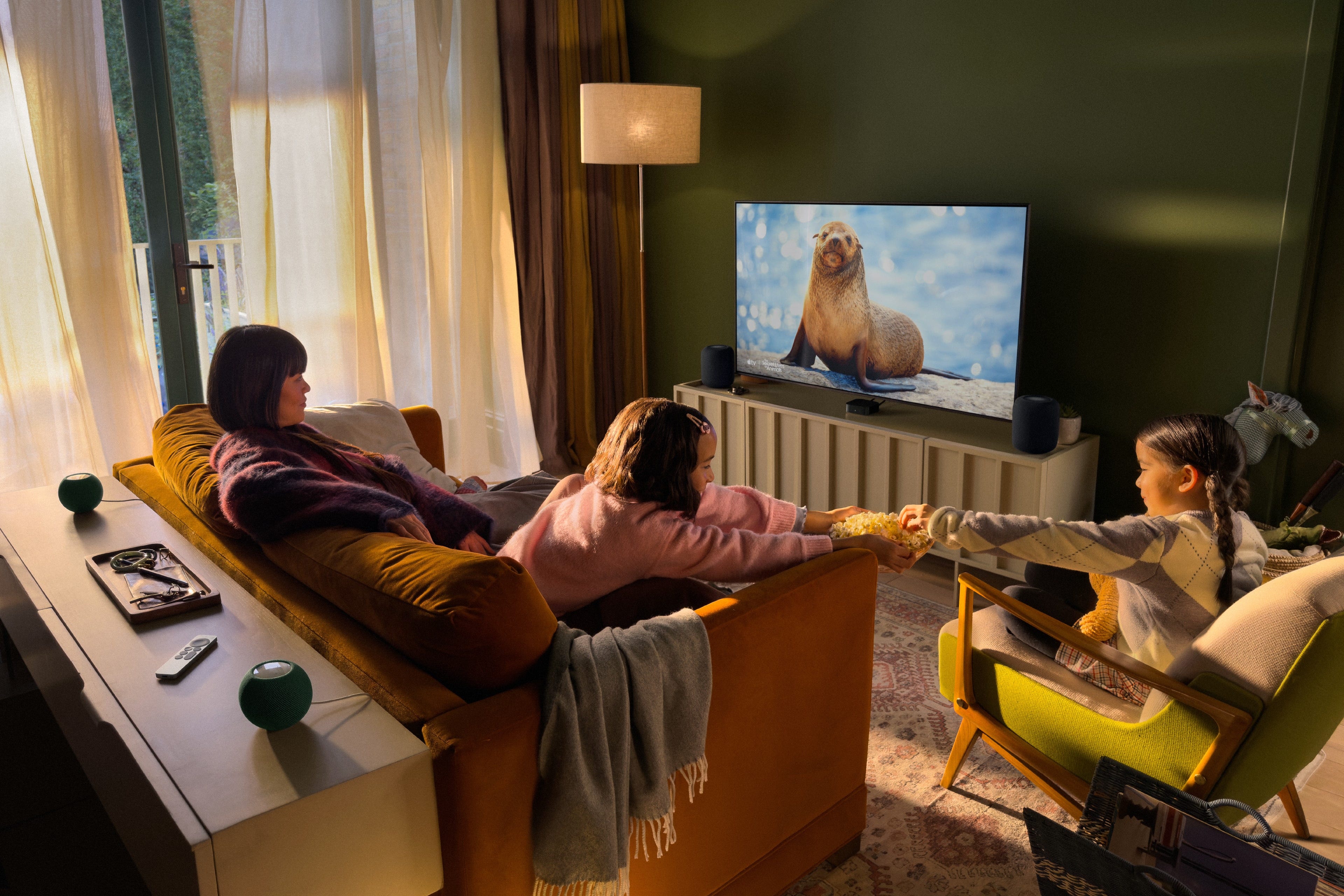
If the lack of passthrough is the biggest (audio) reason to skip the new Apple TV 4K, its ability to wirelessly drive a set of four Apple HomePod speakers might be the biggest reason to consider buying it.
Along with the new Apple TV 4K, Apple debuted the second-gen HomePod mini ($149) and announced that you’ll be able to use four of them simultaneously (two in front, two in back) for wireless home theater. Moreover, if you already own a pair of the larger, second-gen HomePods, you can keep them in front and add a pair of HomePod mini 2s as surrounds.
I don’t know if this combo will pose serious competition to a company like Sonos, but it marks the first time you’ll be able to create an all-Apple, four-speaker Dolby Atmos sound system. And what better way to demonstrate its capabilities than to feed it TrueHD-based Dolby Atmos and Atmos Music?
Grab ‘em while you can
There are a few more reasons to consider buying the new Apple TV 4K, including its Siri-activated remote finder (something I’ve never needed, but apparently I’m in the minority), and its ability to act as a hub for Apple’s new Home Collection of smart home devices.
But frankly, I think most folks will be better off with the previous generation, especially if you can find it for its $249 price or lower.
And for those who want passthrough? Nvidia tells me that the Shield TV Pro is only temporarily out of stock, and will return at its $299 price soon. It may lack the Apple TV 4K’s superb ad-free interface, and snappy, no-lag performance, but it remains the one streaming device that can deliver every audio and video format to your devices, untouched and unaltered.