


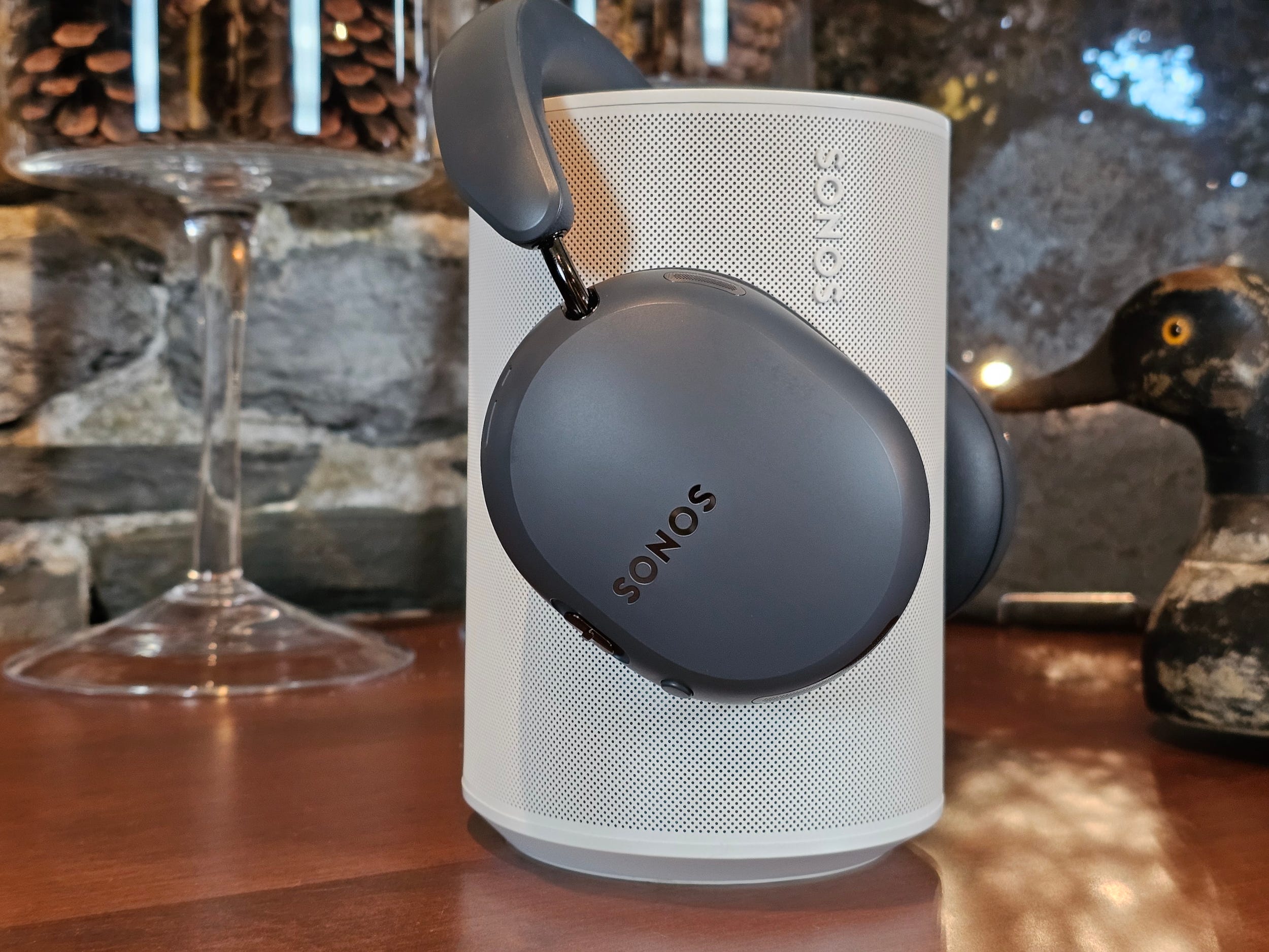
When Sonos CEO Tom Conrad introduced the new Sonos Ace Ultra, he began his keynote by acknowledging how weird it is that the Sonos Ace — the company’s first wireless headphones — can’t be controlled by the Sonos app. The launch event was even titled, “We Had One Job,” a knowing wink at the criticism the Sonos Ace received. Conrad gets a certain amount of latitude to shine a light on this misstep, because he wasn’t in charge of the company at the time.
If you buy through links on this page, I may earn a small commission at no extra cost to you. As an Amazon Associate, I earn from qualifying purchases.
Sonos Ace Ultra
Product Score: 4.5/5

Pros:
Can be controlled via the Sonos app
Great sound and an improved transparency mode
Top-notch noise cancellation and comfort
Cons:
Can’t do lossless or spatial audio over Wi-Fi
Needs at least one compatible Sonos speaker for Wi-Fi streaming
Won’t work with Sonos’ upcoming AI voice assistant
Conrad’s also entitled to take a victory lap of sorts: The new Ace Ultra do indeed fix the Ace’s glaring omission, but with some caveats.
The fix is something known as Headphone Linking, which Sonos notes is an “Early Access” feature:
It’s opt-in, provided as-is, and subject to change and limitation during ongoing development. Requires a compatible Sonos speaker, WiFi, and setup through the Sonos app.
Take careful note of the “requires a compatible Sonos speaker” part, because if you’re a long-time Sonos customer with a house full of pre-2018 speakers, Headphone Linking may not work. You need at least one compatible product, and the venerable Play:1, Play:3, and hugely popular Sonos One, for instance, are not on the list. Neither are any of the now-discontinued Ikea-branded, Sonos-controlled Symfonisk speakers.
Finally part of the family
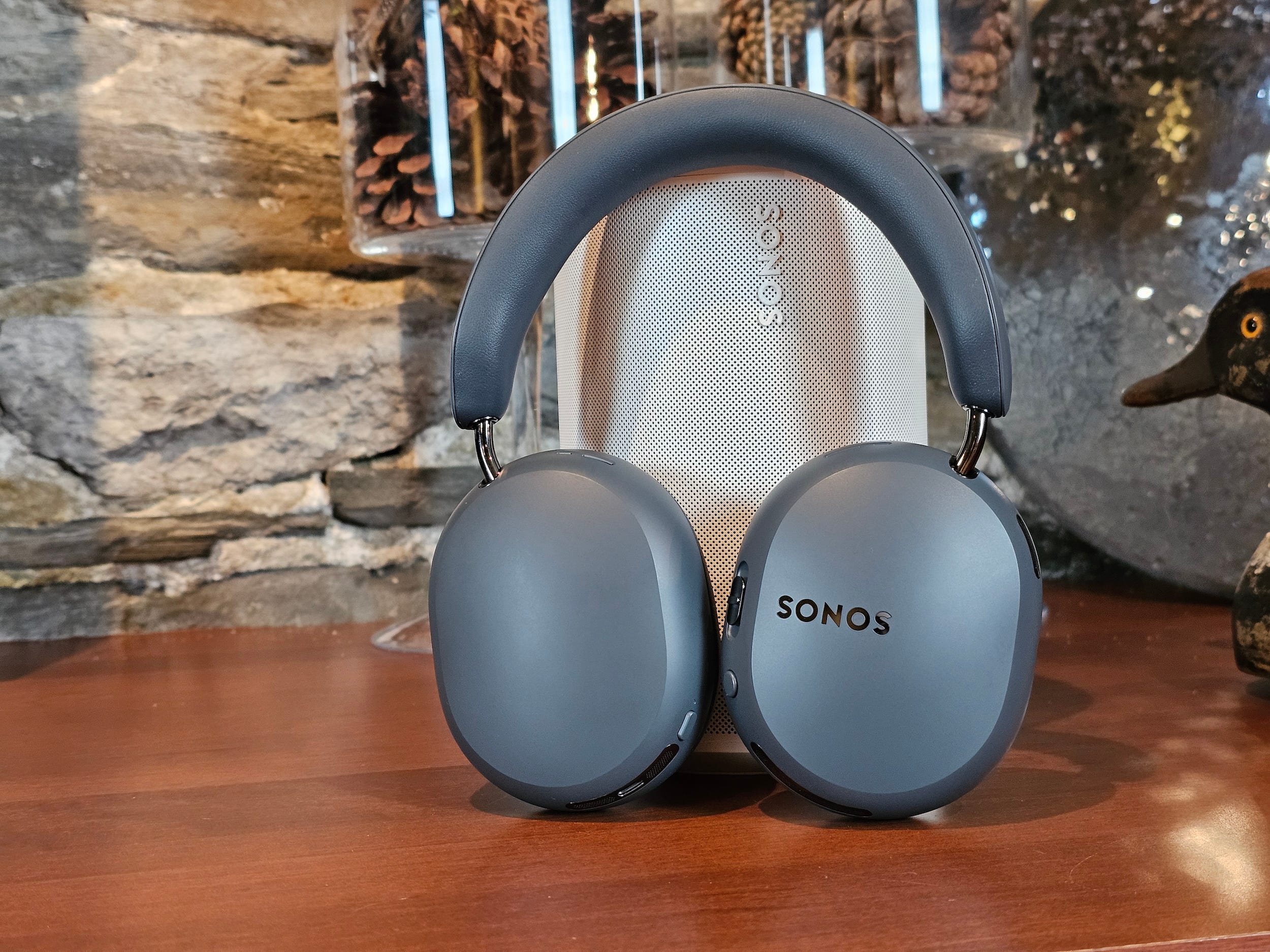
Still, if you have a compatible speaker (and it isn’t being used as a home theater surround), the Sonos app can see and control the Ace Ultra. The headphones show up in the System tab, along with your other Sonos products. You can even pin them to the top of the list for easy access.
When you use the app’s universal search — easily one of its best features — you can stream the result directly to the Ace Ultra. It’s awesome to finally have this option. You can also walk right up to your Linking-compatible speakers and transfer music to and from the headphones with a long-press on the Ace Ultra’s multifunction button. It works seamlessly.
Room for improvement
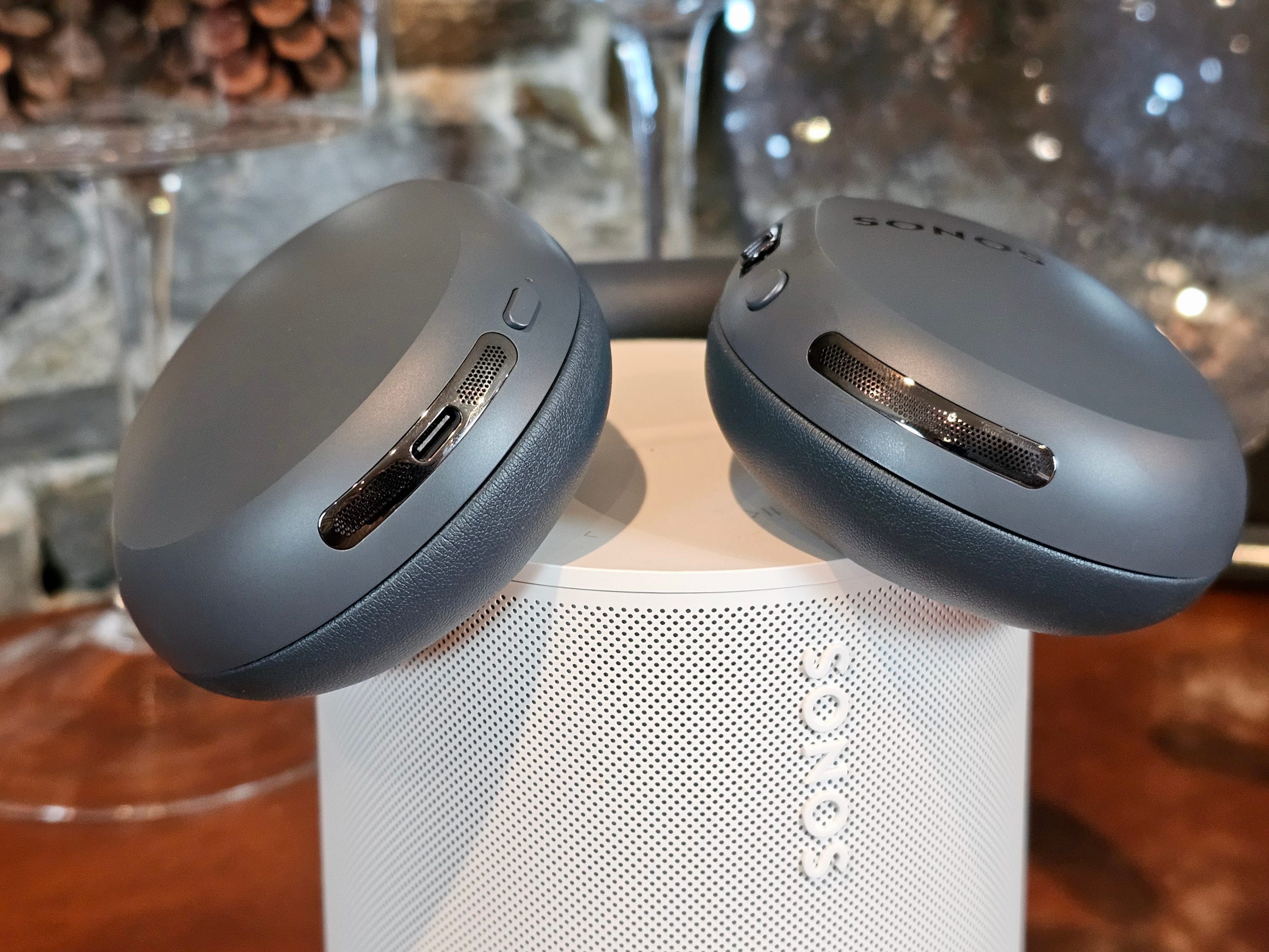
However, Conrad’s “one job” isn’t finished. As thrilled as I am to see the Ace Ultra show up in the app, some frustrating limitations remain.
The big one for me right now is the lack of lossless and spatial audio. I had been hoping that since Sonos lets the Ace Ultra join people’s existing Sonos systems, the headphones would get the same level of audio stream as the company’s speakers do, namely, lossless CD-quality at up to 24-bit/48kHz. At the launch event, I was told that, for now, the headphones are restricted to lossy audio.
In other words, when connected to your home system, your state-of-the-art, $449 Sonos wireless headphones are getting the same kind of lossy stream as a $30 set of budget Bluetooth earbuds. Sonos told me the stream is the equivalent of SBC, the baseline Bluetooth codec. At the moment, the only way to move up to CD-quality lossless is to connect them via USB-C, or pair them with your phone (if it happens to be one of the few that supports aptX Lossless).
For Dolby Atmos Music, a similar limitation exists. Unless you use the Ace Ultra’s TV Audio Swap feature with one of Sonos’ Dolby Atmos-capable soundbars, there’s no option to stream this spatial audio format to the headphones from the Sonos app. Oddly, they work with Atmos tracks over Bluetooth. Despite my repeated questions, no technical reasons were given for these limitations.
If you’ve grown accustomed to using AirPlay with your Sonos speakers — something I suspect a lot of people started doing after the company launched its disastrous app redesign in May 2024 — that won’t work with the Ace Ultra. The new headphones aren’t AirPlay compatible, and if you start an AirPlay session on one of your Sonos speakers, you won’t be able to transfer it to the Ace Ultra, even if the speaker is compatible with Headphone Linking. The same thing goes for Bluetooth sessions.
Lesser annoyances exist, too. Despite having built-in mics that let you talk to your phone’s voice assistant, the Ace Ultra won’t let you talk to any of the voice assistants your existing Sonos speakers may support, like Alexa, Google Assistant, or even Sonos’ homegrown Sonos Voice Control (the one with a deliciously smooth reproduction of Giancarlo Esposito’s voice).
I was also told that there’s no timeline for compatibility with the company’s soon-to-launch next-gen AI voice assistant, known as Sonos 27voice.
Managing power (and expectations)
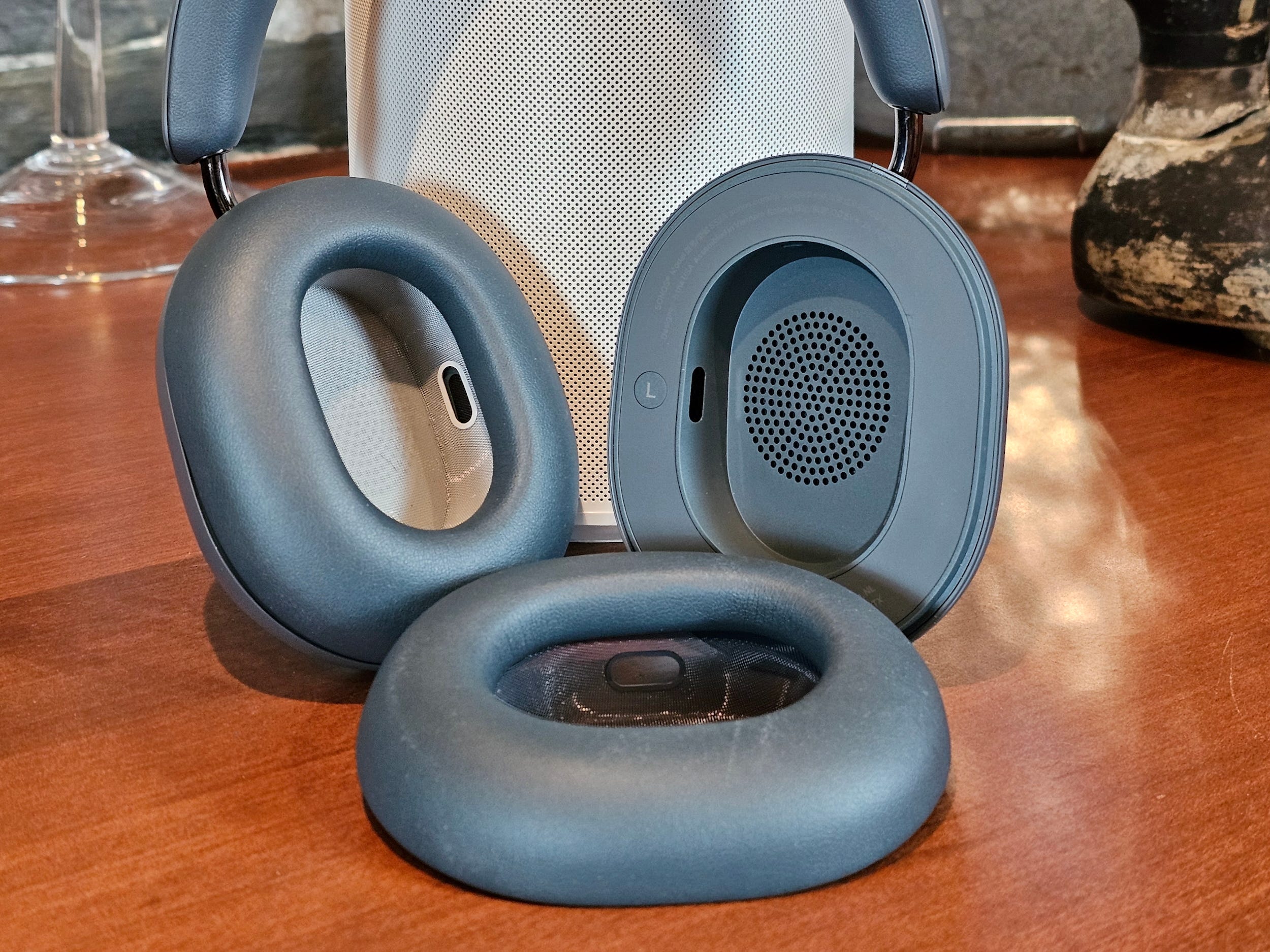
I think the look on my face must have said it all, because the team members on hand offered me a partial explanation for my unfulfilled expectations: power management.
A typical Sonos speaker, like the Era 100, has its own CPU and a dedicated Wi-Fi connection. These are the two ingredients that let it retrieve and play music from the internet independently of any other Sonos speaker in your home. Trouble is, these two ingredients are very power-hungry. The Ace Ultra have their own chips, but I get the distinct impression they were chosen for their power efficiency, not their processing skills. The headphones also have Wi-Fi, but the Sonos system guards it jealously to conserve battery power.
The headphones can’t connect to Wi-Fi music streams on their own. When you start a streaming session on the headphones, the music is actually being relayed to them from one of the Headphone Linking-compatible speakers in your home. The playback buttons on the headphones act as a remote control, telling the linked Sonos product when to start, stop, or skip tracks. If you were wondering why Sonos makes a compatible speaker a prerequisite for Headphone Linking, this is the reason.
Sonos says the Ace Ultra’s ecosystem compatibility isn’t the only reason to buy them. It claims improvements have been made to sound quality, noise cancellation, transparency, and call quality, when compared to the Ace — which, by the way, Sonos now sells for $349.
The Ace Ultra also have a replaceable battery, something we’re beginning to see on a lot of new wireless headphones, likely in response to EU regulations that come into effect in 2027. Unfortunately, due to the design, you’ll need to buy a special kit to do the swap yourself.
Modest improvements
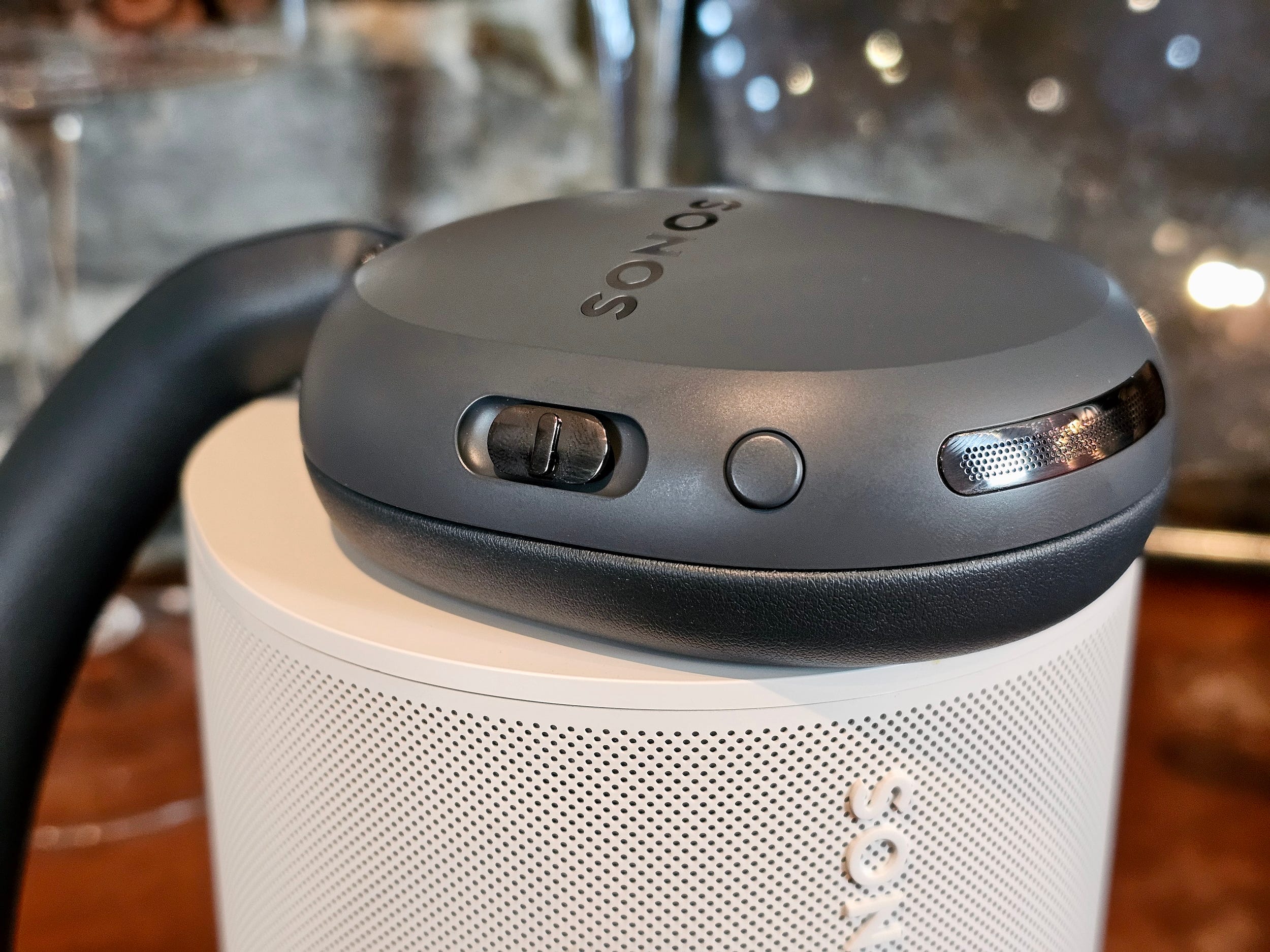
I’ve been testing out the Ace Ultra for a few weeks now, and some of those claims ring true. Others, not as much.
Transparency is the big winner. It’s noticeably clearer than the Ace’s and puts the Ace Ultra in close contention with Apple’s AirPods Max 2 — still the reigning champs. When I used transparency mode during calls or even just for casual in-person conversations with family members, my voice sounded much more natural to me.
Active noise cancellation (ANC) is a trickier area. Sonos says it has doubled the performance compared to the Ace, but only around the 30Hz region of the spectrum. The Ace were already one of the best ANC headphones for this very low frequency range, so Sonos is just improving on an already impressive record. However, 30Hz is so low that it takes a lot of power to turn it into audible sound (humans are much more sensitive to higher frequencies). So there aren’t that many day-to-day situations where you’d notice the Ace Ultra’s enhancement.
I tried using a subwoofer as a stand-in for low-frequency noise, but it could only generate loud sounds in the 70-85Hz range. Unsurprisingly, swapping back and forth between the Ace and Ace Ultra didn’t reveal a clear winner — they both did a very good job of minimizing the noise. Curiously though, the Ace Ultra seems to be a little worse at canceling mid frequencies.
I often use my nearby bathroom exhaust fan as a test of annoying real-world sounds. From about five feet away, the Ace almost entirely killed the fan noise (with an average frequency of 300Hz), while the Ace Ultra still let a little of that noise get in.
Call quality has improved, but it’s a mild change at best. The Ace have always been good at dampening external sounds when you’re on the phone (though not as good as the superb JBL Tour One M3), but they often struggle to keep your voice clear too. On my test recordings, the louder the background sounds got, the more my voice became distorted, or in some cases completely inaudible. The Ace Ultra kept my voice a bit clearer in both loud and quiet situations, but not enough that I’d say you should rush out and buy them if you have the Ace.
With sound quality, we’re again dealing with small differences. Tonally speaking, the Ace and Ace Ultra are voiced identically. Meaning, out of the box, with no EQ adjustments, the emphasis and balance of frequencies are the same. The Ace Ultra give off slightly more warmth, and the highs feel a touch less strident, but it’s very close.
However, the Ace Ultra give you more control over the factory tuning. Instead of the usual two bass/treble sliders Sonos provides for most of its speakers (and the Ace), the Ace Ultra gets three (bass/mids/treble), plus an optional 8-band equalizer for more granular tweaks.
If you listen really carefully, you may notice that the Ace Ultra sound a little smoother than the Ace. The opening of Bob Dylan’s Man in the Long Black Coat has a lot going on: high-pitched chirping, midrange guitar twangs, and deep bass notes. I found that the Ace Ultra does a better job of making these elements feel cohesive and relaxed. The Ace renders them with a slightly sharper edge.
So what’s the bottom line for the Sonos Ace Ultra?
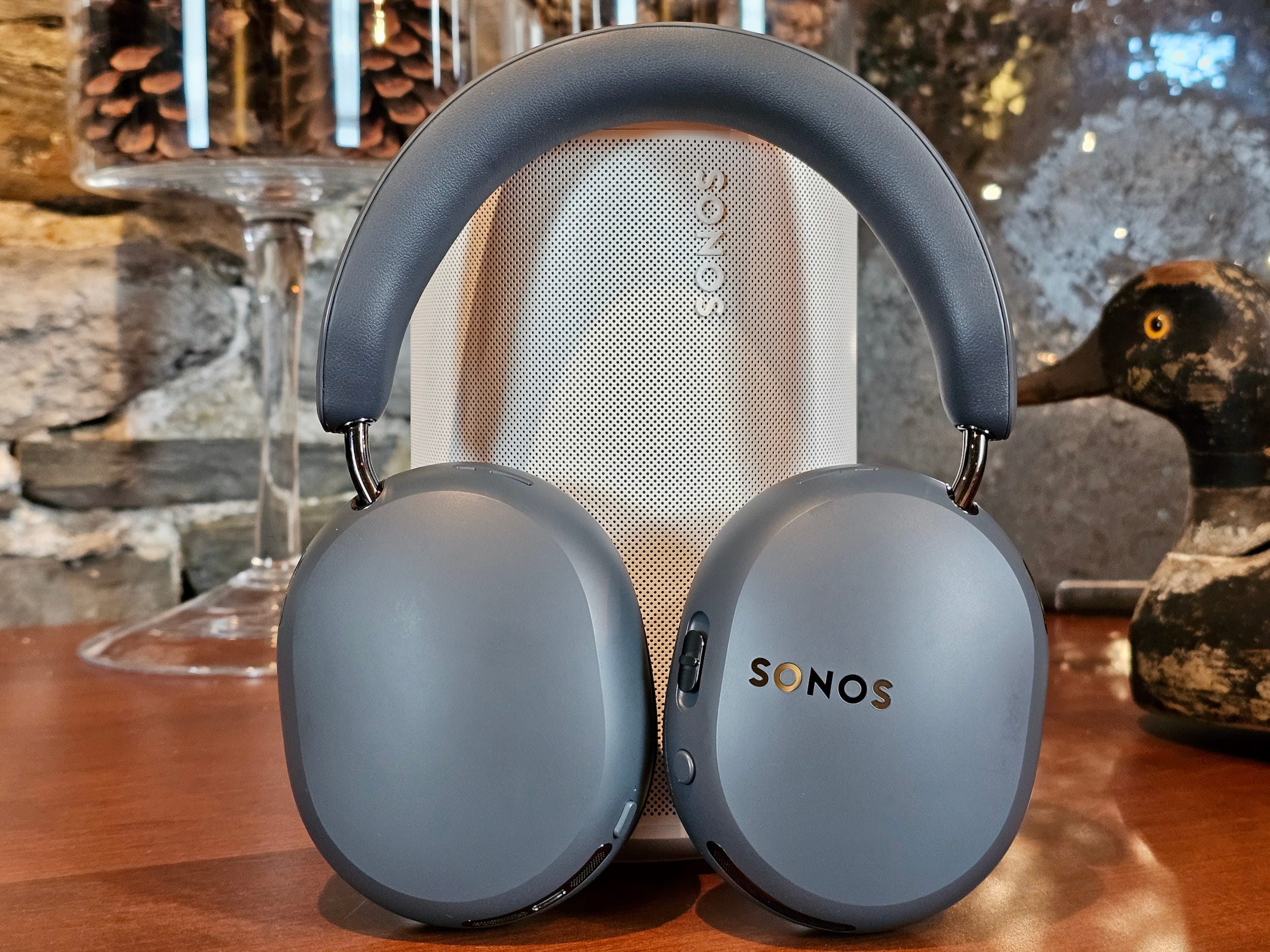
The Sonos Ace Ultra are a great set of wireless headphones — for a very specific group of people.
Their lack of independent Wi-Fi and streaming access means they can’t be used as an introduction to the world of Sonos wireless audio. So folks who haven’t yet taken the plunge into Sonos’ ecosystem have little reason to buy the Ace Ultra.
And if you’re already part of the Sonos experience, but you don’t own at least one of the Headphone Linking-compatible speakers, you should also hesitate — you won’t be able to control the Ace Ultra alongside your existing Sonos products.
If you belong to either group, it’s a perfect time to consider the original Sonos Ace. With their new lower price, they’re now a very compelling alternative to flagship models from Sony, Apple, Beats, Bose, and Sennheiser.
However, if you’re a Sonos customer with one or more compatible speakers, and you’re in the market for a set of top-notch wireless headphones, the Ace Ultra should be high on your list. Being able to manage them together with your other Sonos gear is a unique feature. And, like their predecessor, they check a ton of other critical boxes: Design, comfort, sound quality, noise cancellation, and battery life. These are so strong that you won’t be missing out on any of them when compared to the competition (Apple AirPods Max 2, Bose QuietComfort Ultra Gen 2, Sennheiser Momentum 5 Wireless, or Sony WH-1000XM6).
The one area where the Ace Ultra noticeably lag is call quality, but even then, it’s fine for all but the noisiest situations.
Transparency promotes trust. Please check out my disclosures page, which describes how I work with manufacturers to acquire product samples, and how I guard my editorial independence.
If you enjoyed this Loudmouth review, please consider subscribing. It supports my work and ensures you won’t miss out on future coverage.
If you buy through links on this page, I may earn a small commission at no extra cost to you. As an Amazon Associate, I earn from qualifying purchases.