


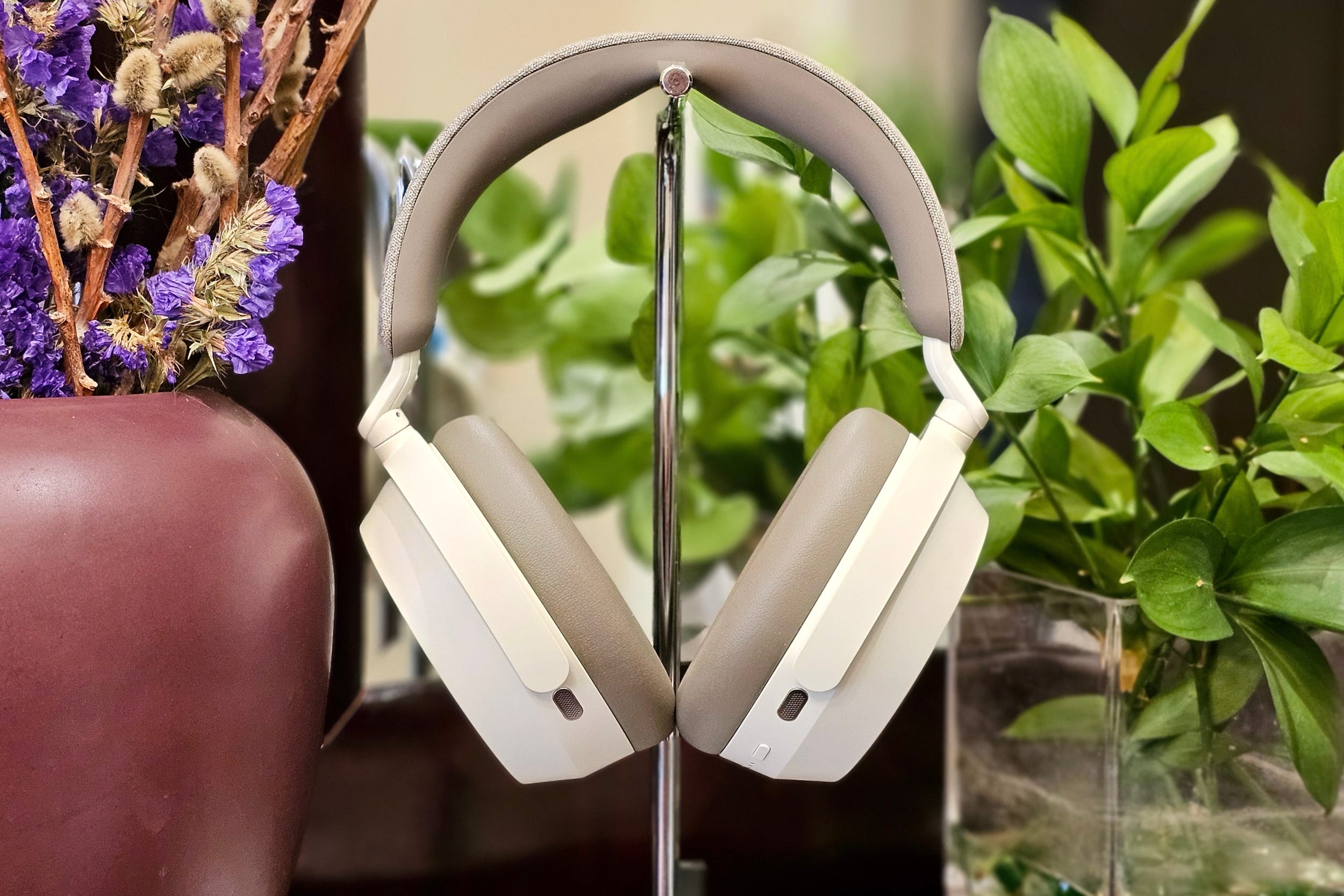
There’s no such thing as the best-sounding wireless headphones. That’s like asking for the best-tasting burger or the most fashionable shoes. Instead, the goal is to find the cans that match your personal taste in tuning. In other words, the cans that are best for you.
For folks whose taste leans toward a balanced, neutral sound signature — one that doesn’t heavy-hand the lows or highs — the best wireless headphones have proven to be, year after year, Sennheiser’s Momentum series. The latest model, the Momentum 5 Wireless, keeps that sound intact.
But this generation’s biggest news isn’t sonic at all: it’s the first flagship wireless headphone I’ve tested with a battery you can swap yourself with a small screwdriver, no service center required. Sennheiser has also improved ANC, transparency, and call quality — the stuff that’s kept it a notch behind Sony, Bose, and Apple in years past.
The result is a great set of wireless cans and a no-brainer upgrade for Sennheiser fans.
Disclosure: If you buy through links on this page, I may earn a small commission at no extra cost to you. As an Amazon Associate, I earn from qualifying purchases.
Sennheiser Momentum 5 Wireless
Product Score: 4/5

Pros:
Excellent sound that doesn’t boost highs or lows
User-replaceable battery with very high stamina
Much improved ANC and transparency
Cons:
Lackluster immersive audio feature
Call quality isn’t as good as the competition
No support for Auracast
Easier on the wallet
Let’s start with the price, because I’m sure you’ve noticed that everything, particularly electronics, seems to be getting more expensive.
At $399.95 USD/$569 CAD, the fifth generation is $50 more than its predecessor, but still $50 less than Bose’s QuietComfort Ultra (2nd Gen) ($449 USD/$599 CAD), $60 less than Sony’s WH-1000XM6 ($459.99 USD/$599.99 CAD), and far more affordable than Apple’s AirPods Max 2 ($549 USD/$799 CAD).
I appreciate that Sennheiser has chosen to keep the Momentum 5 among the most affordable of the wireless headphone flagships.
Tried and true design
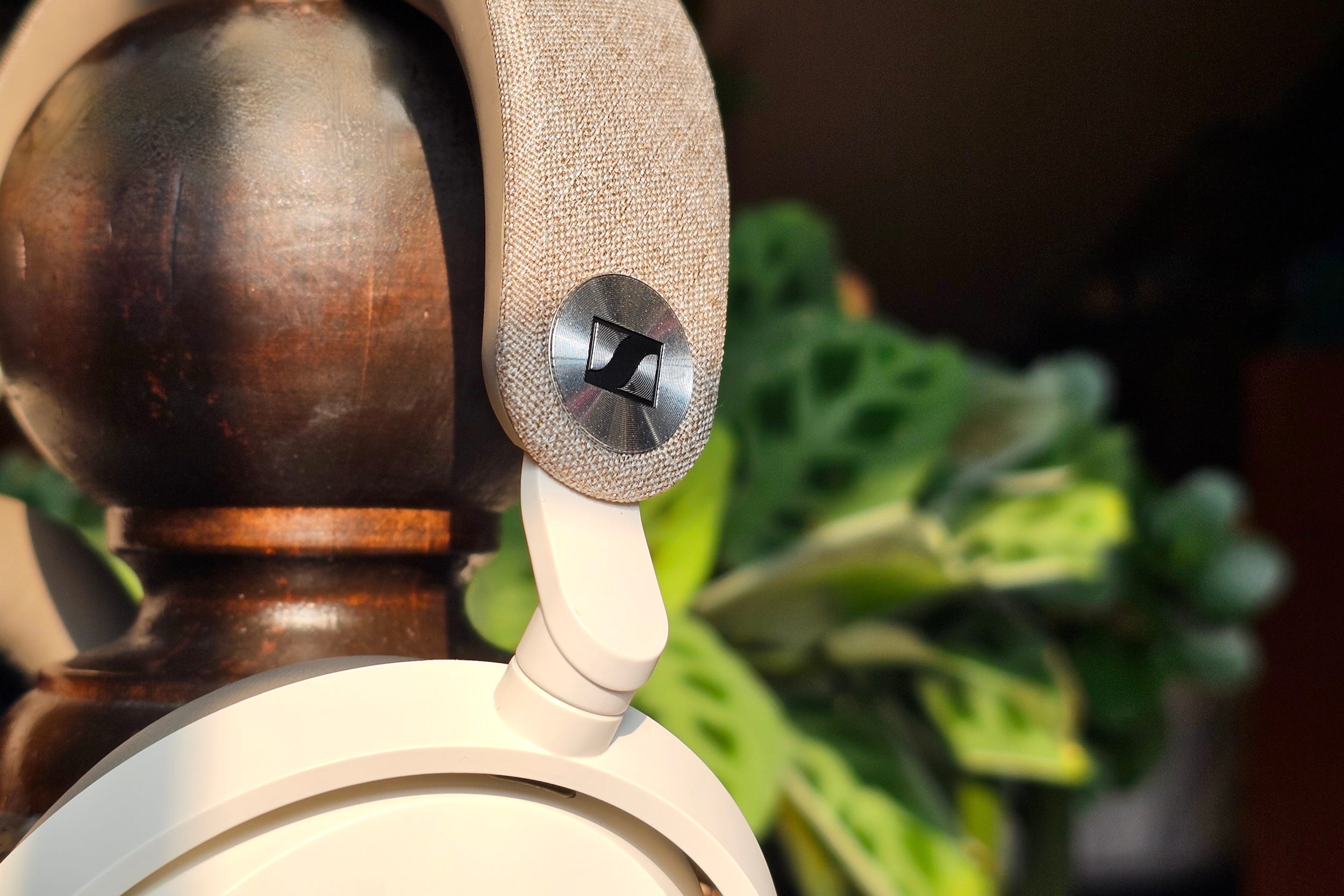
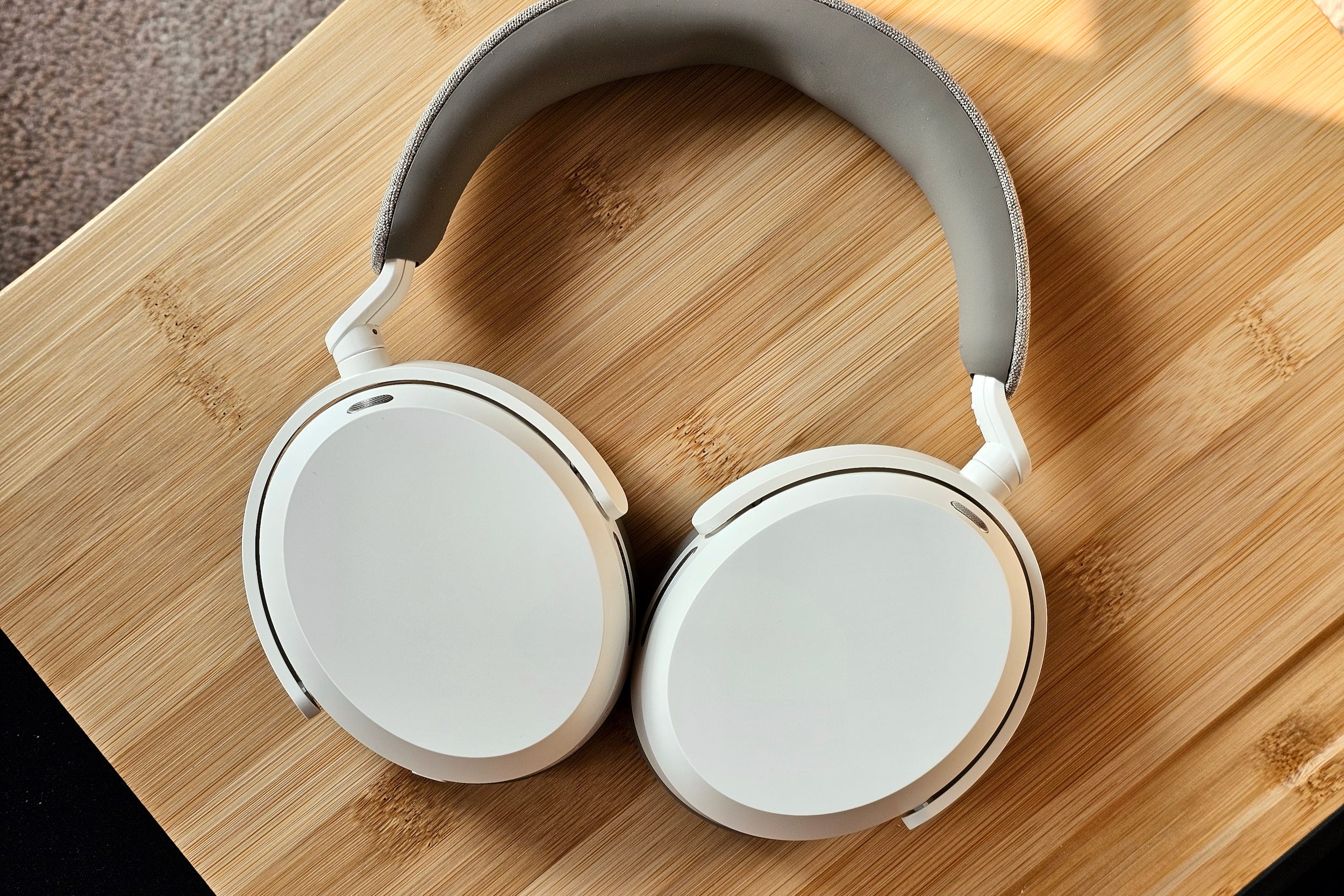
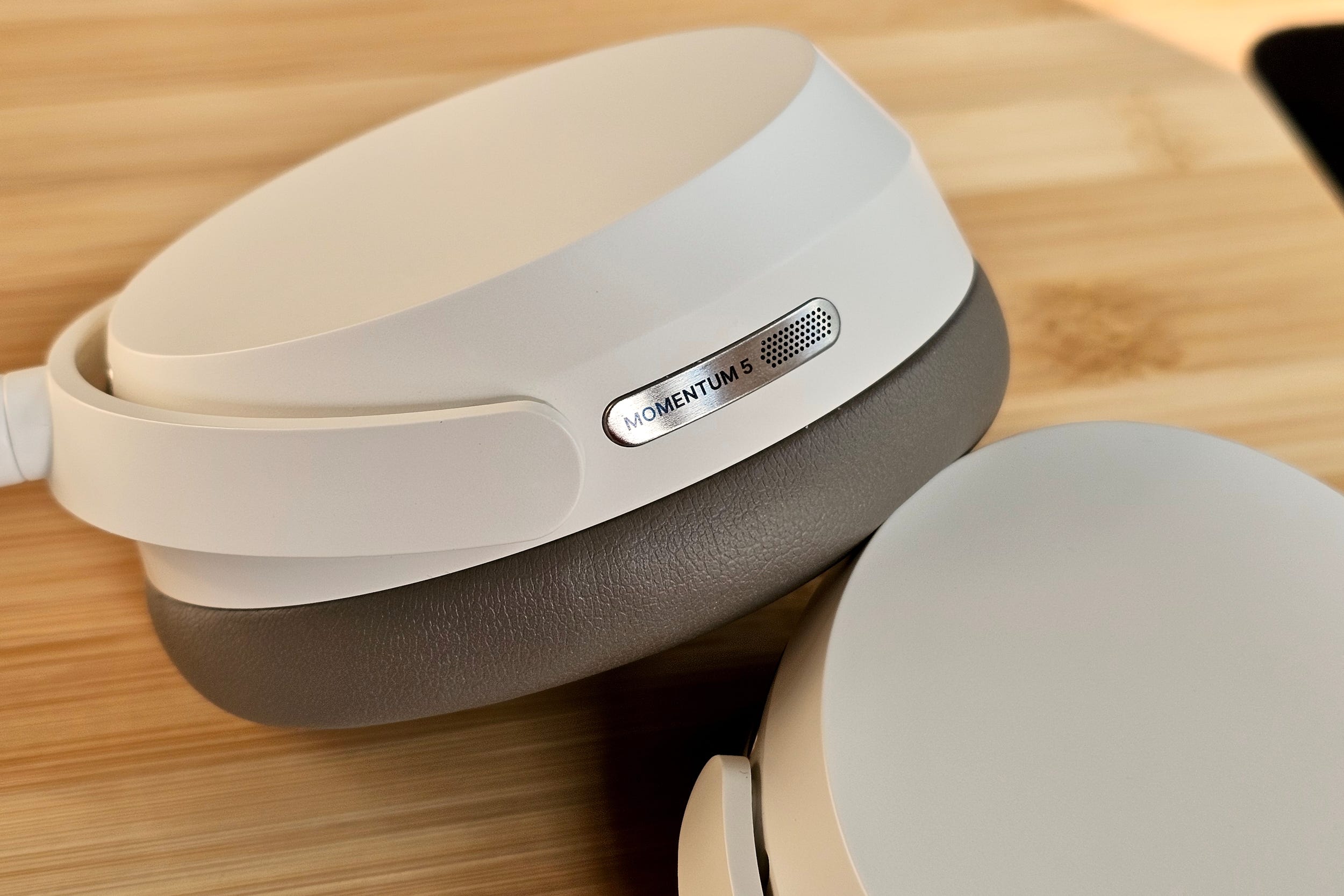
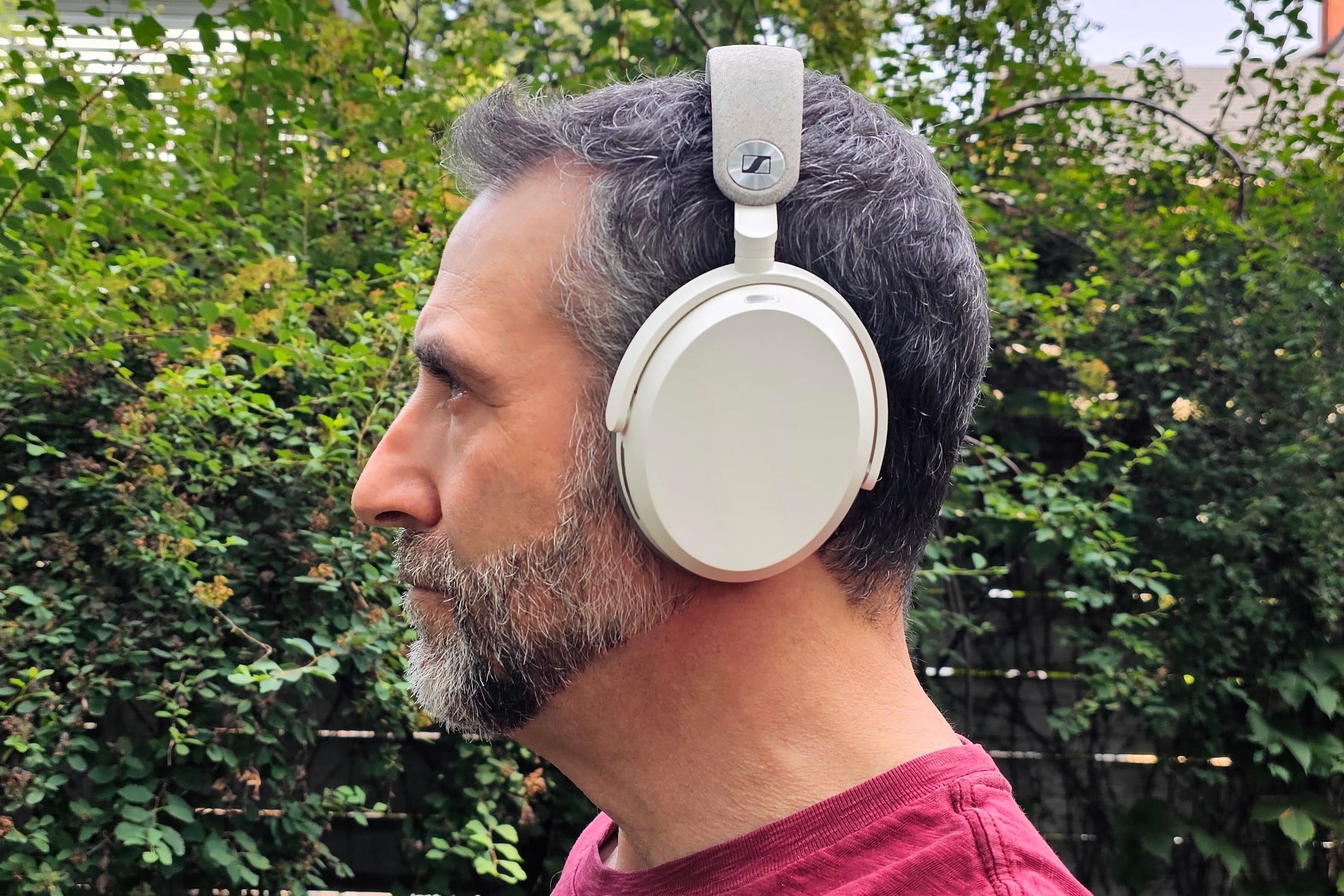
At first glance, it looks like Sennheiser has only made small cosmetic changes since the Momentum 4. A new circular logo treatment adorns the fabric-topped headband. There are two more microphones per side, which sit behind new metal grilles. The earcups are a tad deeper. They’re effectively the same weight (290 grams vs 293 for the fourth-gen).
Despite Bose returning to a fold-up hinge mechanism on the QuietComfort Ultra and Sony following suit with its XM6, Sennheiser has stuck with its fold-flat approach. To combat claims that this makes headphones harder to pack, the travel case has been aggressively trimmed down and is now smaller overall than Sony’s and just a little larger than Bose’s, yet it seems to offer just as much structure and protection.


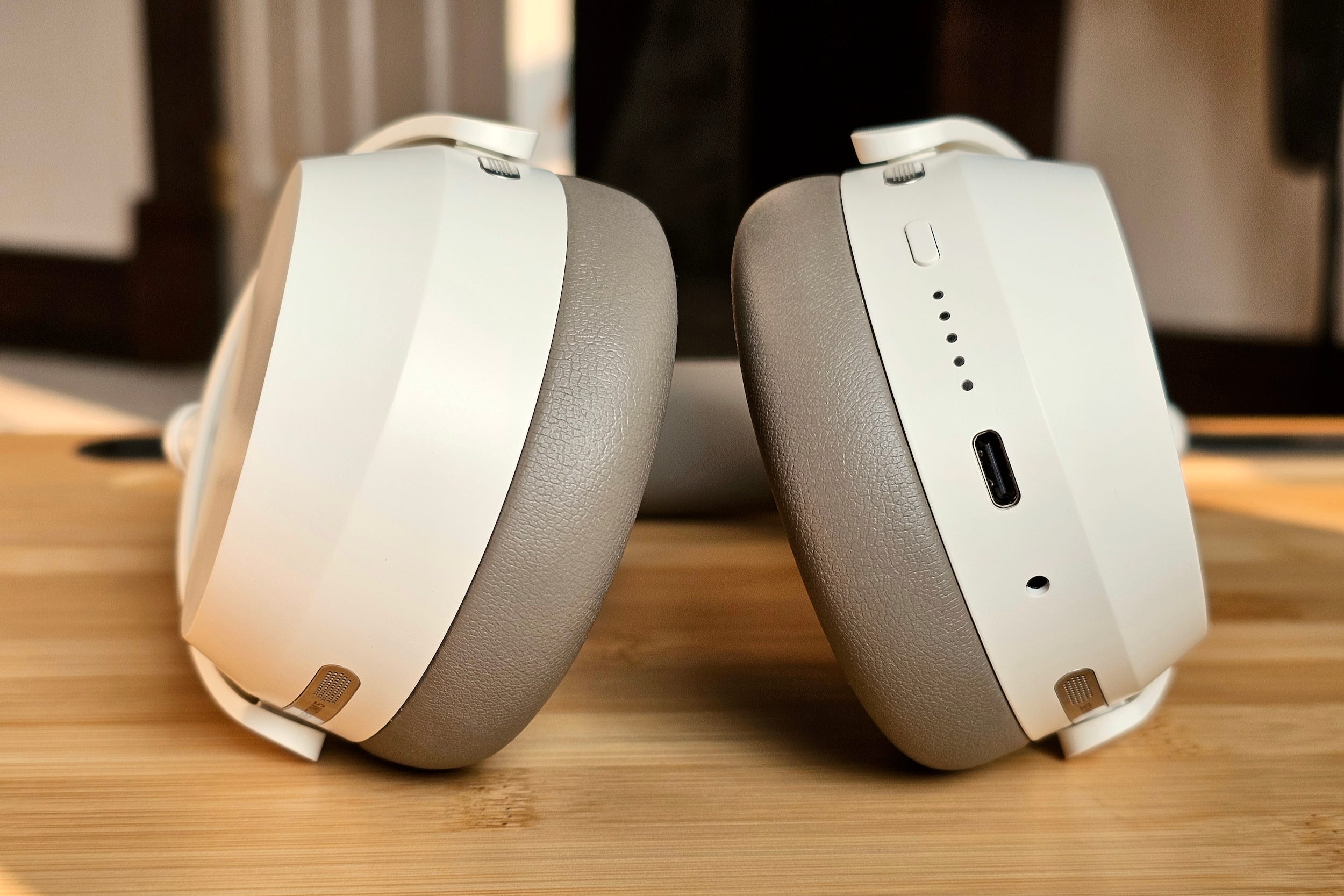
The fifth-gen keeps the same touch controls for media, ANC, call, and volume (plus it adds a new gesture for spatial audio mode), with a single physical button for power and Bluetooth connections.
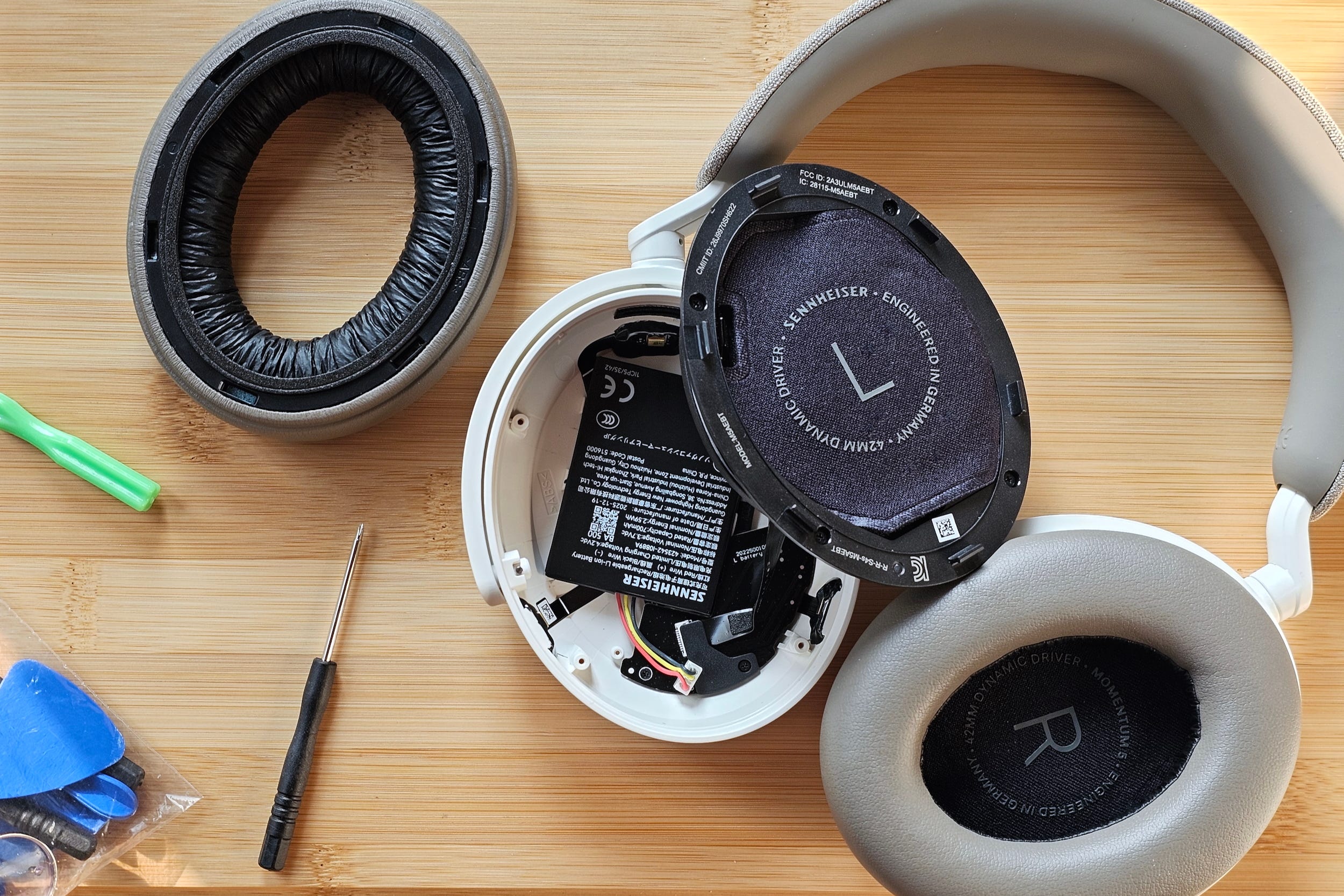
One of the biggest changes is on the inside: Remove the left ear cushion, grab a small Phillips screwdriver, and you’ll find that new user-replaceable battery. Just be careful — the driver assembly is connected via a ribbon cable and you definitely don’t want to damage it.
Sennheiser estimates the replacement battery will run between $40-$50 when it’s made available later this year, but I expect you’ll find compatible versions from other sellers for as little as $20 by 2027.
Quick side note: If you like the idea of highly repairable headphones, be sure to take a look at the Fender Audio Mix and the remarkably similar Fairphone Fairbuds XL.
For me, they’ve proven to be very comfortable headphones, whether I’m wearing eyeglasses or not. The headband creates just enough clamping force to keep them from moving about. I don’t recommend them for the gym or running -- I found their grip too gentle for those activities. If the gym is your thing, check out Sennheiser’s more budget-friendly Accentum Wireless or Accentum Plus Wireless. They’ve got an octopus-like clamping force and I guarantee they won’t budge under heavy use.
Even though there are now wear sensors inside each of the Momentum 5’s redesigned earcups (making music auto-pause/resume more accurate regardless of which side you remove), they feel a little roomier than before, which I prefer to the shallow earcups on Sony’s XM6. And I love that Sennheiser is one of the few headphone companies that gives you 180 degrees of earcup rotation, letting you decide if you want the cushions face-down or up, when worn around your neck. Another rarity: a five-segment LED battery meter, which takes the guesswork out of your charge status.
The only critique I’ll level at Sennheiser’s design is that it may feel a little too conservative for some buyers. For those who want their $400 headphones to look like $400 headphones, the Momentum aren’t as successful as Bose’s QuietComfort Ultra (2nd Gen), which use polished aluminum headband components for a decidedly luxe look.
Upgraded ANC
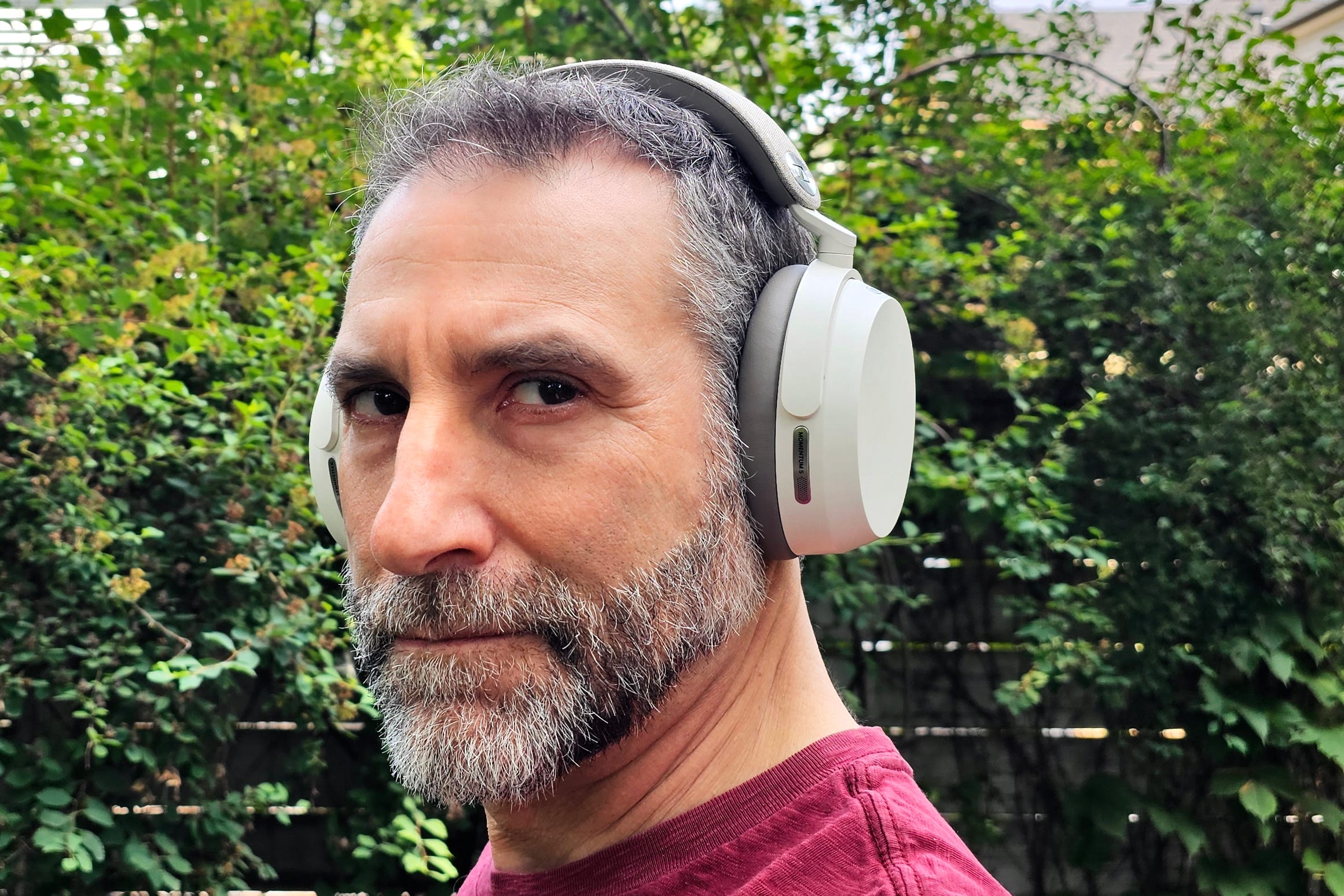
Active noise cancellation and transparency are at the heart of most wireless headphones these days, and thanks to an ANC arms race, they get a little better each year. I think Bose’s QuietComfort Ultra (2nd Gen) still offer the quietest experience for most daily routines like commuting to work, flying, or working in your local coffee shop, but it’s now a toss-up as to who I’d pick for second place. Probably Sony’s WH-1000XM6. But maybe the Momentum 5 Wireless? Honestly, without scientific testing gear, it’s too close to call.
You may find that ANC effectiveness can be compromised by some glasses styles. I recently switched to a frame with fairly thick limbs and noticed the difference immediately. This isn’t specific to the Momentum 5; the QuietComfort Ultra (2nd Gen) and XM6 both performed better without glasses, too.
Transparency is an even harder evaluation: Apple’s AirPods Max series were, for years, the leaders for the most natural-sounding, can’t-believe-I’m-wearing-headphones experience. Today, I think Bose, Sony, and Sennheiser all strike within 99% of Apple’s benchmark.
Where the Momentum 5 enjoy a slight edge is their ANC/transparency gesture control. Using the equivalent of a pinch-to-zoom move with your thumb and forefinger (or really, any two digits) you can increase and decrease the amount of noise canceling, from full transparency to full ANC, in increments. I’m an all-or-nothing kinda guy, so I didn’t use it much, but it works well.
Still got that Sennheiser sound
As I foreshadowed in the intro, the Momentum 5 are in the goldilocks zone for tuning if you like your headphones to take a mostly hands-off approach to your tunes.
If you’re not sure, here’s what it means in practice: Superb clarity and detail. The Momentum 5 reward quiet-space critical listening. This is especially true when taking advantage of their advanced codec compatibility and USB Audio, which can deliver hi-res lossless audio from a smartphone or laptop at up to 24-bit/96kHz — the gold standard for very picky audiophiles (the previous gen was limited to 16-bit/48kHz).
That feature (wired USB Audio) can be enjoyed by just about everyone. The wireless equivalent (Qualcomm’s Snapdragon Sound with aptX Lossless), on the other hand, is something only a small handful of buyers will get to hear.
Sidebar
Sennheiser Momentum 5 Wireless: One of its best features won't work for most buyers

Hey, are you familiar with Qualcomm’s aptX Adaptive and aptX Lossless Bluetooth codecs?
Even with the optional bass boost mode, these cans don’t get as low as Sony’s XM6. Which isn’t to say that bass is somehow underwhelming -- far from it. Tracks that depend on solid bass response, like Billie Eilish’s skull-thumping bad guy, are very well rendered. But if you like deep, powerful, and resonant lows, the Momentum 5 stop short of that experience.
Normally, I don’t get great results when using app-based personalized EQ schemes, but Sennheiser’s Sound Personalization accurately diagnosed my slight high-frequency hearing loss and gave me a boost in that part of the spectrum and significantly improved my enjoyment. So much so, that I ended up keeping it on for much of my listening.


I can’t say the same of the Momentum 5’s new Immersive Audio “Optimized for Dolby Atmos” feature.
If you’re listening to stereo, it gives you two options: Enhance that stereo sound through a virtual 3D effect, which makes the soundstage wider and deeper. Or enhance it further by adding head-tracking, which attempts to keep the main music elements (typically vocals) locked in front of you, even as you turn your head side-to-side. It sort of simulates a live music experience.
I’ll say this — it works, and I’m glad Sennheiser added it. However, it’s rare that I hit a stereo track that sounds better to me in this mode.
In theory, if you’re already listening to Dolby Atmos content, Immersive Audio won’t alter the sound (because adding an additional 3D effect to an already 3D format would be bad), so the only reason to use it is to turn on head-tracking. In reality, it does affect the sound, dropping perceived loudness a bit and pushing the center channel vocals backward in the soundstage.
Sennheiser says this is a necessary adjustment to let head-tracking do its thing without causing clipping (distortion) at high volumes. Again, I think it’s a nice-to-have add on, but not a reason to buy the Momentum 5.
Unfortunately, Sound Personalization and Immersive Audio are incompatible — you have to pick one or the other.
Not-quite-crisp calls
Call quality on the Momentum 5 is good, with a noticeable improvement in voice quality over the Momentum 4. However, Sennheiser still has some algorithm tuning to do if it wants to compete with leaders in headphone calling. Wind was audible when conditions went above a light breeze and while most background noises were eliminated, you could tell when the software was doing so — the louder the background noise, the more my voice would wobble and fade in and out.
Don’t be surprised if your callers ask if you’re a spot with bad cellphone reception when this happens.
In quiet, windless conditions, everything performs well, and I was especially happy with transparency mode on calls. To me, this is a must-have feature if you regularly take calls with your headphones. It makes for a more natural experience and reduces the fatigue of doing multiple, long calls. If you’re in a noisy environment, you can always engage the ANC if you need it.
The Sennheiser Momentum 5 Wireless boast an impressive number of features, but there’s one omission that’s particularly glaring: No Auracast support.
Auracast is a handy way to share your device’s audio with another person, but in the future, it will enable a host of additional scenarios — everything from being able to hear the TV at your gym, to getting vital terminal announcements while you’re waiting for your flight.
What’s strange is that Sennheiser added Auracast to its Momentum 4 True Wireless earbuds in 2024, and Accentum True Wireless in 2025.
Should you buy them?
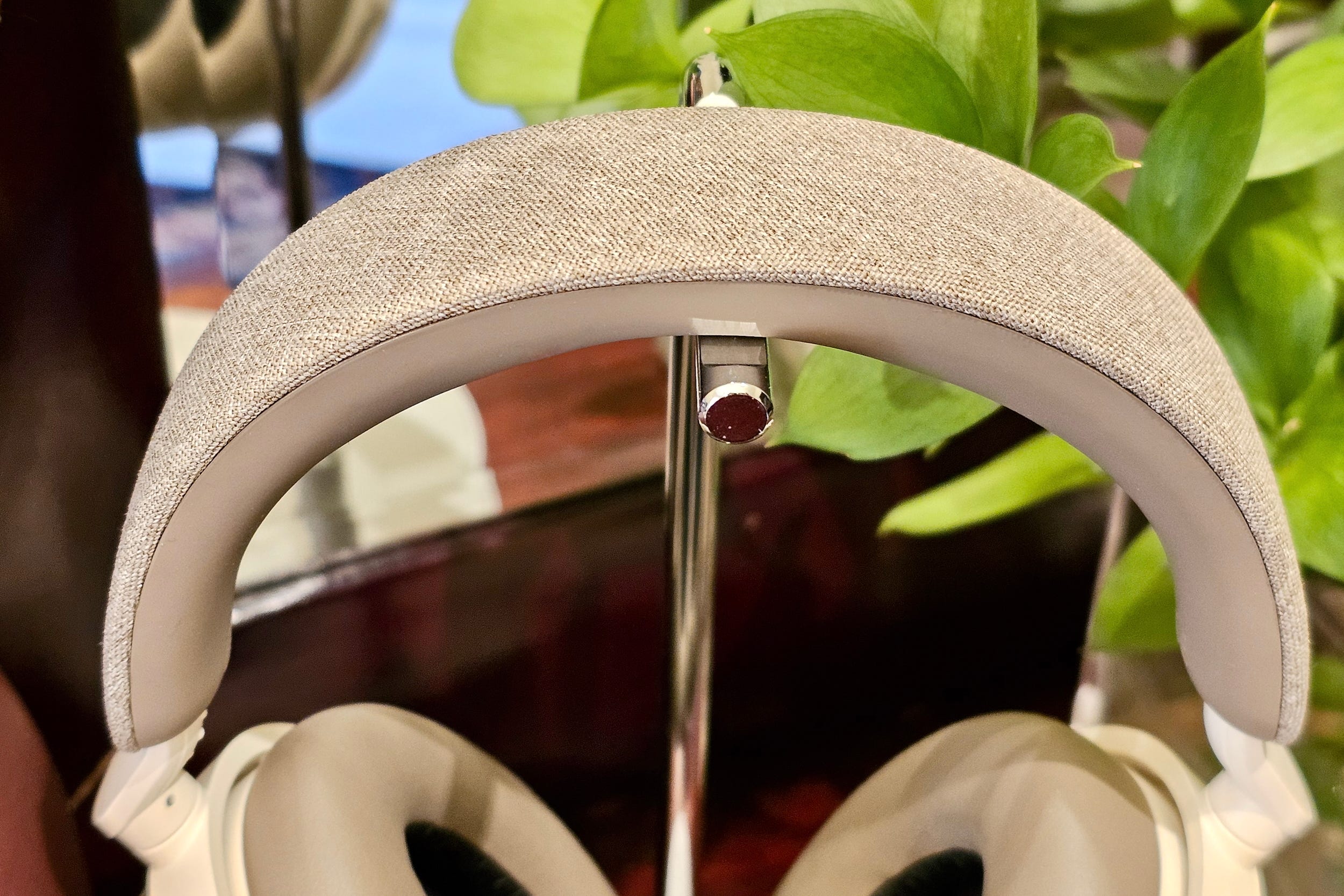
Sennheiser’s Momentum 5 Wireless are the headphones Sennheiser needed and the ones that fans wanted: a set of cans that keeps the brand’s signature sound, closes most of the ANC and call-quality gap with Sony and Bose, and — thanks to that replaceable battery — might be the first flagship in this category actually built to outlast its warranty. If you’re already a Momentum fan, this is a no-brainer. And even if you’re not, they should be on your shortlist.
If you’re wondering if you should spend a bit more for the Sony WH-1000XM6 or Bose QuietComfort Ultra (2nd Gen), ask yourself these questions:
Is a more-than-24-hour battery life important? Stick with Sennheiser. Same thing for repairability.
Do you love bass? If so, Sony’s XM6 offers impressively resonant lows.
Prefer physical controls to touch? Bose still uses touch for volume adjustments, but all other functions use a button. Sony and Sennheiser are both heavily geared toward touch controls.
Do you find it hard to get a comfortable fit? In my experience, more people find Bose’s cans to be better for long-term comfort, myself included.
Do you do a lot of calls? Both the XM6 and QuietComfort Ultra (2nd Gen) outperform the Momentum 5 Wireless for call quality.
If you enjoyed this Loudmouth article, please consider subscribing. It supports my work and ensures you won’t miss out on future coverage.
Disclosure: If you buy through links on this page, I may earn a small commission at no extra cost to you. As an Amazon Associate, I earn from qualifying purchases.