


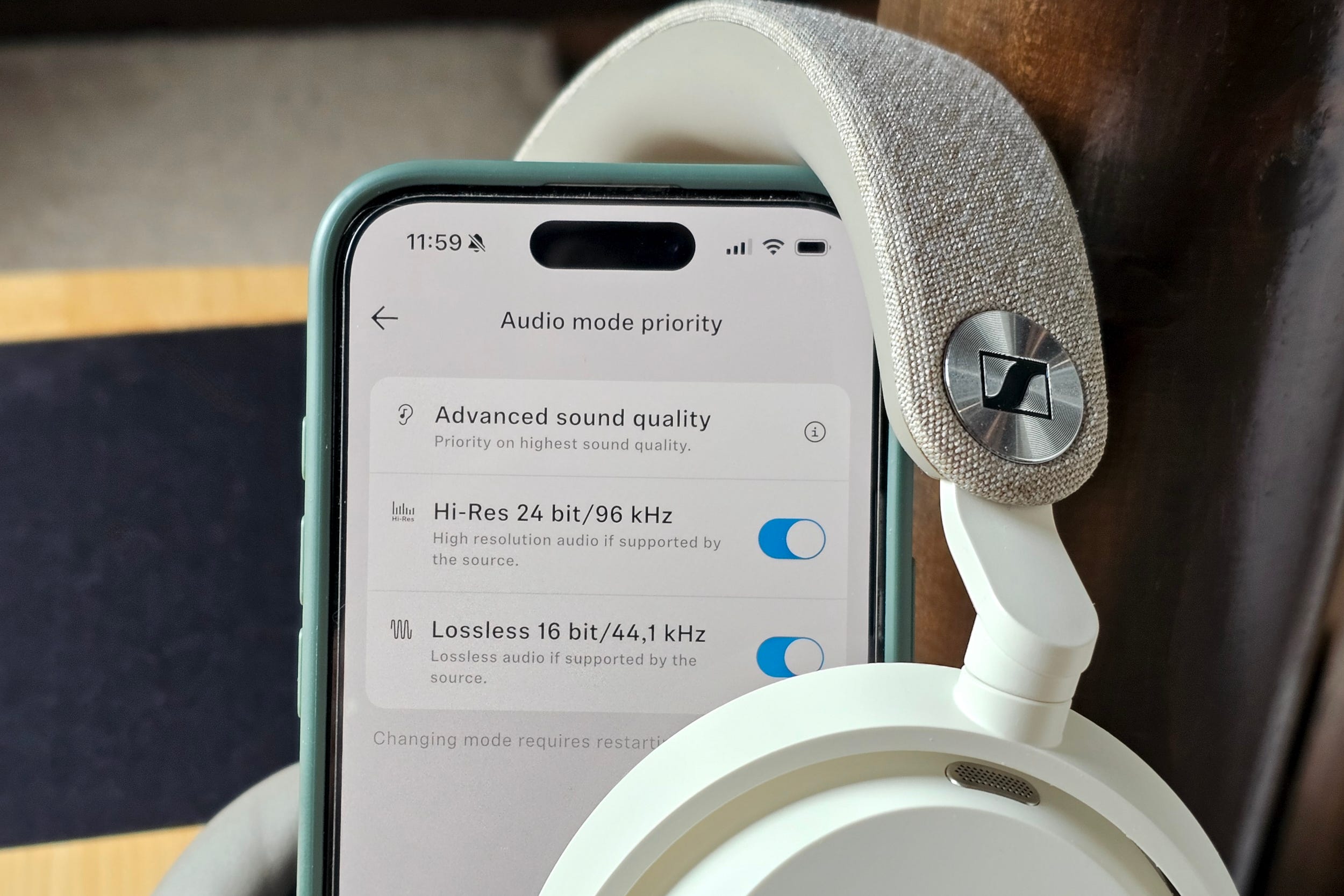
Audiophiles have always claimed that if you want genuinely high-quality sound from headphones or earbuds, you gotta go wired. Some of that passion is ideological (audiophiles love their cables), but it also has a solid technical rationale: historically, Bluetooth connections haven’t been robust enough to support lossless audio, and true hi-res compatibility was right out.
A few companies found some clever workarounds in the form of codecs — the algorithms that make digital audio small enough to survive the Bluetooth voyage from your phone to your earbuds. But even the best of these are still reliant on a wireless pipe that was never sized with high-end audio in mind, and they only work if you own specific gear.
Things, however, are changing. A new version of Bluetooth (7.0) has recently been adopted, and it comes with a new optional feature called High Data Throughput (HDT). HDT massively increases Bluetooth’s bandwidth, to a maximum of 7.5 Mbps.
Alfredo Perez, senior technical marketing manager for HDT at the Bluetooth Special Interest Group (SIG), walked me through the details. He says that the best-case rate we can expect is about 6.4 Mbps. But, he points out, realistically that probably looks closer to 6.0 Mbps “once you consider other factors like encryption overhead, retransmissions, etc.”
Even with this reduction, HDT should, in theory, have plenty of room for both CD-quality lossless stereo (about 1.4 Mbps) and hi-res audio at up to 24-bit/96 kHz (about 4.6 Mbps without any compression).
Why does this matter?
Major streaming services such as Apple Music, Spotify, Tidal, Deezer, Amazon Music, and Qobuz offer nearly all of their music in lossless CD quality (16-bit/44.1 kHz), the long-time benchmark for digital audio. Several, including Apple Music, Tidal, Deezer, Amazon Music, and Qobuz, go further, with millions of tracks in hi-res audio (24-bit/48 kHz and up), the step-up level aimed at audio purists (though whether average people can hear the improvement has been hotly debated).
And yet, if you use wireless headphones, you probably aren’t getting either of these quality levels. Today, lossless hi-res audio over Bluetooth isn’t possible. Even CD-quality lossless works only with a handful of compatible phone-and-headphone combos, and only when the wireless connection is at its very best. If it isn’t, that lossless audio is scaled back to lossy.
Most Bluetooth headphone users get lossy audio — music that has been heavily compressed, resulting in a loss of detail.
A few companies have tried to get around Bluetooth’s limitations with Wi-Fi, but Wi-Fi is a power-hungry technology that’s poorly suited to battery-driven headphones and earbuds. However, HDT is based on Bluetooth Low Energy (LE), and its power requirements should be a fraction of Wi-Fi’s needs.
That’s the theory, and it sounds really exciting. The rollout of HDT, though, could prove complicated, and, as with previous tech upgrades, there will be a lot you need to keep an eye on.
When is this happening?
No manufacturer has produced a market-ready HDT-compatible phone or wireless set of headphones yet. And despite the SIG saying that it expects the first premium audio applications to emerge in 2027, I think it will be 2028 before there are actual HDT products folks can buy.
The most likely scenario will be HDT headphones first. But since HDT requires that both the headphones and the source (the phone) be compatible, those first HDT headphones might need to ship with an HDT USB-C dongle. I expect Questyle will include HDT in the next version of its QCC Dongle Pro. Then, eventually, the HDT phones will also emerge.
If history is any guide, Android phones will lead the charge. You can expect Samsung and Google to be early adopters. The iPhone is a different story. Apple has so far resisted the last decade’s codec-based enhancements to Bluetooth audio, and has yet to support Bluetooth Auracast, a major step forward for Bluetooth as a means of sharing audio both publicly and privately. It has made no public announcements about HDT support.
Ken Kolderup, chief marketing officer of the Bluetooth SIG, told the Japanese press (in a quote translated into English), “our current impression is that they [Apple] are very interested, because Apple executives are participating in discussions about the standards,” but I wouldn’t interpret that as a guarantee.
Still, HDT would make sense for Apple, finally giving it a standardized way to support lossless on its AirPods line of wireless headphones and earbuds, something it has so far done only on a proprietary basis, when these devices are linked to the Vision Pro headset.
The many flavors of HDT

HDT requires Bluetooth Core 7.0, but just because a product advertises itself as Bluetooth 7.0, that doesn’t mean it will support HDT. The only way to know is to check the specs.
More worryingly, HDT isn’t a single spec. There are five “modes” of HDT, each defined by the bandwidth it supports: HDT 2 (2 Mbps), HDT 3, HDT 4, HDT 6, and HDT 7.5 (the highest rate, at 7.5 Mbps).
In order for a product like a phone or earbuds to claim HDT compatibility, it only has to support up to HDT 4. The fastest levels — HDT 6 and HDT 7.5 — are optional.
Given that HDT 4 is likely good enough for CD-quality lossless audio, I suspect we’ll see two product tiers emerge: a budget-friendly level that promises high quality at affordable prices, and a premium level that supports up to hi-res audio, with a correspondingly higher price tag.
Does that mean we’ll all need to start shopping for products that specifically call out “Bluetooth 7.0 with HDT 7.5”? Probably not.
“Many consumer products already implement different combinations of Bluetooth features and capabilities depending on their intended use,” Perez tells me. “The [manufacturer] selects the capabilities appropriate for the product and determines how those capabilities are presented to consumers, and I would expect the same to be true for HDT.”
In other words, we’re more likely to see wireless headphones marketed with claims like “lossless Bluetooth” or “hi-res Bluetooth,” depending on which HDT mode they support.
Codec confusion will continue
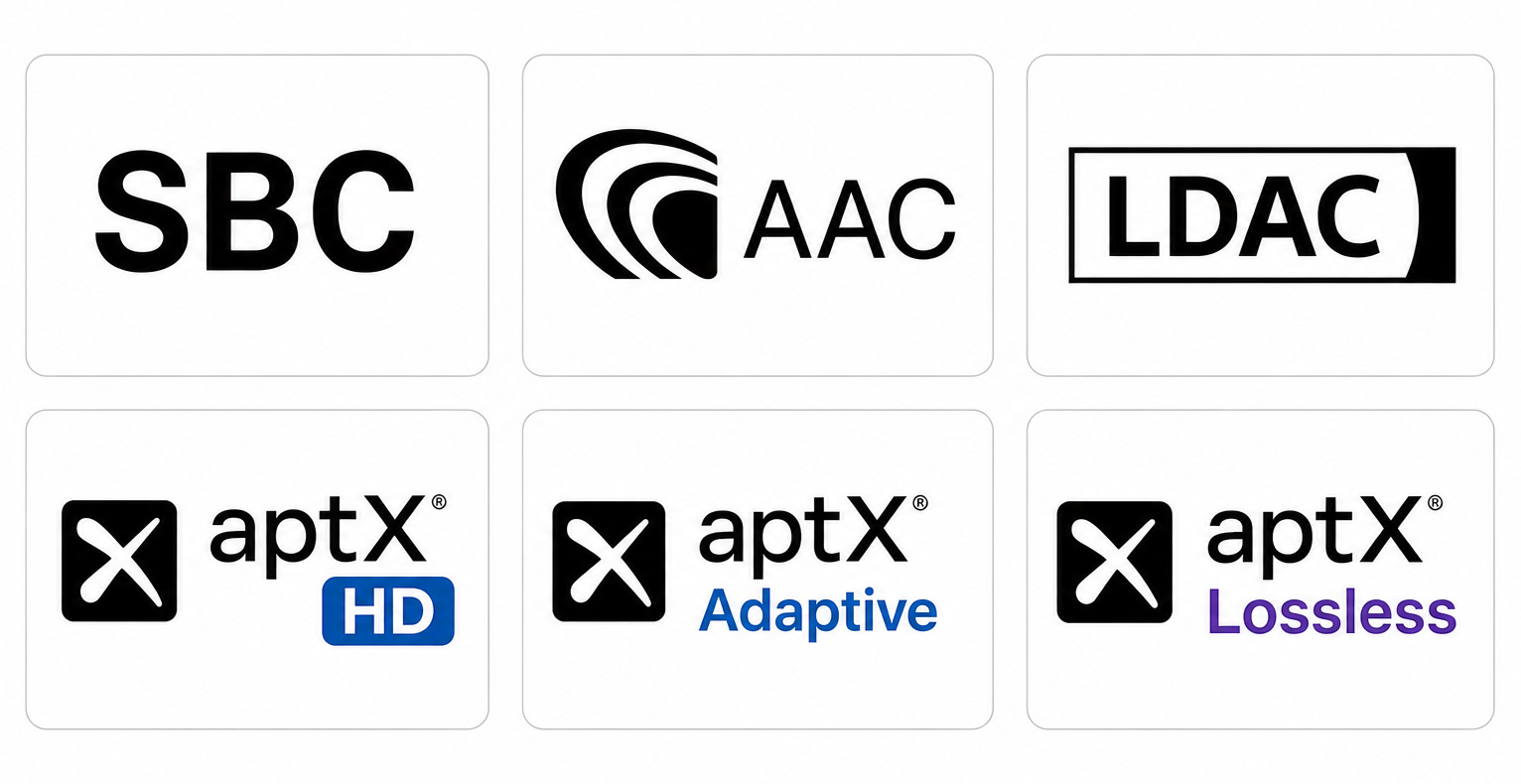
“The SIG has been explicit that HDT is the plumbing and that high-resolution audio and lossless audio are separate features still being standardised on top of it,” wrote John Darko. He’s right, and that raises a number of questions, especially when it comes to audio codecs.
Under Bluetooth Classic, the SBC codec is required for all audio products. Products that incorporate the newer Bluetooth LE Audio standard must also support the LC3 codec. Because Bluetooth Core 7.0 (with or without HDT) will be backward compatible with Classic and LE Audio, SBC and LC3 will remain, but neither of these codecs works with lossless or hi-res audio — they both use lossy compression.
What’s missing at the moment is the Bluetooth SIG’s declaration of a new standard codec that can handle lossless and hi-res. My money is on LC3plus, an extension of the LC3 codec that can scale all the way up to 24-bit/96 kHz. We may get the official announcement as soon as CES 2027.
The big caveat is that even if the SIG declares a new standard codec for HDT audio, manufacturers aren’t required to use it, and things could get very confusing.
For instance, Apple could adopt HDT to take advantage of the extra throughput, without adopting the new standard codec.
This would let iPhones continue to work with all Bluetooth headphones and earbuds at the current SBC/AAC lossy audio quality, but it would also restrict the highest level of native audio support to Apple’s own family of AirPods devices (and probably a few Beats products too).
Samsung has already created such an ecosystem lock-in. If you own a Samsung phone that supports the company’s Samsung Seamless Codec (SSC) and pair it with SSC-compatible Galaxy earbuds, you’ll get higher-quality audio than you would with someone else’s earbuds or headphones.
Qualcomm does the same thing with its Snapdragon Sound platform: If you want to use the aptX Lossless codec (currently one of the only viable solutions for lossless over Bluetooth), both your phone and headphones need to use Qualcomm’s chips.
The timing is intriguing
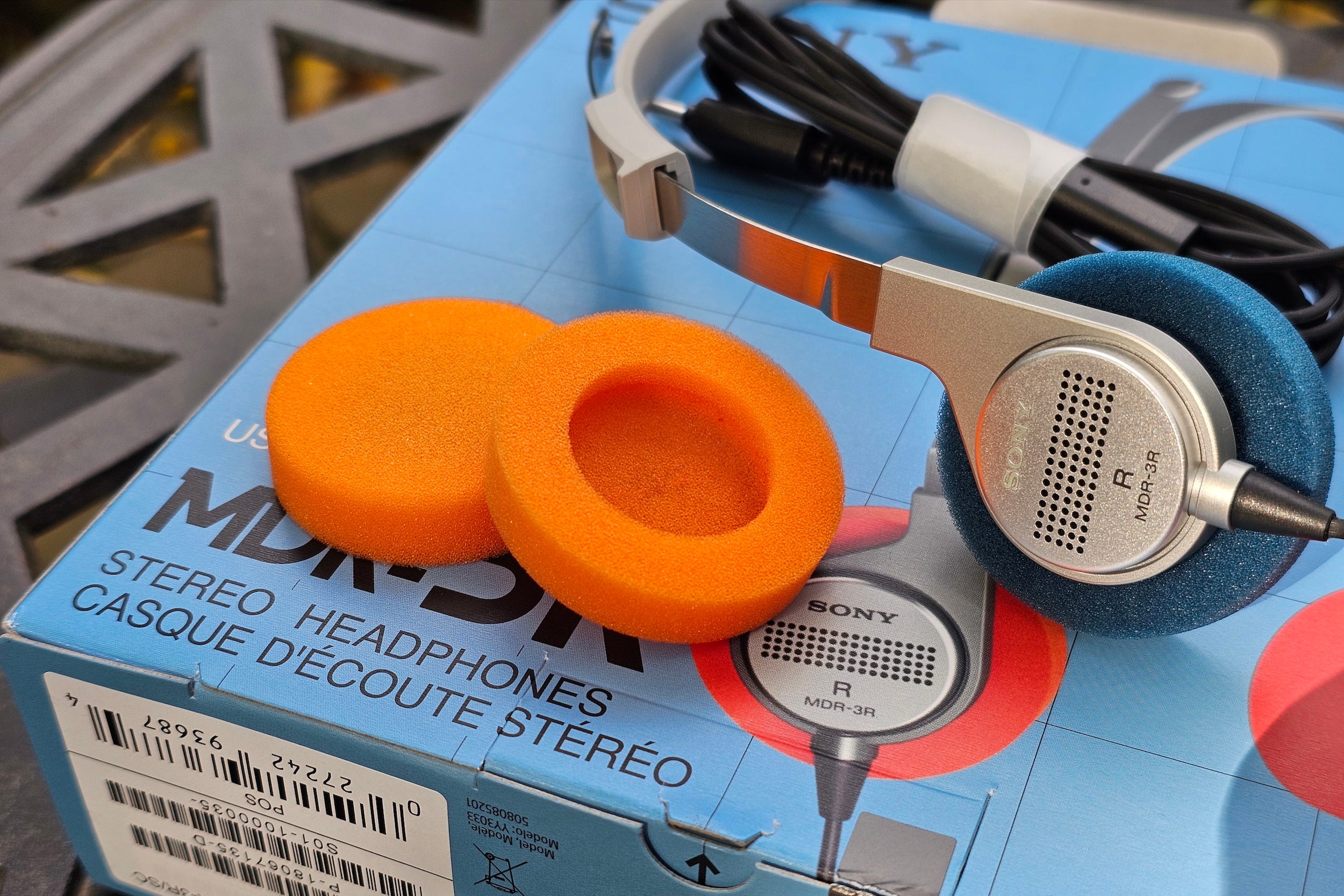
Ironically, Bluetooth’s long-awaited audio upgrade comes at a time when interest in wired headphones and earbuds appears to be on the rise. I’m still not clear on whether it’s a prolonged wave of nostalgia, a fleeting fashion trend, or a genuine desire to ditch digital devices, but non-audiophiles are continuing to embrace wired audio at a surprising rate.
According to Circana, sales of wired headphones jumped 20% in the early weeks of 2026, following a 10% increase in the last half of 2025. Google Search interest for the term “wired earpods” (a reference to the iconic white earbuds that Apple used to include with every iPod and iPhone model) appears to have peaked in May 2026, at a level 450% higher than at any time in the previous five years.
Within hours of my coverage of Sony’s reimagined retro wired Walkman headphones, the MDR-3R, they sold out on Amazon. When I shared that article on LinkedIn, people had plenty to say about the headphones, and some of the comments were quite telling: “whilst I doubt that their fidelity will astound me like the Walkman experience did the first time around, I don’t care... A sonorous, transparent and pristine sound is not nostalgic audio!” said one person. “I can’t believe how great they sound and how much simpler life is when you don’t have to think about charging & connectivity,” said another.
This could lead to a surprising reversal for the wireless audio industry. As average listeners continue to opt out of wireless, citing the simplicity of the wired world, HDT’s support for unfettered sound may persuade audiophiles to reconsider their anti-wireless stance.
This part about the (re-)rise of wired buds and cans is fascinating. I can’t help but suspect there’s something deeply complex going on there. It makes me wonder, for example, what problem were wireless buds supposed to be solving (I’m constantly looking for rich examples of technological determinism around me, it’s an occupational hazard). Were wireless buds supposed to improve mobility for the wearer? But they don’t, not really. As the retro Apple ads would show, you can easily dance with them. Reduce tangle annoyance? But that’s more than negated by their supremely annoying habit of slipping out of your hand and immediately skittering 6 metres across the room or down the subway train. Lose one, you’re hooped. So if wired buds or cans are equally convenient (if not more so, with no charging pressure), and they sound better, why not turn back the technology clock? You can get all that and, as you’ve said, scratch that fun nostalgic kinaesthatic itch all at the same time. Win!