


I’ve known for more than a year that Wiim was going to expand its wireless streaming empire into home theater, but I wasn’t prepared for the Wiim Bar’s particular mix of price and features.
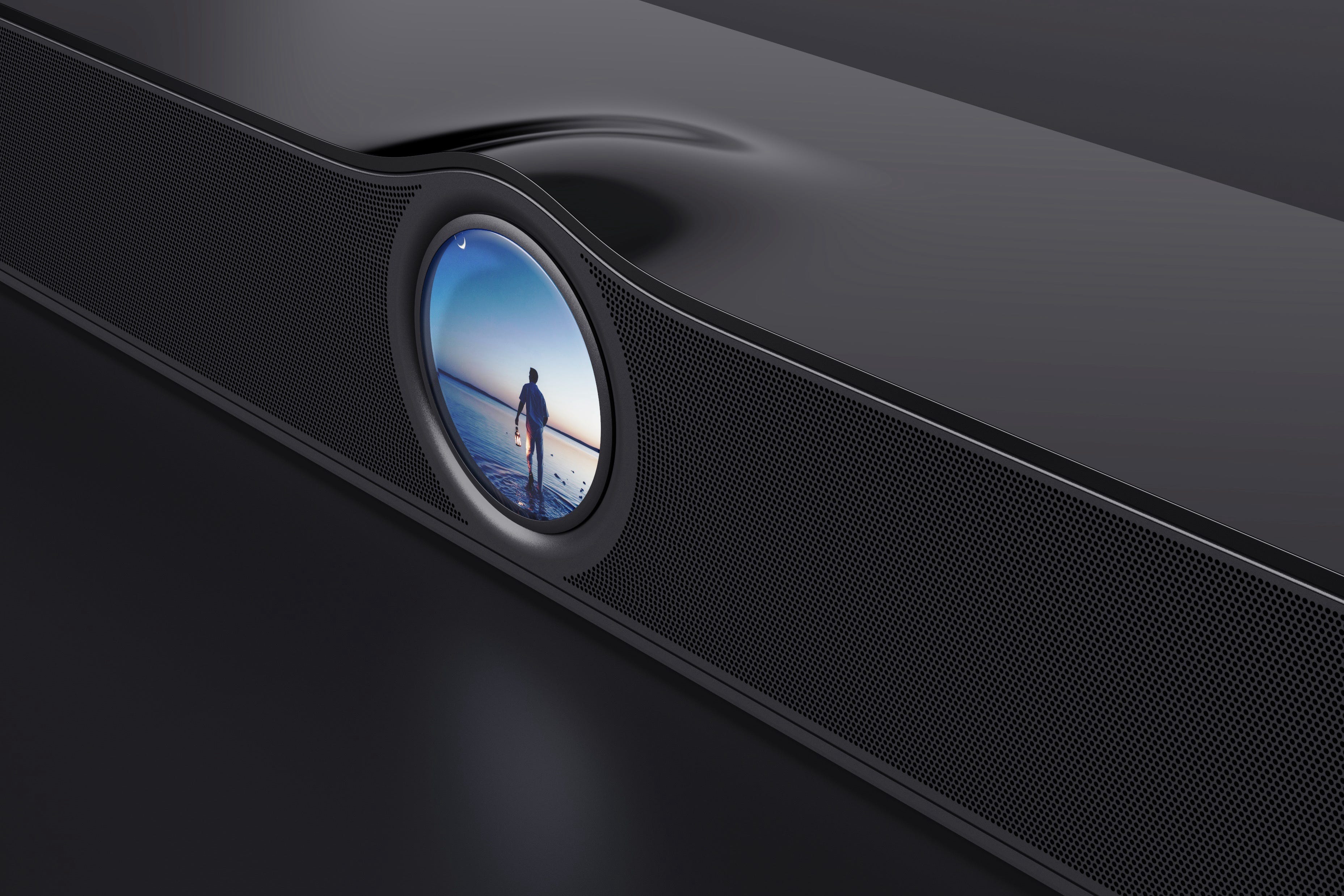
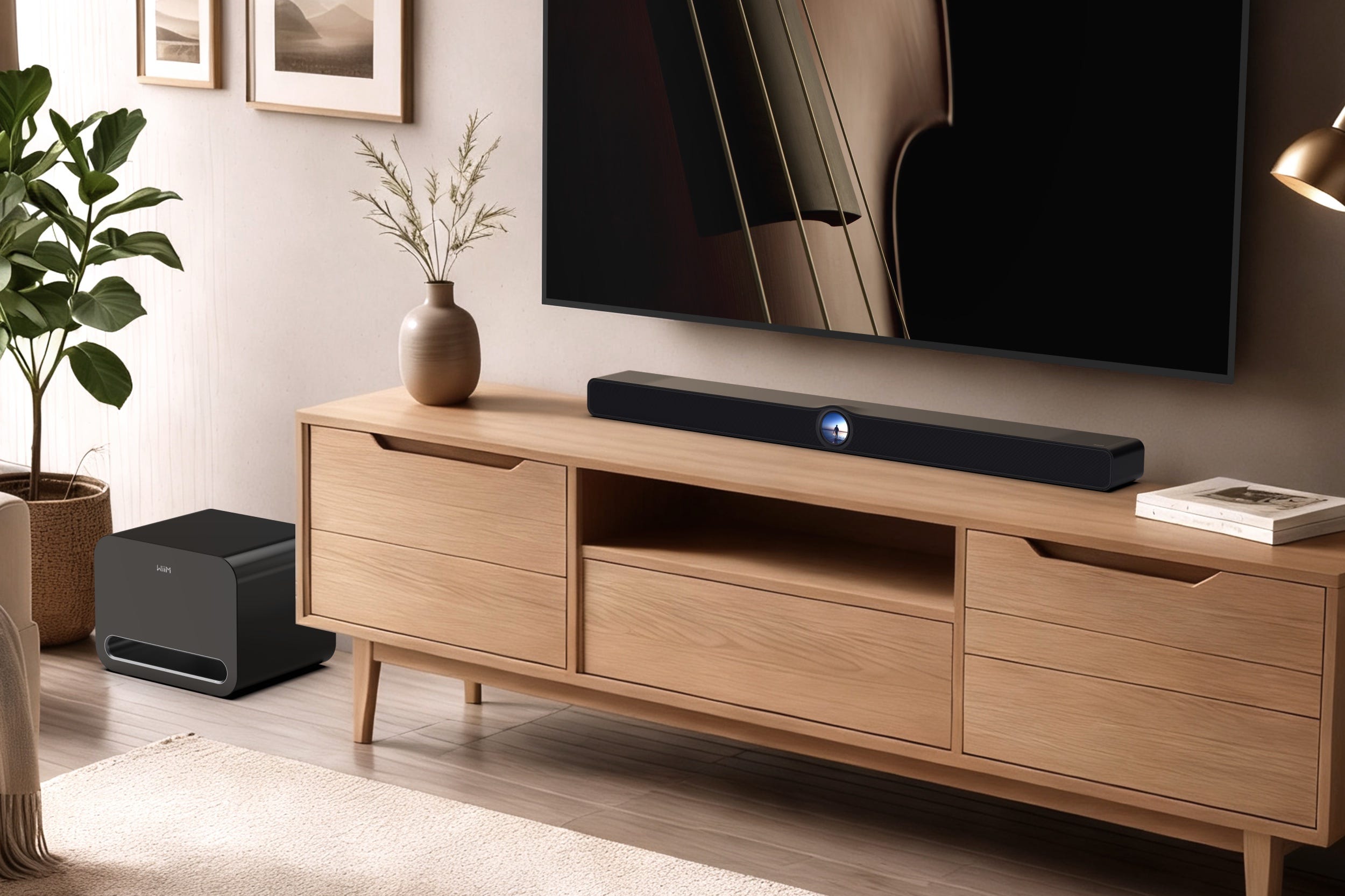
The sleek-looking speaker, which debuts in July for $479 USD, features 3.0.2-channel sound, dedicated up-firing height drivers, compatibility with both Dolby Atmos and DTS:X, and something you’ve probably never seen before on a soundbar: a 2.1-inch circular color touchscreen display.
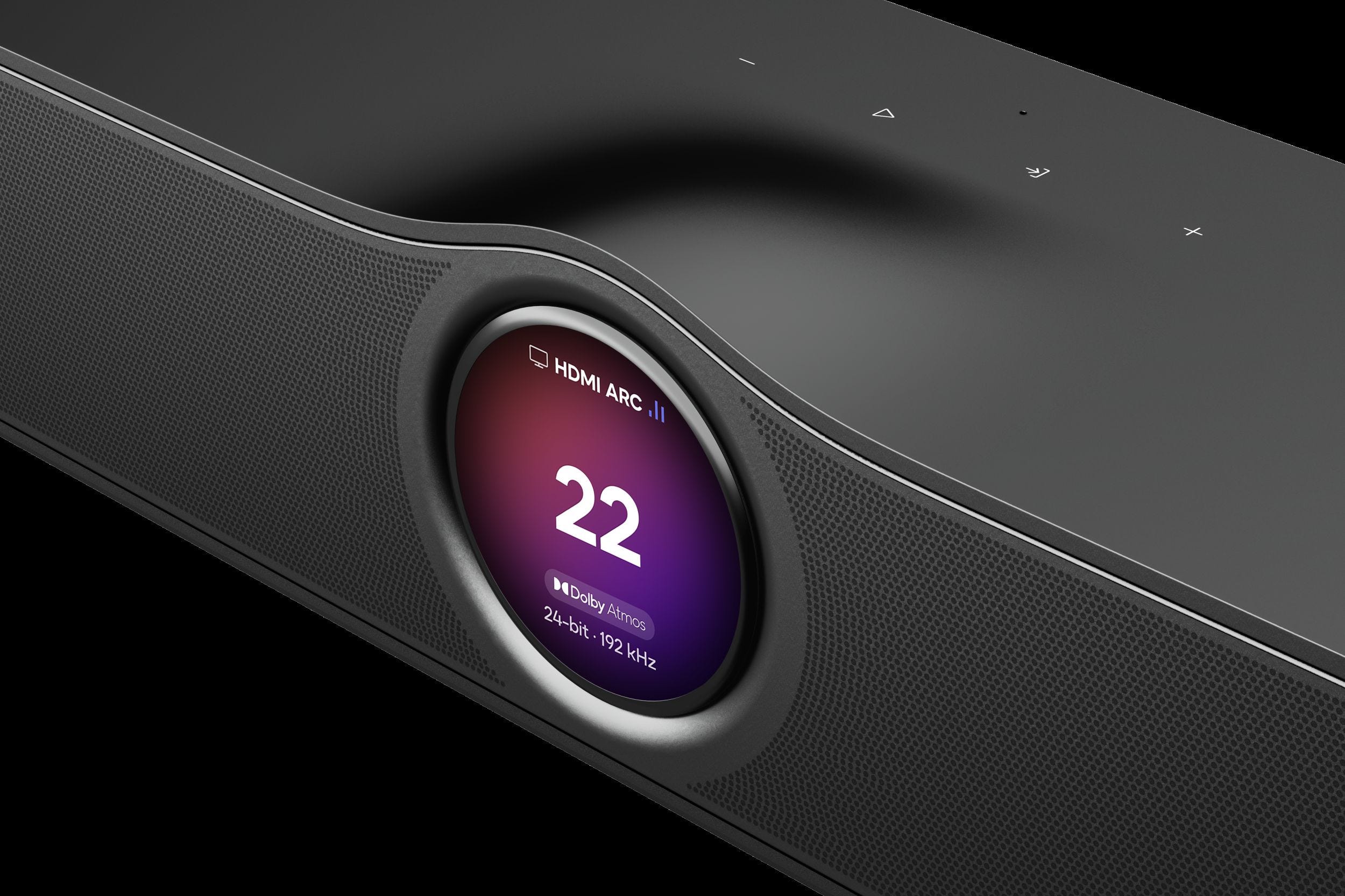
I don’t think soundbars should call attention to themselves, but I’m also not a big fan of the current trend away from any front-facing displays. Scrolling alphanumeric displays have disappeared in favor of tiny LED indicators. Major soundbar brands like Sonos, Sony, and Bose have come to rely on mobile apps to show users things like volume level, playback format, bass and treble levels, or which source is in use.
This makes the Wiim Bar’s central display a welcome alternative, especially for folks who want a visual confirmation of what their ears are telling them.
The Wiim Bar is expandable to 3.1.2 with the addition of a Wiim Sub Pro ($449), or you can go full 5.1.2 for $1,386 by combining the Bar, the Sub Pro, and a pair of Wiim Sound Lites ($229 each). Wiim doesn’t offer bundles yet, but I’m told it’s looking at doing so in the future.
Familiar but unique
Under the glossy black plastic shell sits three front mid-woofers, three front tweeters, two top full-range height drivers, and four passive radiators. Like a lot of soundbars these days, Wiim includes automatic room correction tuning, and there’s a dedicated dialogue enhancement mode for help with speech.
Its collection of ports is fairly standard: One HDMI e-ARC, optical, 3.5mm analog, USB-A, and 10/100 Ethernet.
Where things start to get interesting are all of the Wiim-specific add-ons. The USB port will be configurable to support USB Audio-in, USB Audio-out, or USB mass storage. The Bar ships with a voice remote, which can turn the soundbar into an Amazon Alexa smart speaker. Like most Wiim devices, it has two-way Bluetooth, so you can stream to the Bar from your phone, or from the Bar to a set of wireless headphones.
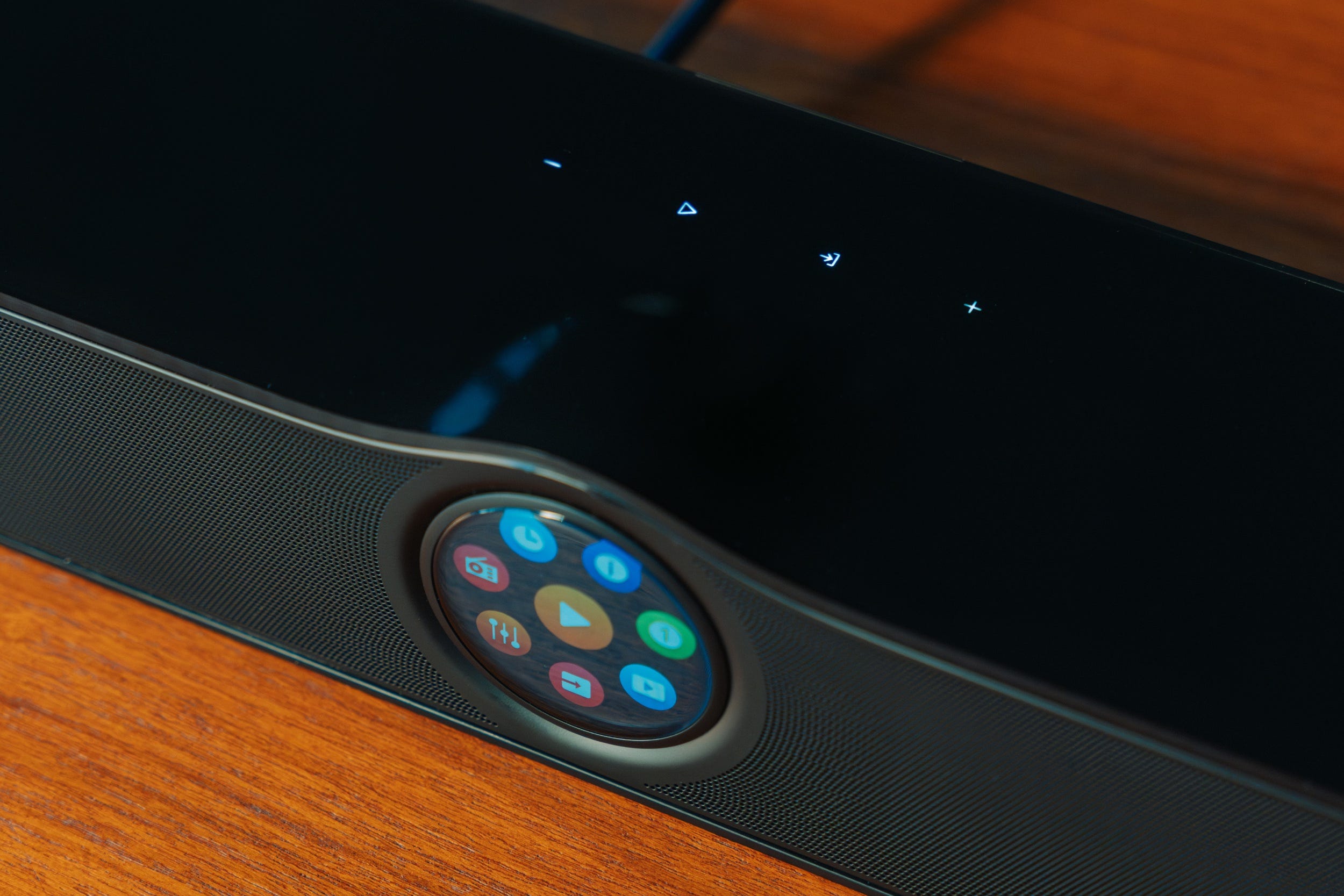
And then there’s the touchscreen. As I said earlier, I really like the idea of a big, visible display on a soundbar. I’m a lot less convinced that it should also be a user interface.
Wiim introduced its first touchscreen on the Wiim Ultra, a great network music player add-on to any existing sound system. The rectangular shape and the fact that streaming gear tends to sit on top of other components like amps or receivers, made it accessible and easy to use.
The Wiim Sound wireless speaker incorporated the company’s first circular touchscreen, with a 1.8-inch diameter. Even though it served the same purpose — displaying vibrant album art when playing music, data readouts like volume and format, and access to playback controls, source switching, EQ, Smart Presets, and personalization — it was a little more awkward to use.
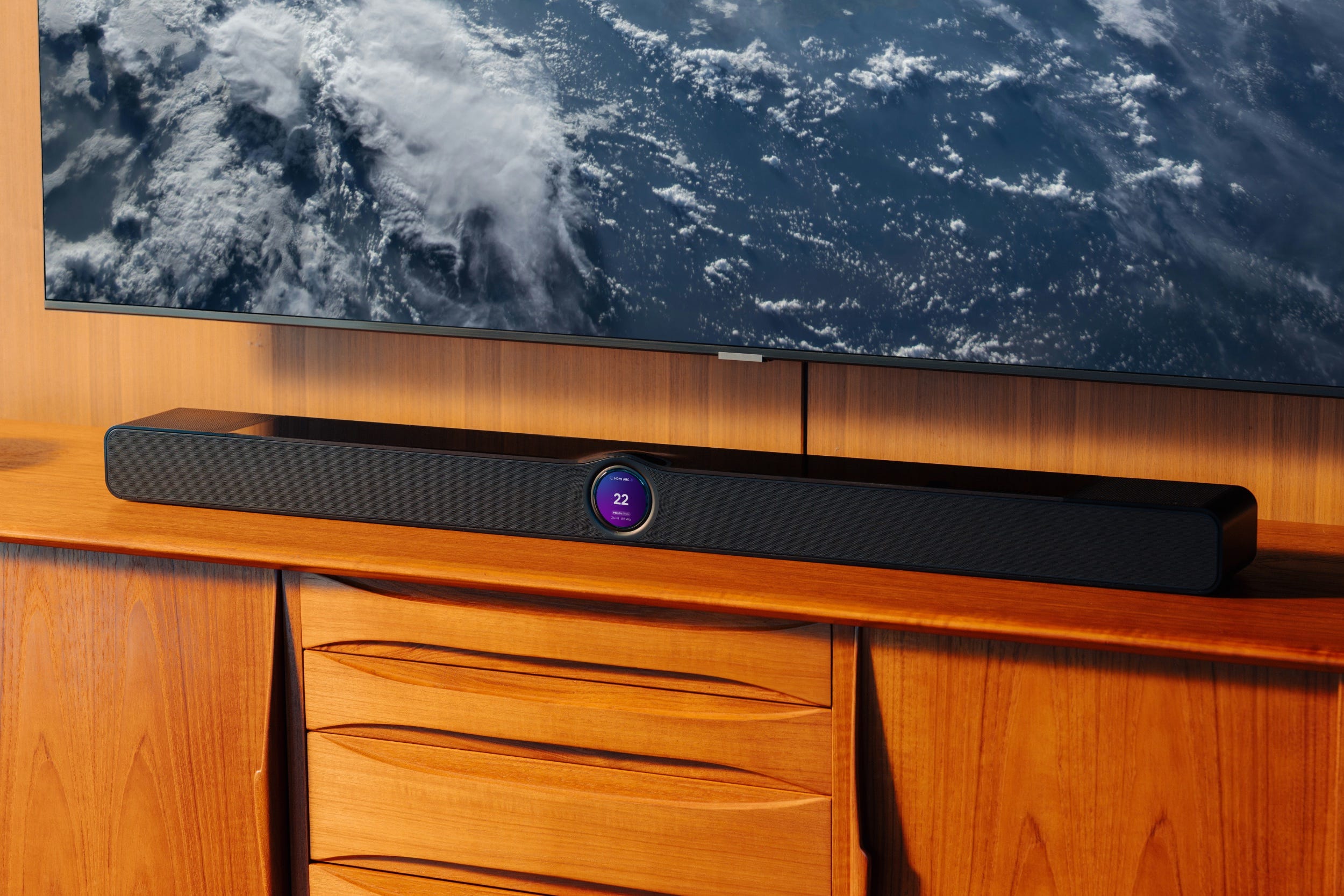
As you can see in the attached press photos from Wiim, the Wiim Bar is likely going to end up on a media console, in front of your TV, making it ergonomically awkward. Unless you’re one of those people who mounts their TV (and presumably their soundbar too) above a fireplace (a terrible idea), you’re going to have to crouch in front of the Bar to comfortably access the touchscreen.
If the speaker is placed near the back of the console, you’ll have no choice but to approach it like you would a mouse, with your palm facing down. But then you’ll have to raise a finger to do the swiping and tapping. I can’t see this being a popular activity.
Thankfully, Wiim seems to get this. In addition to the circular screen, the Bar has a set of top-mounted, proximity-sensing playback controls that light up when they’re within reach.
Sneaking up on Sonos
Ever since debuting its ultra-affordable wireless music streamers, the Wiim Mini and Wiim Pro, the company has received non-stop comparisons to Sonos, and for good reason. The Wiim ecosystem of products, which now includes streamers, streaming amplifiers, wireless speakers, a subwoofer, and now a soundbar, are all controlled via the Wiim Home app.
That app looks and works a lot like the Sonos app — prior to the disastrous redesign of 2024 — a fact that did not escape the attention of Sonos customers who began looking for an alternative.
With the addition of the Wiim Bar, that ecosystem now extends to every room in the house. In some ways, Wiim has always one-upped Sonos (and Bose, if we’re being inclusive) with its inclusion of hi-res audio up to 24-bit/192kHz, and its advanced equalization options for those who like to geek out while fiddling with frequencies. The Wiim Bar keeps with that tradition, while also pushing it forward with support for Google Cast, Tidal Connect, Spotify Connect, and Qobuz Connect, for direct control from dozens of popular streaming apps, plus DLNA and Roon for local network control.
However, one big omission continues to dog Wiim: No Apple AirPlay.
I remain baffled by this situation. Wiim’s first products, the Mini, Pro, Pro Plus, and Wiim Amp are all compatible with Apple’s wireless audio streaming protocol. Then, without explanation, support for AirPlay simply came to an end. Wiim products launched since the Wiim Amp don’t have it.
I expect to get hands- and ears-on with the Wiim Bar soon, and when I do, I’ll report back with a full set of impressions.
As its first soundbar, the Bar hints at Wiim’s ambitions. It ultimately wants to compete with flagships from Sonos, Bose, and Sony. But instead of jumping in the deep end, Wiim is repeating its music streamer strategy that proved so successful: it’s starting with an entry-level option before ramping up to something bigger and pricier.
Even with four passive radiators, with no built-in subwoofer, it’s unlikely the Wiim Bar will deliver the kind of cinematic low-end rumble needed for a strong sense of immersion. Likewise, without any kind of side-firing drivers, it will be tough for the Bar to produce virtualized surround sound from Dolby Atmos or DTS:X content.
My hunch is that by next year, Wiim will follow up with a step-up model that will almost certainly bear a “Pro” or “Ultra” as part of its name. It will be more expensive, and will include a full 5.1.2 or 5.1.4 system to be more of a match for the excellent Sonos Arc Ultra and Bose’s newly released Lifestyle Ultra Soundbar.
If you enjoyed this Loudmouth article, please consider subscribing. It supports my work and ensures you won’t miss out on future coverage.