


Every music streaming platform is grappling with AI.
Some, like Bandcamp, have banned it outright. Others are using a combination of technology and fierce penalties to keep 100% AI generated music from taking over their platforms, while still paying royalties to AI creators.
Tidal has taken a third path, and as far as I can tell, no other major service has gone this far: As long as the AI content doesn’t violate its rules, it can live alongside Tidal’s human-created catalog. But there’s no “monetization” mechanism. Tidal won’t pay any royalties to those who create and distribute AI generated content.
It’s a policy that exceeds even Deezer’s own AI rules, which until now were considered some of the strictest. Deezer tags fully AI-generated tracks, pulls them from its recommendations and playlists, and strips out the fraudulent streams that make up the bulk of AI listening. But on legitimate streams (when a real person deliberately chooses an AI track), Deezer still pays royalties.
Tidal’s message appears to be, we respect that AI is a legitimate way to create music, but we don’t think creators should be paid for doing so.
Don’t break the rules
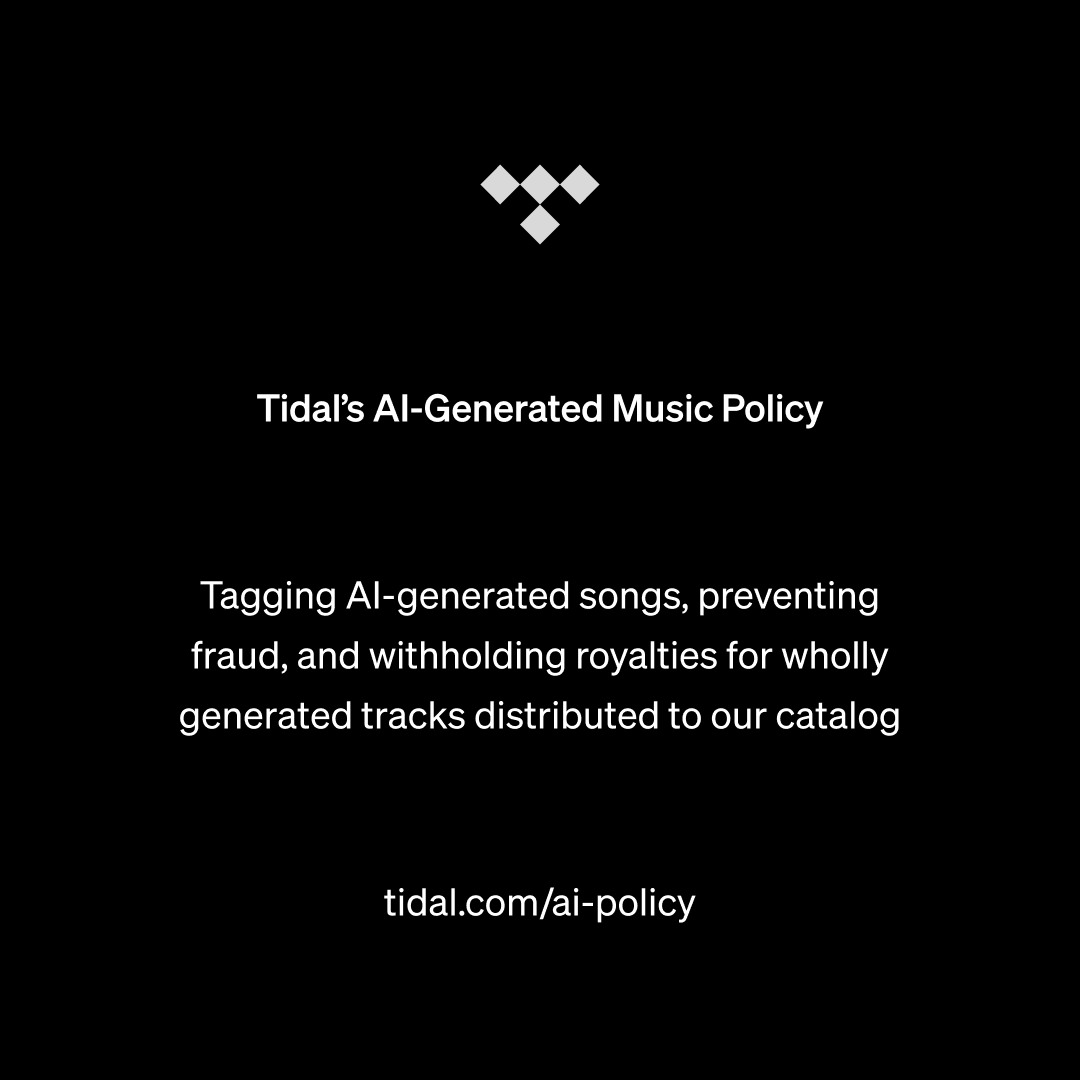
Tidal, like the other major streaming platforms, has drawn a line in the sand regarding what kind of AI music is acceptable. It starts with a definition:
Tidal defines AI-generated music as music that is “wholly or substantially generated by generative artificial intelligence”.
So if you’ve used AI to generate a few effects or samples for use in an otherwise entirely human-created track, you’re not considered an AI music creator. You can breathe a sigh of relief.
Tidal then describes what’s off-limits …
“We will not tolerate AI-generated music that exploits an individual’s or group’s music, name or likeness, deceives listeners, or diminishes the quality of our service. Effective mid-July, AI-generated music associated with fraudulent activity will be blocked or removed from our platform. Fraudulent activity includes (but is not necessarily limited to) AI-generated music that aims to deceive listeners, interfere with authentic artists and their audience, or involves high-volume uploads or unusual streaming activity.”
… and explains its decision to deny revenue:
“Starting today, AI-generated music will not be monetizable. [...] Tidal’s priority is ensuring royalties go to original works directly produced, written, and performed by people. We will therefore not knowingly attribute royalties to music we identify as wholly AI-generated.”
Keeping AI out of the pool
It’s worth pausing here to understand how subscription services like Tidal pay artists, because it explains why it chose to draw the line where it did.
Most services, including Tidal, use a pro-rata / streamshare royalty model. This creates a single pool of money, which in Tidal’s case is exclusively funded through listener subscriptions, and paid out to artists based on their overall share of platform streams.
The danger in this system is the ease with which AI music can flood the platform. Since algorithms are often the way recommendations are processed, an unlabeled or inaccurately labeled AI song could end up with a ton of streams, thereby displacing songs by human musicians.
Since the pool is finite, human artists struggling to build an audience could find their small monthly royalties reduced to nothing, and even major stars like Drake and Taylor Swift might see a dip in payouts.
A new scarlet letter
The problem is, it’s getting harder to automatically identify AI music. As part of its effort to prevent AI music from passing itself off as human-created, Tidal is going to start a new tagging and display regimen that will eventually put the onus on the music distribution companies that supply Tidal (and others):
“Tidal will identify and tag AI-generated music. Listeners should know whether content they are listening to is AI-generated. To start, listeners will see an icon next to content we identify as 100% AI-generated. This feature will start appearing for listeners in mid-July. As AI-detection methods become more reliable, we will expand this tag to content that is substantially AI-generated. But the responsibility to identify and tag AI-generated content should not rest with Tidal alone. We expect — and will begin to enforce — that content distributors identify AI-generated content before it reaches our platform.”
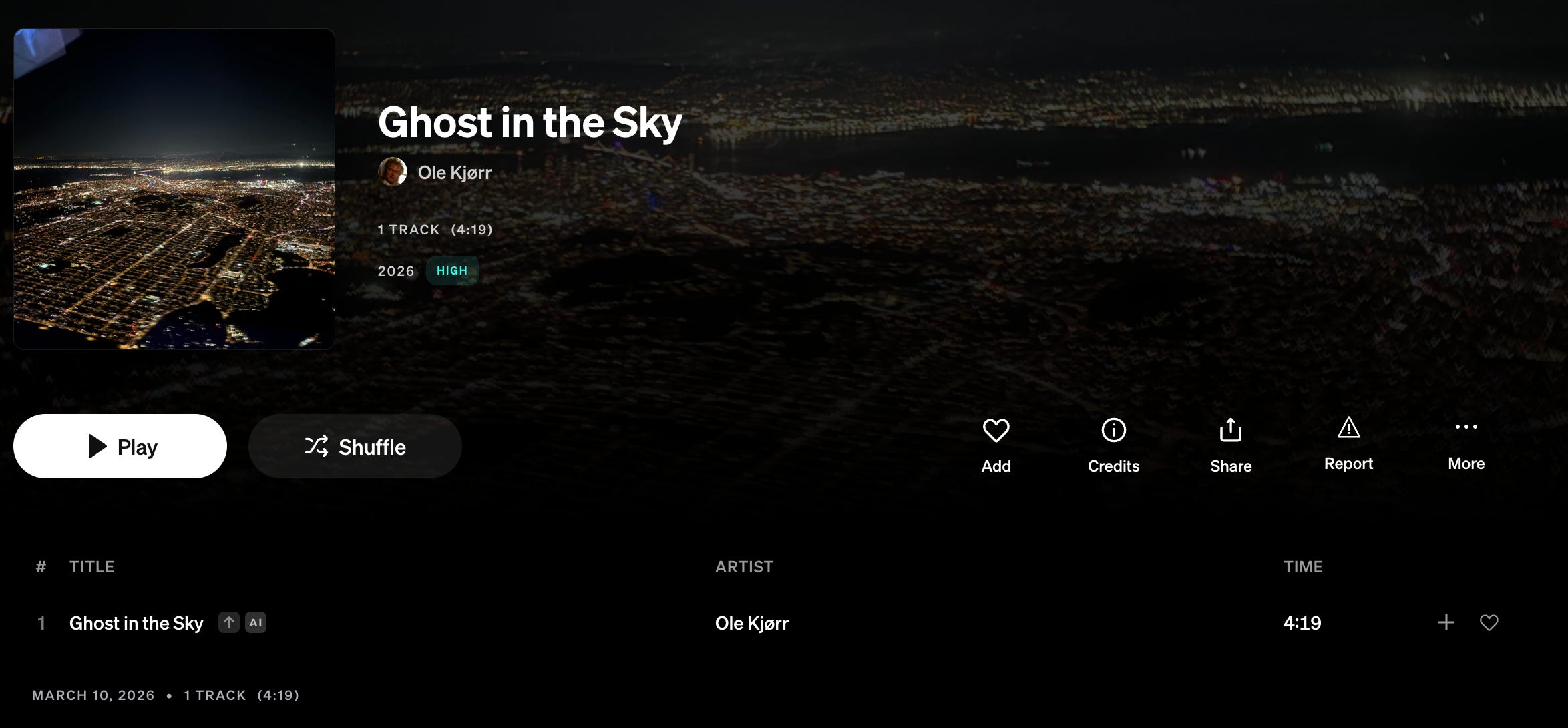
In practice, the tagging is quite subtle. My Tidal contact kindly provided the screenshot below, as a demo of how AI tagging will appear on the platform.
The small “AI” block will appear next to all identified song titles, and on an album that has at least one identified AI music track.
Curiously, Tidal won’t apply the label to the creators themselves, regardless of how much of their catalog has been flagged as AI-generated.
Finally, Tidal makes it clear that AI music creators won’t be able to use the company’s Tidal Upload feature (which lets small artists share their music on Tidal and even do direct-to-fans sales in the U.S.) to do an end-run around these rules.
“If we have reason to believe that Upload content is wholly AI-generated, it will be tagged as such, and blocked from direct-to-fan monetization.”
An artistic contradiction?
Both Tidal’s tagging and no-revenue policies regarding AI music are consistent with its own description as “an artist-first, fan-centered music streaming platform”.
Where things get a little uncomfortable is Tidal’s additional marketing language around its support of creators.
On Tidal’s About page, the third pillar of its platform says:
“Commitment to the Art — We empower artists to create and deliver their art exactly as they intended.”
In its AI policy, it points out that sometimes that “art” will be the byproduct of AI:
“Artificial intelligence and machine learning are not new to music creation, they have just become more commonplace and advanced [...] Artists should have the freedom to create with AI tools, and listeners should have the autonomy to choose the type of content they consume.”
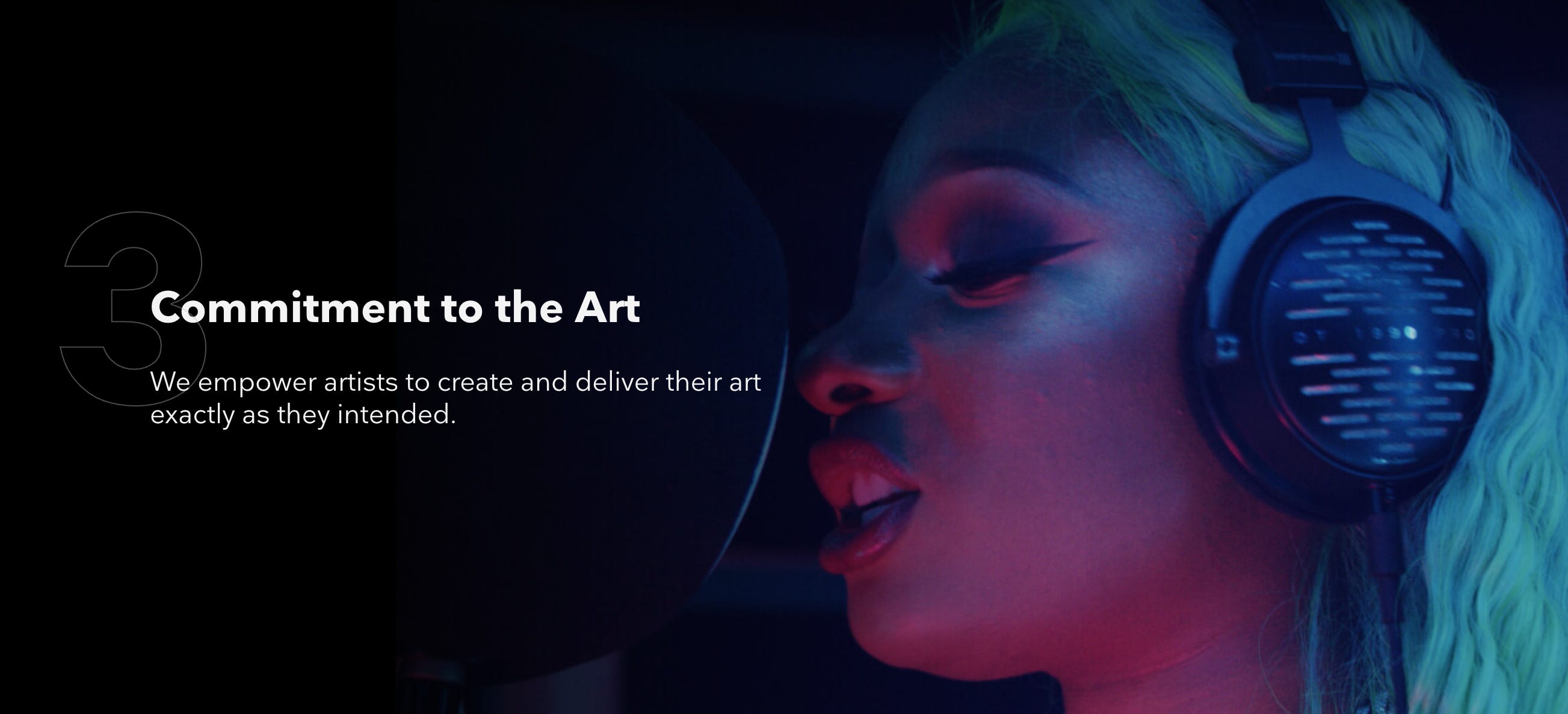
And yet, when it comes to AI-generated music (as Tidal defines it), its financial commitment to the art has strict limits.
Curiously, the company chose to leave the door open, just a crack, to the possibility of future monetization:
“We acknowledge the ongoing debate regarding whether certain AI-generated music (e.g. AI-generated music developed from fairly and properly licensed models) should be entitled to earn royalties. This debate will continue as the technology advances and rightsholders and AI music platforms develop licensing models.”
No matter how sophisticated AI music gets, I will continue to seek out human musicians. The music is, obviously, the most important thing, but it’s not the only thing. It’s the humans behind the music that I find so compelling.
Would Phil Collins’ In The Air Tonight hit with such raw emotion if I knew it had been prompted into existence? Would I enjoy Lenny Kravitz’s Cab Driver if it had been written by an AI, knowing that no robot has ever faced blatant discrimination while trying to hail a taxi in New York City? And will an AI song ever embed itself deeper in my soul through a live performance the way Won’t Get Fooled Again did when I finally saw The Who in Toronto in 2022?
I don’t think so.
Still, I wouldn’t go so far as to say that AI music has no value, or that those who create it shouldn’t be compensated in any way if the tracks they produce find an audience.
What’s your take on AI music? Let me know in the comments.
If you enjoyed this Loudmouth article, please consider subscribing. It supports my work and ensures you won’t miss out on future coverage.
Excellent post.