


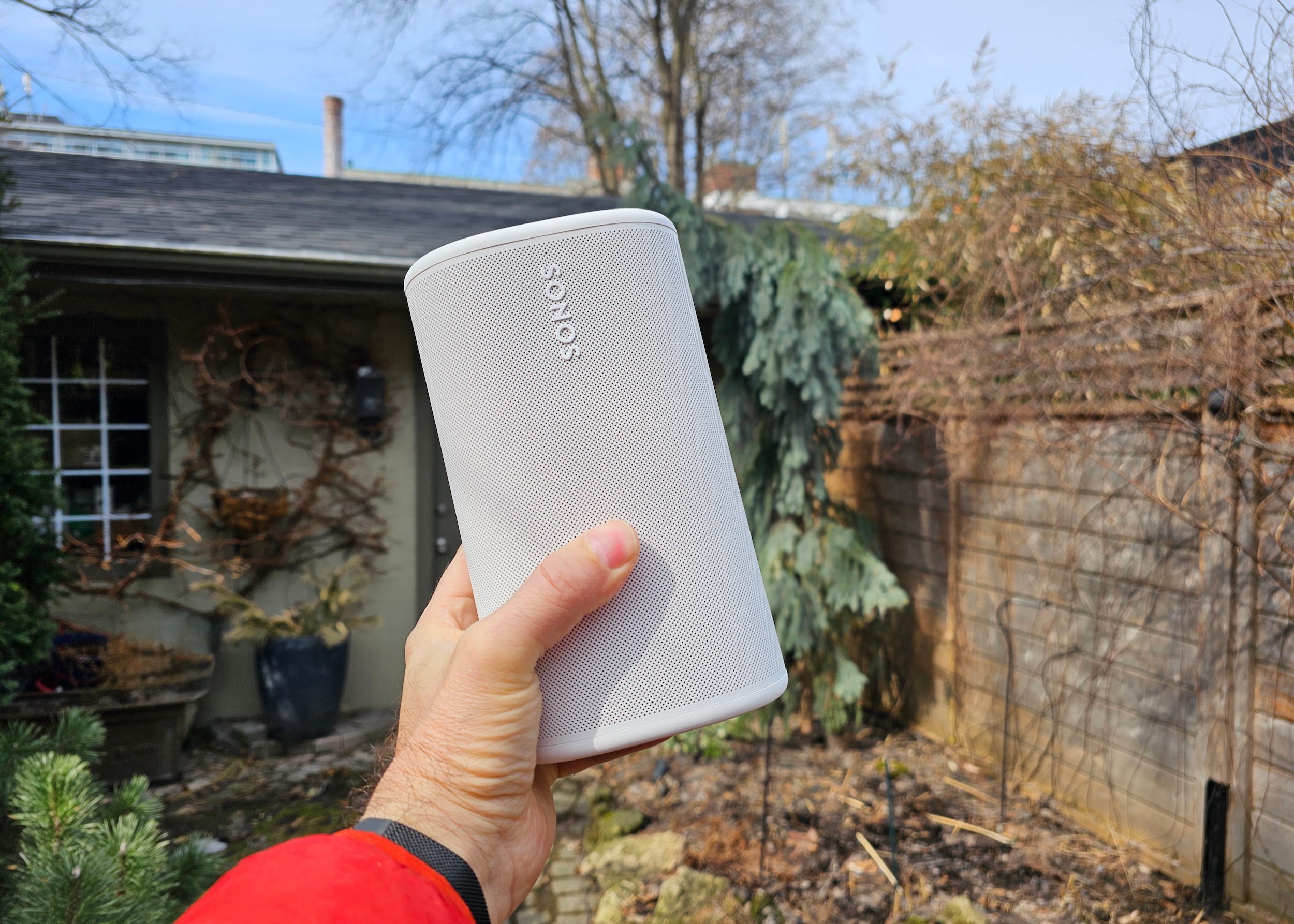
Searching for a portable Bluetooth speaker will turn up hundreds of options in every shape, size, and color. And I’ve been reviewing them for the better part of a decade — dozens have crossed my desk by now. Some, as you’d rightly suspect, are garbage, but there are also plenty of great products with prices starting from as little as $50.
If you don’t have to spend a fortune for decent sound, why would anyone spend $299 on Sonos’ new Play? It’s the Maglite Flashlight of Bluetooth speakers: powerful, versatile, and built to keep on ticking long after its peers are in the landfill.
Disclosure: If you buy through links on this page, I may earn a small commission at no extra cost to you. As an Amazon Associate, I earn from qualifying purchases.
Sonos Play (2026)
Product Score: 4/5

Pros:
Great sound for its size
Tons of connection choices
It’s got a big, user-replaceable battery
Cons:
Not as rugged as other portables
Needs a powerful charger (not included)
Pricey, if all you need is sound to go
At home, on-the-go, or anything in between
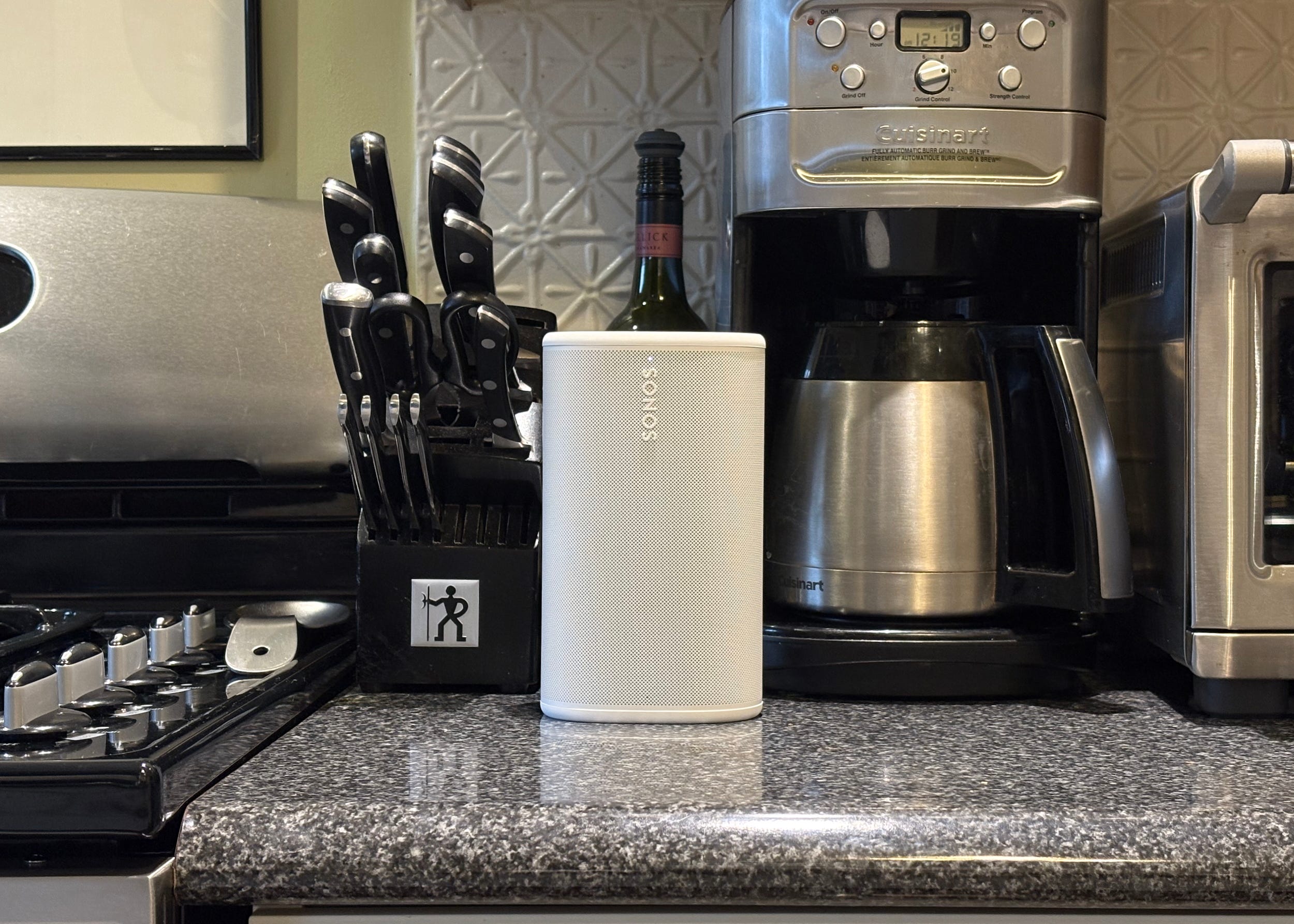
Sonos is the company that put wireless audio on the map. Since 2005, it has been growing an ecosystem of top-notch speakers, soundbars, and subwoofers that all work together seamlessly and can be controlled from anywhere using the Sonos app on your smartphone.
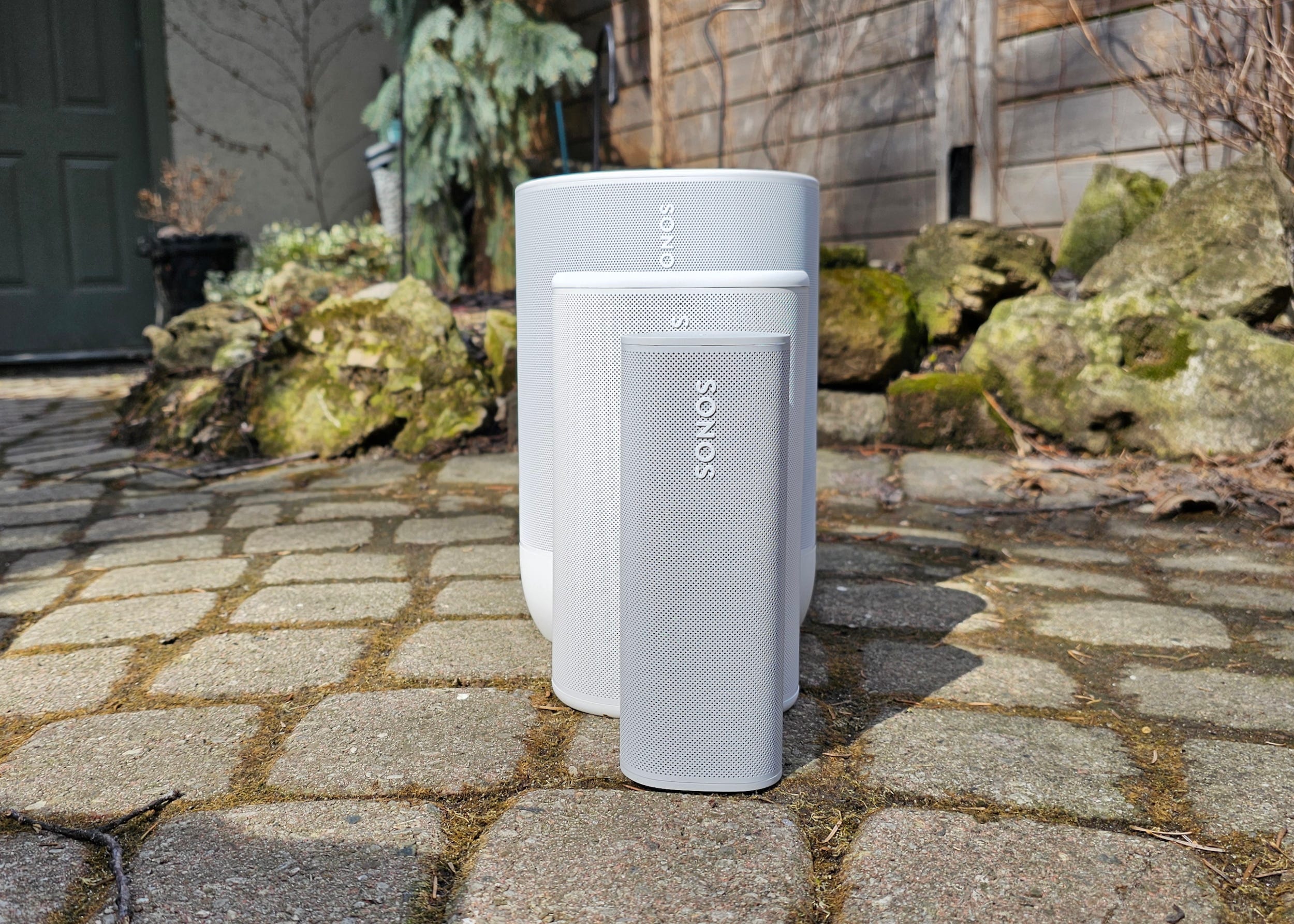
The Play is Sonos’ third portable, and it sits right in the middle of its lineup. It’s half the weight of the Move 2, a powerful speaker that’s luggable from kitchen to patio, and not much farther. Despite its smaller size, it can run for 24 hours, same as its big brother.
Meanwhile, it boasts much better sound than the ultra-portable Roam 2, a less powerful unit that handily fits in a backpack. Like both its siblings, (and all the best portables on the market) the Play is waterproof, dustproof, and rugged enough to withstand the occasional bump or drop.
These features make it a very capable Bluetooth portable speaker, but they don’t let the Play stand out. The Play is all about the extras.
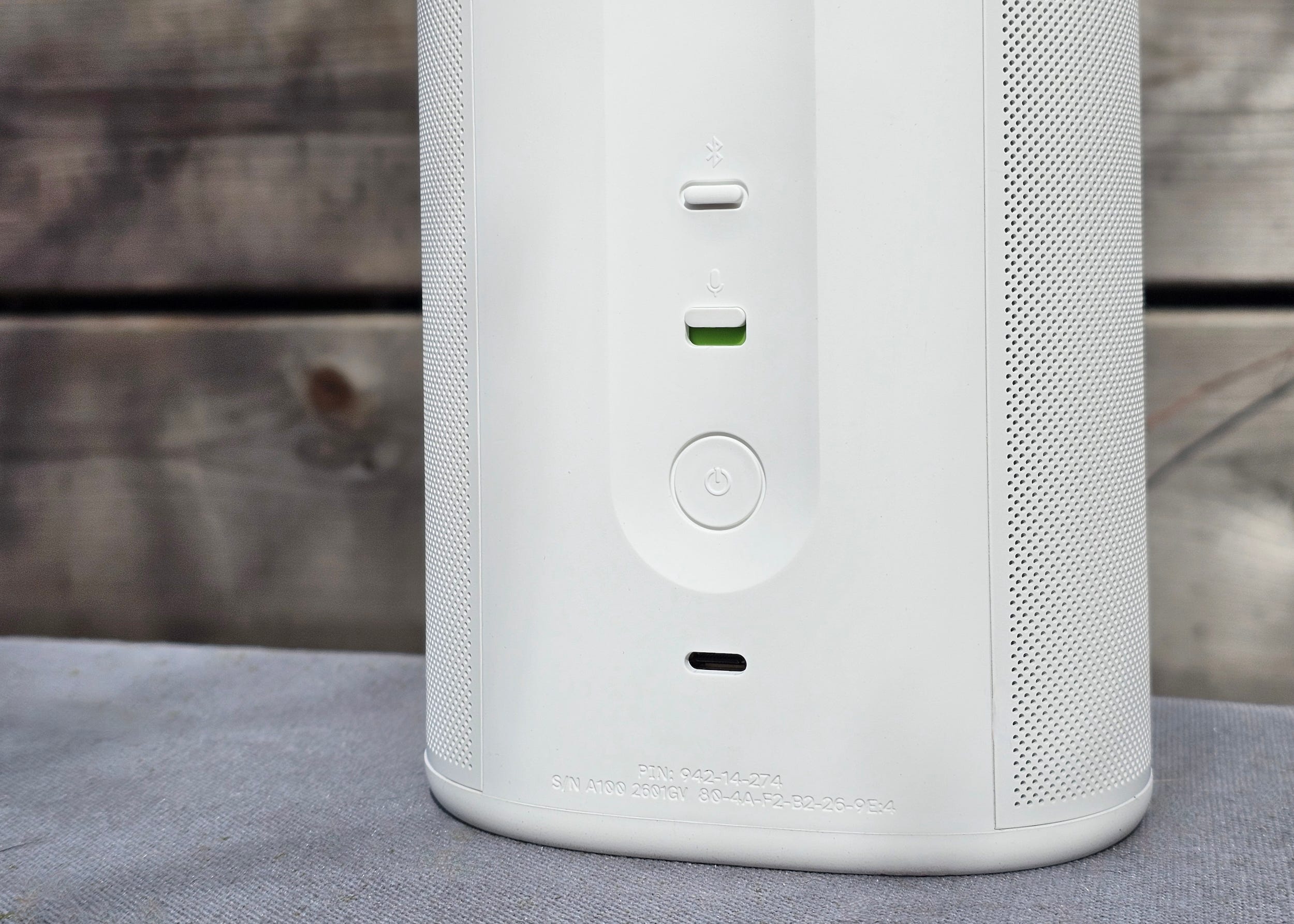
Wi-Fi connectivity means that when you’re at home, you can stream straight to the Play from apps like Spotify, Tidal, Pandora, and Amazon Music — and the audio won’t stutter or drop the moment you wander too far from your phone. It acts as an Apple AirPlay speaker, and gives you hands-free access to Amazon Alexa. Anyone on your Wi-Fi with the Sonos app can take control — no need to find the phone that started the playlist — and texts, phone calls, and other system sounds won’t interrupt your tunes. Music even sounds better on Wi-Fi, because it has more bandwidth than Bluetooth, and if you own two Plays, they can play together as a stereo pair.
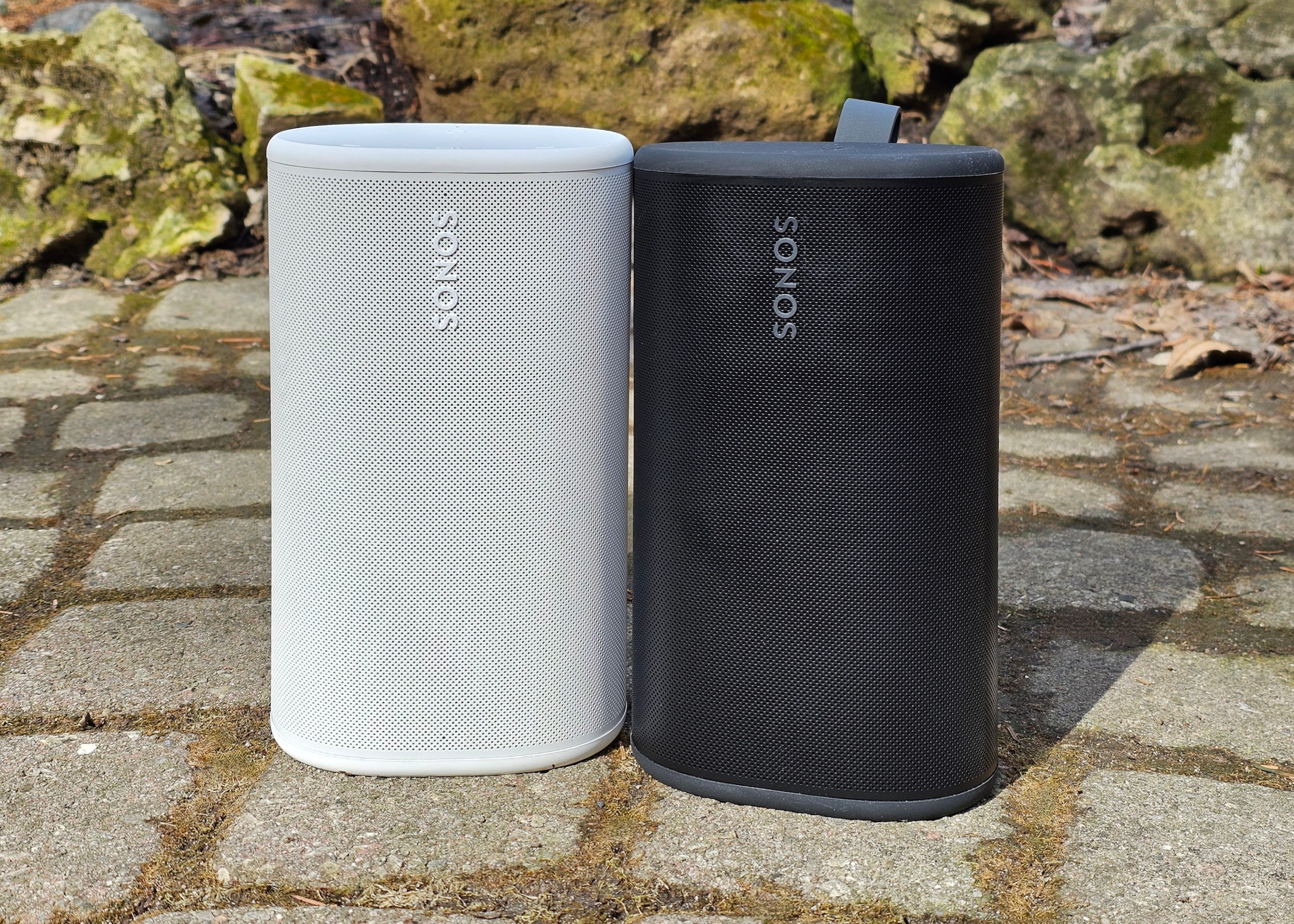
Over Bluetooth, you can link as many as four Play or Move 2 speakers to play in lockstep — so a hang that starts with two friends can scale into a backyard blowout without you ever scrambling for more sound. A USB-C cradle tops it up at home, and for $19 Sonos sells a line-in adapter that wires the Play to a turntable — or any other analog source — an increasingly hard-to-find feature on portable Bluetooth speakers.
You may have heard Sonos customers bemoaning the launch of a major Sonos app update, which was so disastrous the CEO resigned. They weren’t exaggerating: the botched 2024 update rendered many systems unusable. Thankfully, things are now (mostly) back to normal and the Sonos app is still a Swiss Army knife for sound, giving you access to just about every streaming service on the planet in one place. Its universal search and playlist feature makes finding, playing, and favoriting tunes, artists, and albums a breeze. Plus the Play seamlessly integrates with any other Sonos products you own.
Sonos Play: Its best features
Every time I fire up a new Sonos speaker for the first time, I have a moment where I do a double-take. Whether I cued up delicate acoustic recordings, bass-heavy hip-hop, or vintage rock, the Play’s performance outstrips its size. To paraphrase John Mayer, it’s bigger than its body gives it credit for.
Like every Sonos speaker to come before it, it offers truly satisfying sound out of the box. But I’d encourage you to try the equalizer setting in the Sonos app, which can boost or lower both bass and treble if either aren’t quite to your liking.
The app also unlocks a trick I haven’t seen anyone else pull off: Auto Trueplay Tuning. A speaker’s position in a room — and the room’s acoustics — heavily affect what you hear. This is true for all speakers, but especially for smaller units that get moved around a lot. Auto Trueplay uses the Play’s built-in microphone to measure its environment and automatically adjust its tuning to compensate, every time you move it. The improvement isn’t night and day, but it’s audible (particularly if you move it from an open space to a small enclosure like a bookshelf) and you don’t need to do a thing.
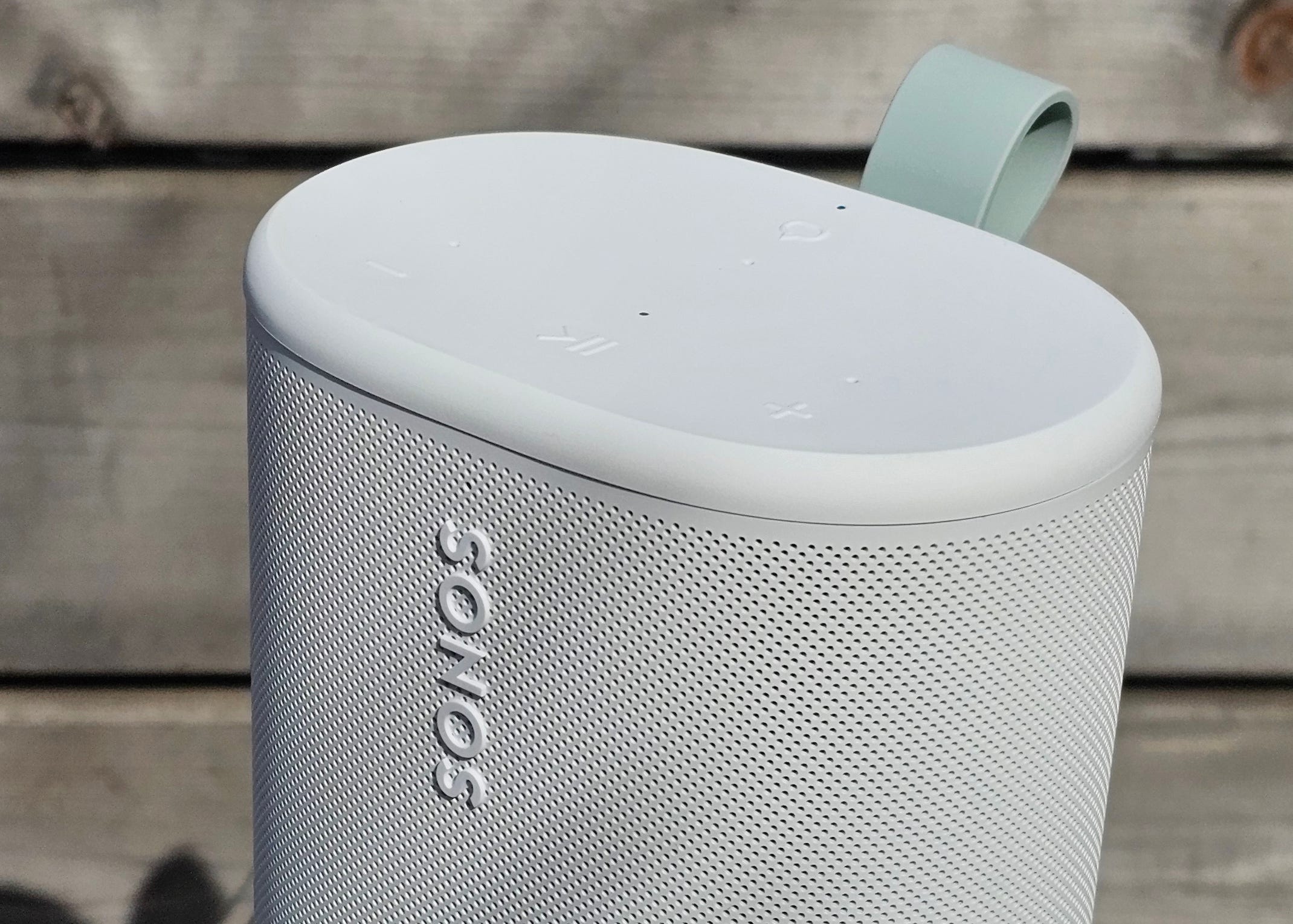
Technically speaking, the Play is a stereo speaker, meaning it has two channels, but you’re not going to hear true left and right stereo separation. Instead, think of it as a mono speaker with a wide soundstage. A pair of Plays, however, gives you nearly unlimited options for creating a perfect stereo sweetspot.
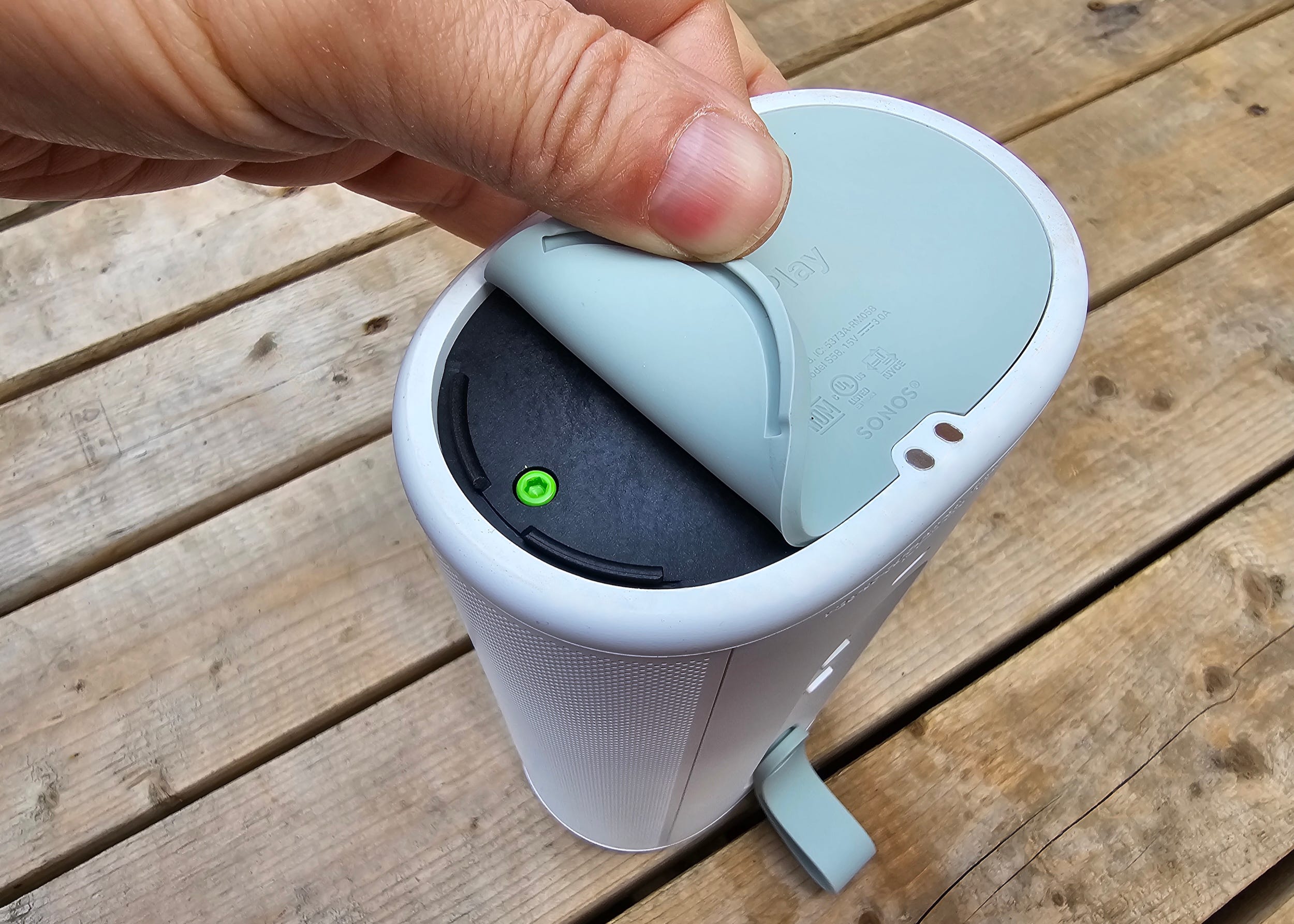
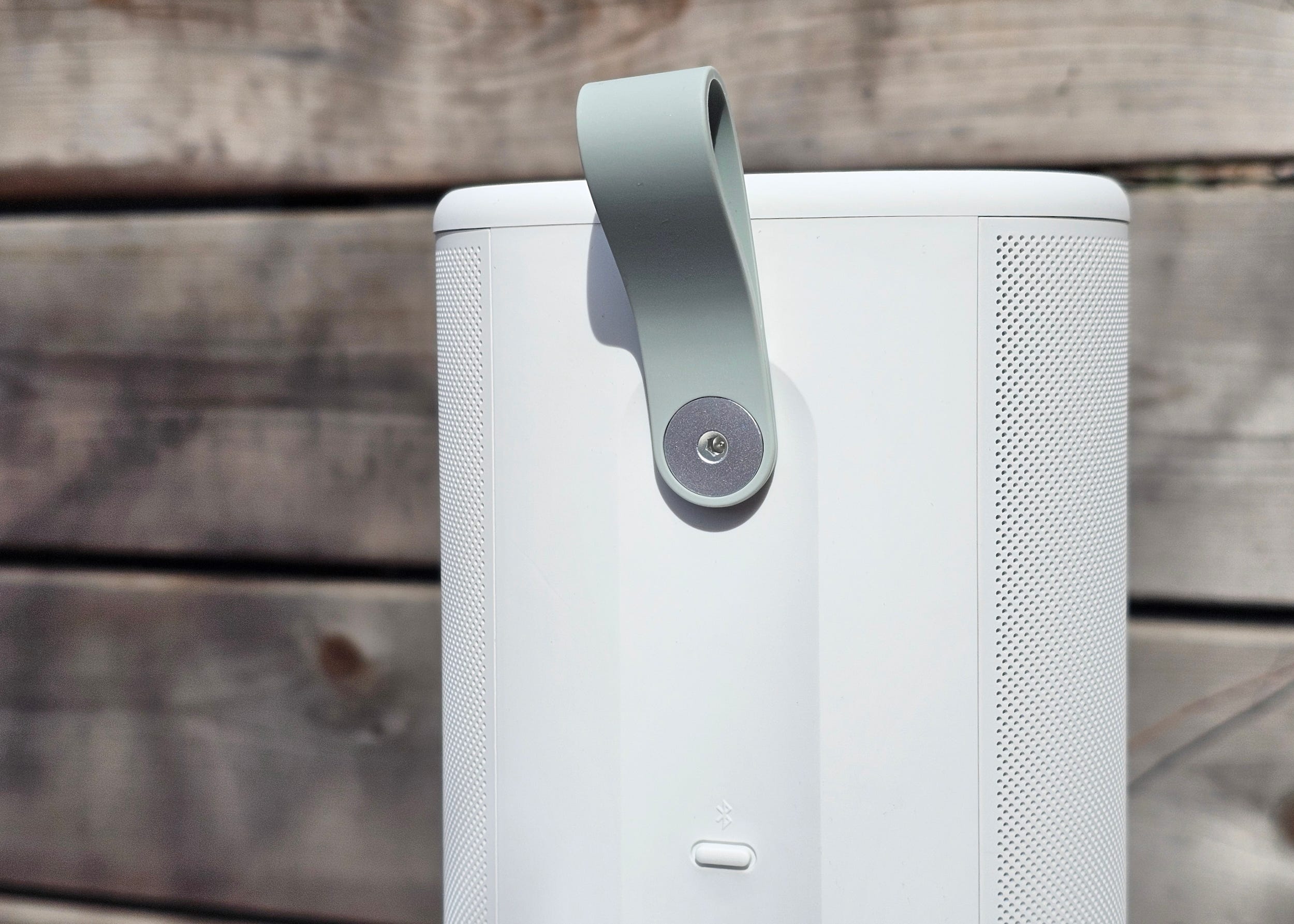
While portable Bluetooth speakers often look like toys, the Play is a study in understated elegance, whether you get it in black or white. With its handy, detachable silicone carry loop rotated downward and out of sight, I guarantee no one will guess it’s actually dustproof, waterproof, and impact resistant. The Play is made from recycled plastics, and if you manage to wear down the battery you can replace it yourself -- another rarity in the Bluetooth speaker world.
Sonos Play: Areas for improvement
Given the Play’s killer combo of looks, sound, and practicality, there isn’t much shade to be thrown in its direction. Still, there are a few limitations you should know about.
Powering on the speaker isn’t instant like other portables. The Play seems to need anywhere from three to 10 seconds to “boot up,” depending on how long it’s been since it was last turned on. If you’re using it with Bluetooth (as opposed to Wi-Fi), you’ll need to switch modes each time using the button on the back.
It’s rugged — for a Sonos speaker — but for truly rough duty its wrap-around plastic grille may not survive as well as models built to take a beating.
While the Play includes a charging cradle, you’ll need your own USB-C charger to plug it into. Sonos reckons most folks already own one, so it opted to reduce e-waste. Ordinarily, that wouldn’t faze me, but the Play is fussy about what it’ll draw from: it wants an 18-watt USB-C source at a minimum, and 45 watts if you want fast charging. That bargain 10-watt cube you own won’t cut it and neither, annoyingly, will most laptop USB-C ports. Pack a proper charger if you’re heading out of town. Sonos’ promise of a 24-hour battery life is achievable, but only at 50% volume using Bluetooth. Wi-Fi will reduce this considerably, as will louder playback.
When away from home, it would be awesome to stereo pair a set of Plays (some competitors like the Beats Pill, JBL Charge 6, and Bose SoundLink Flex allow this), but Sonos only supports grouped play via Bluetooth.
For owners of Sonos soundbars like the Beam Gen 2, the Play would make an ideal surround speaker, but Sonos doesn’t let portable speakers fill that role, nor can you add a Sonos subwoofer for 2.1 sound. While it’s great that Sonos lets you connect analog sources to the USB-C port (via the optional adapter), the fact that you can’t connect it to lossless USB Audio sources, like a laptop, is a missed opportunity.
Finally, the powerful Sonos app you’ll come to love at home doesn’t work with the Play when you’re using a Bluetooth connection. You’ll have to rely on your own third-party music apps, just as you would when using wireless headphones.
Sonos Play: Should you buy it?
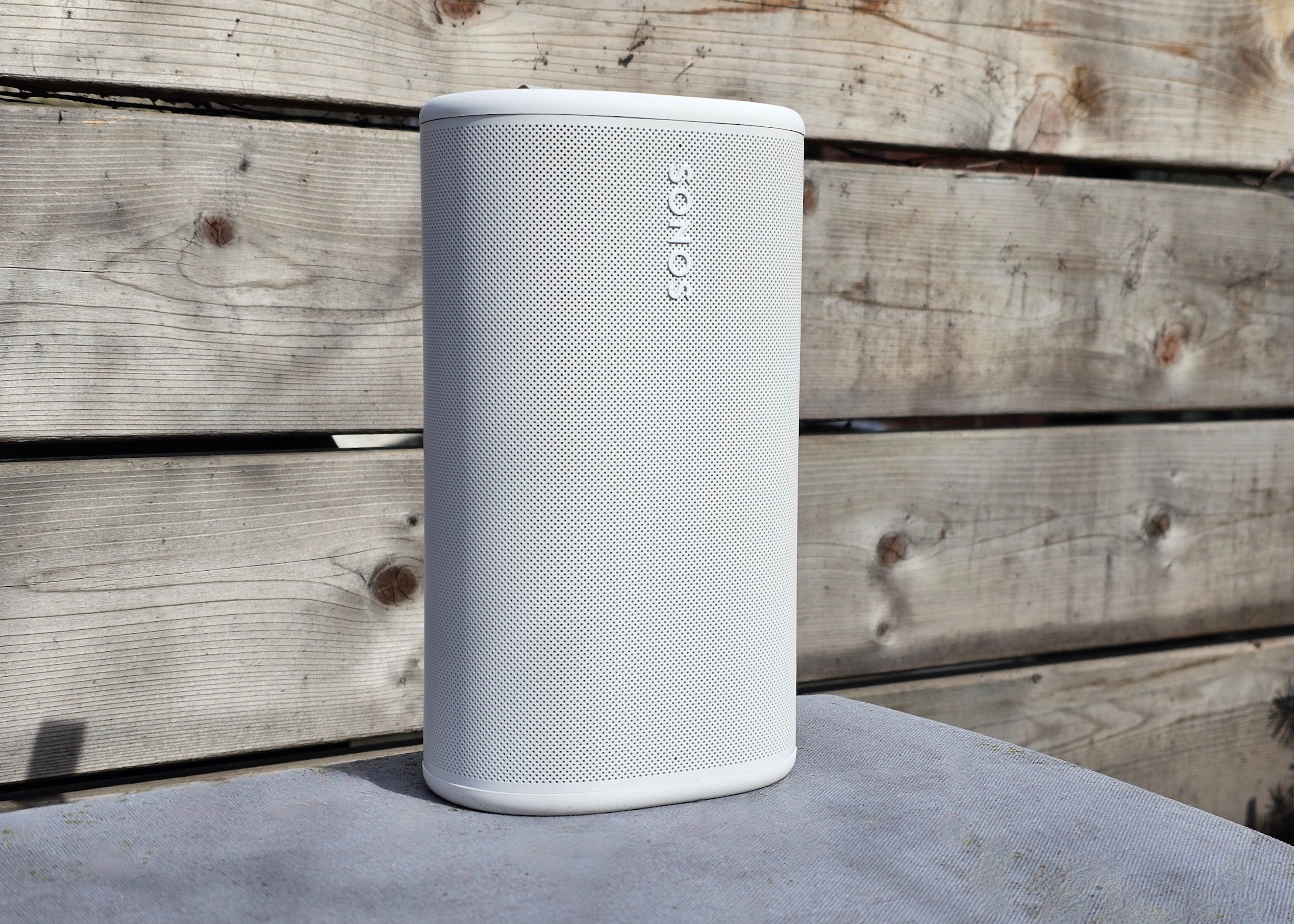
Sonos doesn’t have a monopoly on great sounding, rugged and portable Bluetooth speakers. If that’s your only requirement, you can find slightly cheaper products in the $180 to $250 range, like the JBL Charge 6, Sony ULT Field 3, or UE Everboom.
However, if you want a portable speaker that might truly be the last you’ll ever need to buy, the Play is unmatched. It works with everything from turntables to Alexa, brings its own best-in-class app, and sounds as good as anything in this size class.
As long as you don’t run over it with your car or drop it off the side of a boat, its rugged design means the internal battery will probably die before you break it – and when it does, you can replace it yourself for a new lease on life.
If you enjoyed this Loudmouth article, please consider subscribing. It supports my work and ensures you won’t miss out on future coverage.
Disclosure: If you buy through links on this page, I may earn a small commission at no extra cost to you. As an Amazon Associate, I earn from qualifying purchases.