


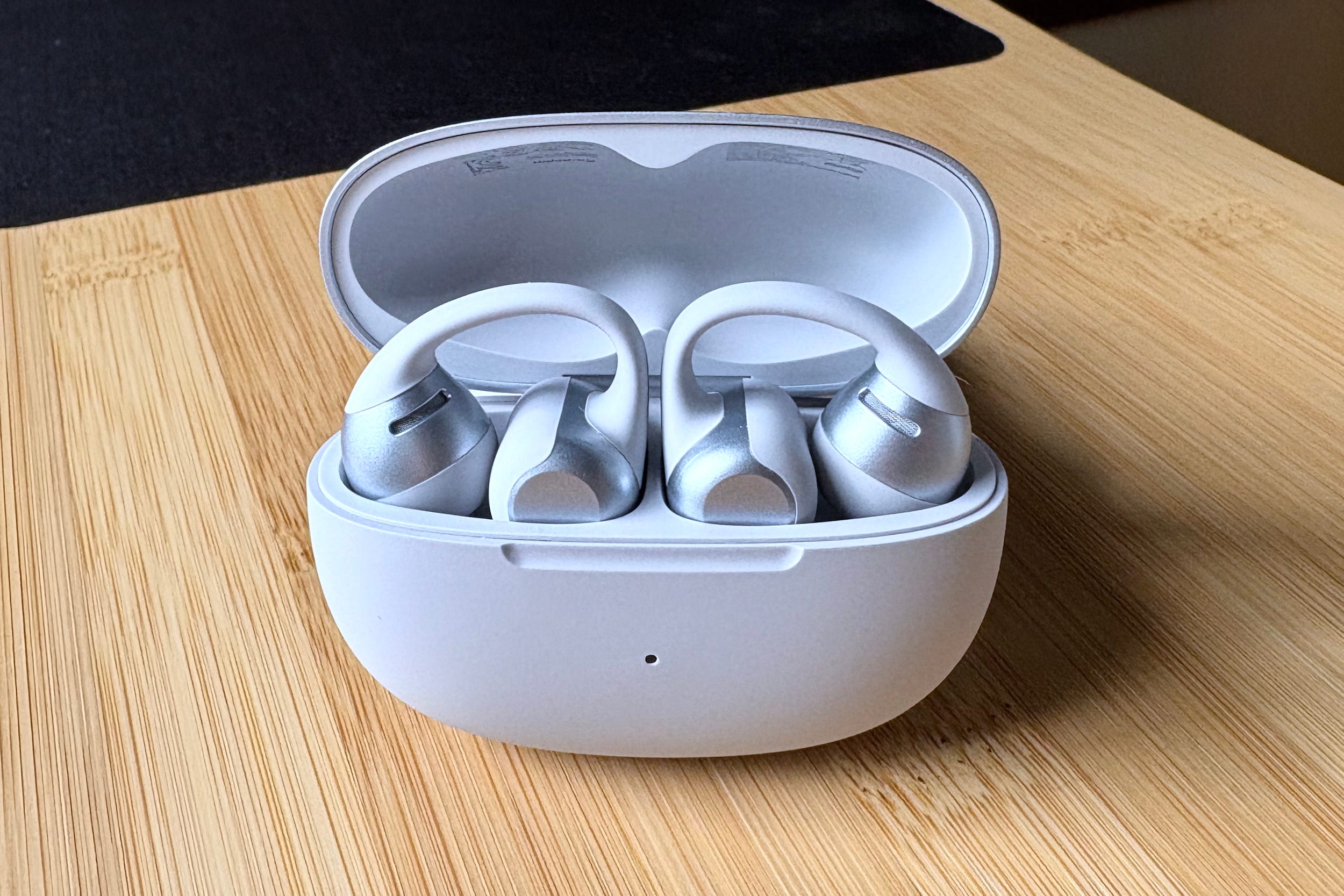
I love the whole open-ear earbuds category. They’re almost universally more comfortable than their closed, in-ear cousins, they let you hear your surroundings, and they’re perfect for calls. I was a big fan of the first-gen products that used an earhook shape, but since the introduction of the clip style, which wraps around the edge of your ears, I’ve become a convert. Especially for folks who wear glasses, this is the way.
Disclosure: If you buy through links on this page, I may earn a small commission at no extra cost to you. As an Amazon Associate, I earn from qualifying purchases.
Shokz OpenDots 2
Product Score: 4/5

Pros:
Very comfy clip-style design
Great sound quality
Much improved control customization over first-gen OpenDots One
Cons:
Still pricey
No Auracast support
Call quality not as good as Shokz’s earhook models e.g. OpenFit 2
It was Shokz’s first clip style earbuds, the OpenDots One (introduced in 2025) that made me see the light. They appeared to offer almost every benefit of the earhook style, with improved audio quality, and, if possible, even more forget-that-you’re-wearing-them comfort, which earned them a solid 4/5 in my review.
What's new in the OpenDots 2
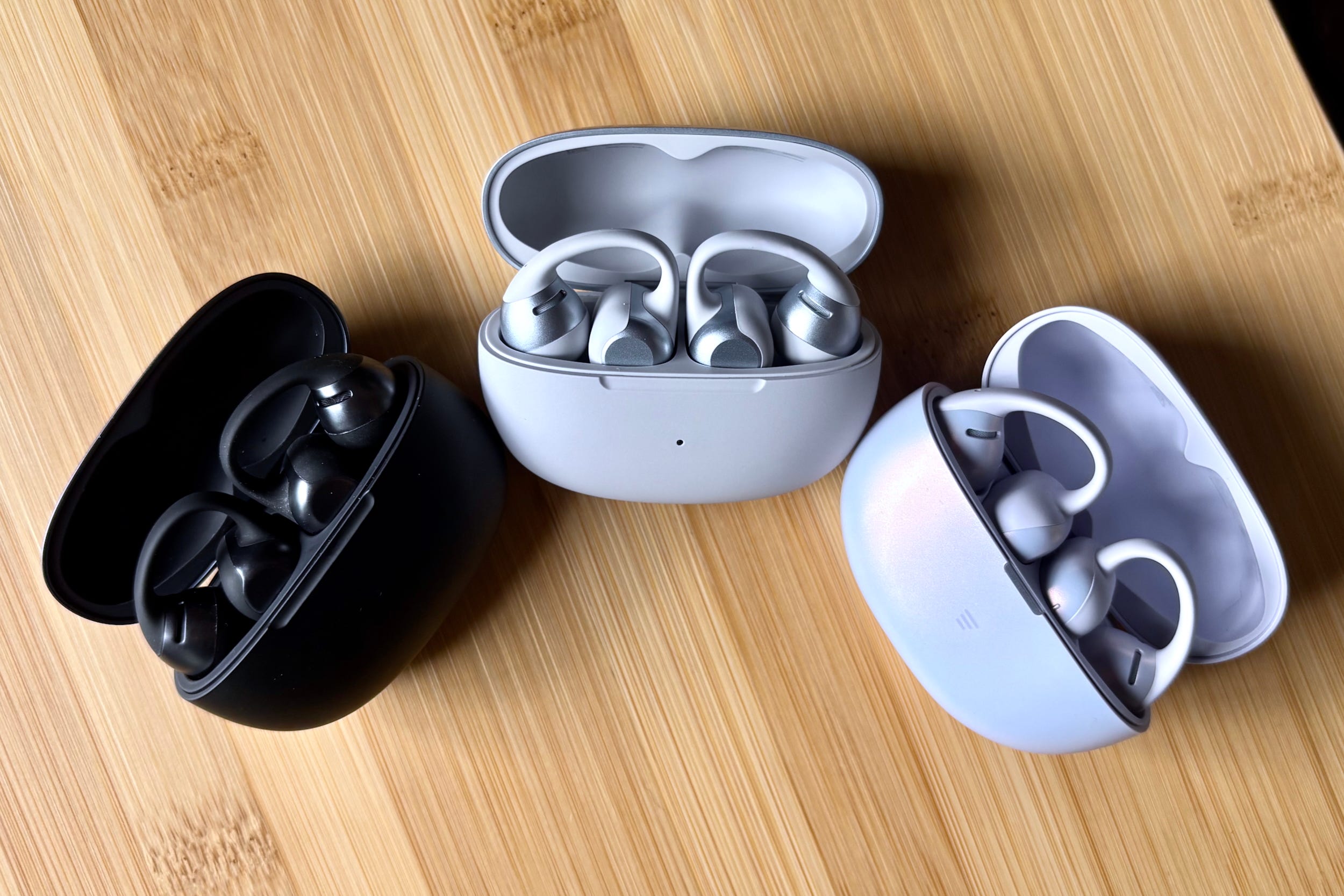
The new OpenDots 2, which keep the OpenDots One price of $199.95, continue all of the things I liked about the first-gen: impressive sound quality, wireless charging, two simultaneous connections to devices (Bluetooth Multipoint), strong battery life, wear sensors for auto-music-pause, and my favorite — swappable left/right earbuds (there is no official left or right earbud; just put ‘em on your ears and that’s it).
They’ve also added a feature I didn’t even know I wanted: Drop Alert. If either bud detects that it has fallen, its companion emits an unmistakable warning tone. I think I would probably know immediately if I’d dislodged a bud, but given how easy it is to forget you’re wearing them, it’s a really smart add-on. I did a bunch of sample drops to try it out and the companion bud alerted me every time.
What Shokz didn't fix
The OpenDots 2 don’t, however, fully address my critiques of the first-gen: the price, the controls, no Auracast support, and call quality that isn’t quite as good as the company’s similarly priced OpenFit 2.
Only the controls have been improved. Which is not to say this is the only thing Shokz changed. The second-gen get better dust and water protection (now IP57 vs IP54), and the case now gets its own IP54 rating, whereas the first-gen lacked any official protection for the case.
Fast charging is a teensy bit faster (you can now get an extra two hours after just five minutes of charging instead of 10 minutes). Bluetooth has been upped to 6.1 from 5.4, and Shokz has added both Google Fast Pair and Microsoft Swift Pair. All of these changes are nice-to-haves, but hardly must-haves.
Call quality: still a quiet-room tool
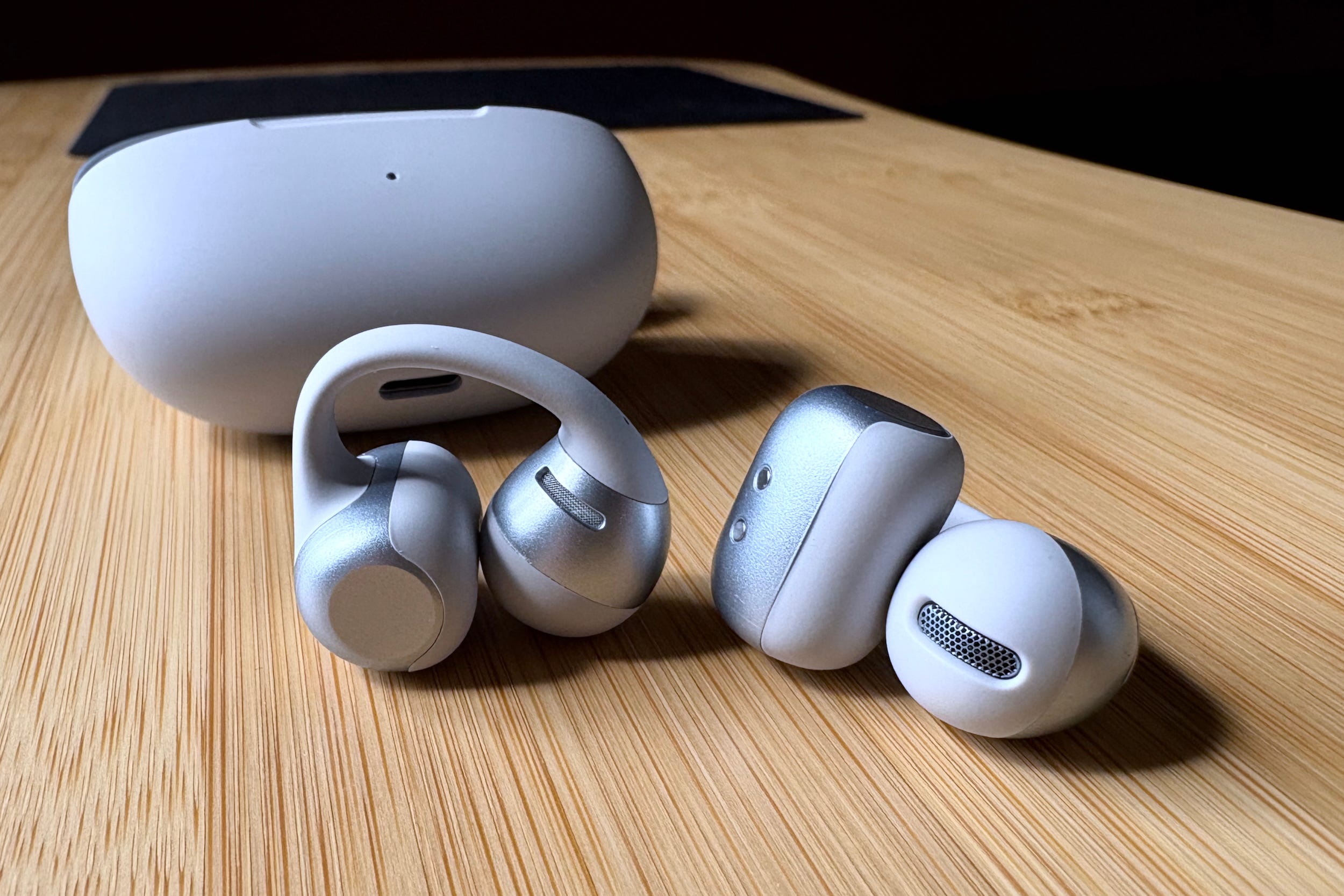
The unimproved call quality is the biggest surprise to me given that Shokz claims it gave the OpenDots 2 three “AI Noise-Canceling Microphones” (two regular mics plus one bone conduction unit), as opposed to the OpenDots One’s two regular AI noise-canceling mics. I couldn’t hear any improvement when I tested them against one another. I’ve embedded recordings from both below so you can decide for yourself.
They remain great for calls in quiet locations, but you’re not going to be fooling anyone if you claim to be sitting in your home office while walking along busy streets. Your callers will know.
Shokz OpenDots 2 (loud environment)
Shokz OpenDots 2 (quiet environment)
Shokz OpenDots Air (loud environment)
Shokz OpenDots Air (quiet environment)
Shokz OpenDots One (loud environment)
Shokz OpenDots One (quiet environment)
How they actually sound

Shokz claims the OpenDots 2 have better bass response and volume, plus significantly less distortion, with an enhanced Dolby Audio mode. But again, much like with call quality, I can’t really hear a difference.
That’s not a knock by any means. I think the OpenDots One/2 are among the best open-ears you can buy for audio quality so there’s an argument to be made that they didn’t need to improve it. They manage to overcome the one big problem with most open-ears: weak bass. And if you pump up the volume, you’ll be able to hear your music even in loud environments. I don’t recommend doing so for prolonged periods (it could lead to noise-induced hearing loss) but it’s nice knowing it’s an option. The optional Dolby Audio mode creates an artificially wider soundstage, which increases the sense of being surrounded, but does so at the expense of precision and detail. Definitely worth trying, but I don’t think it’s a reason to buy either of these models.
Voice-only content like podcasts or phone calls, will still get obliterated by heavy traffic or machinery sounds, however that’s true of all open-ear products, even Shokz’s top-of-the-line OpenFit Pro, which has a built-in active noise reduction feature.
The controls, finally improved
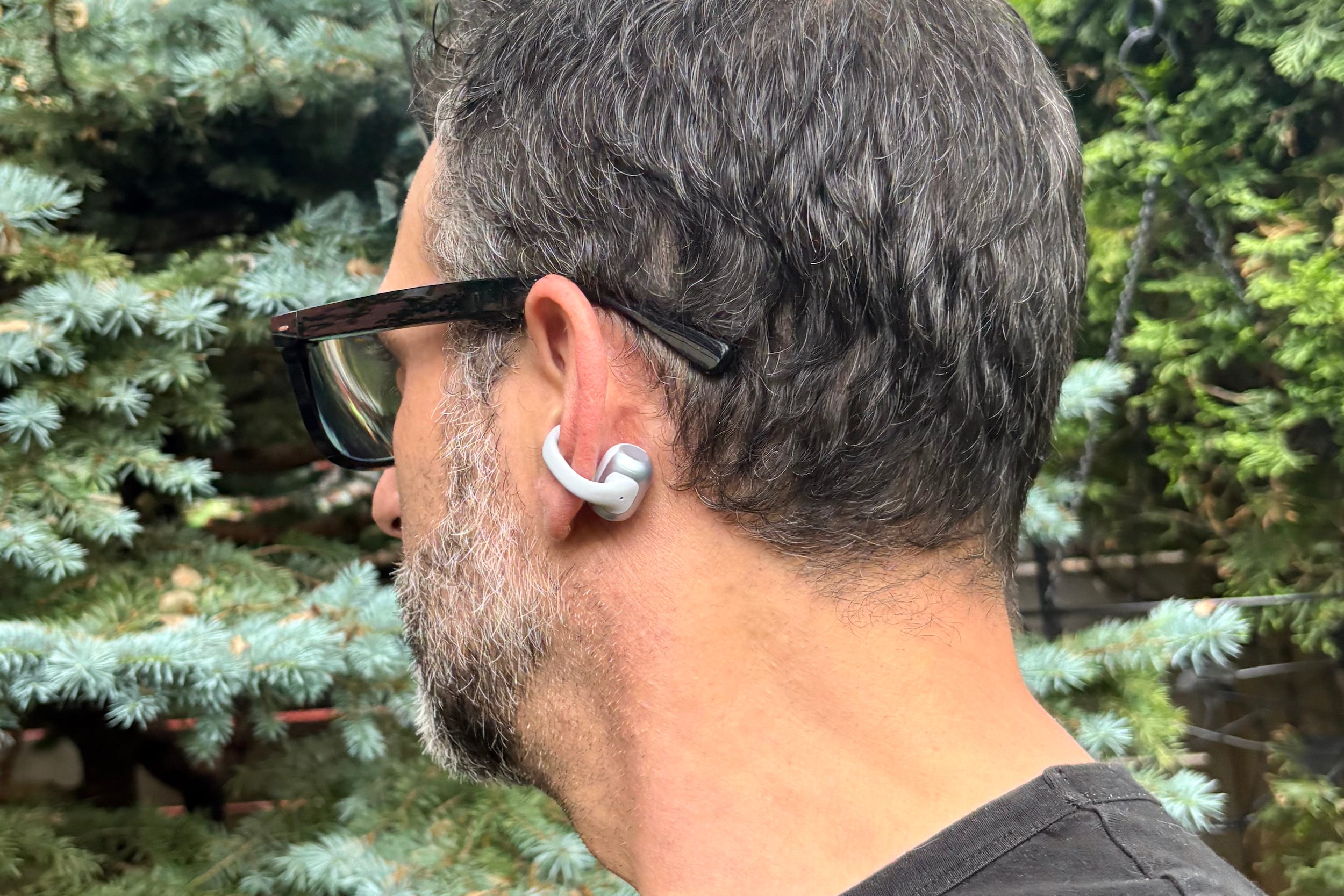
I’m thrilled that Shokz took my comments on the OpenDots One’s controls to heart. The OpenDots 2 are now far more configurable. There are five available gestures on each earbud, for a total of ten: single and double pinches on the barrel of the battery compartment, a pinch-and-hold, plus double and triple taps on the flexible connector. Except for pinch-and-hold, which is restricted to volume changes, each can be set to do any of the supported commands, like playback, volume, track skipping, call answering, and voice assistant access. Contrast that to the OpenDots One, where you only get three: double-tap, double-pinch, and a long pinch, and only the long pinch can be customized. And that’s three total, not per earbud. To be fair, Shokz has since added a fourth gesture via a firmware update — a triple tap — but it can only be used for track skipping.
As with the OpenDots One, I’ve found that the pinch gestures work way better than the taps. The taps require a fair amount of force, even with their sensitivity setting set to maximum in the Shokz app.
So the OpenDots 2 end up with the same rating and recommendation as their predecessor. They’re really good, but still pricey when you consider that neither audio nor call quality has been substantially improved.
The cheaper alternative: OpenDots Air
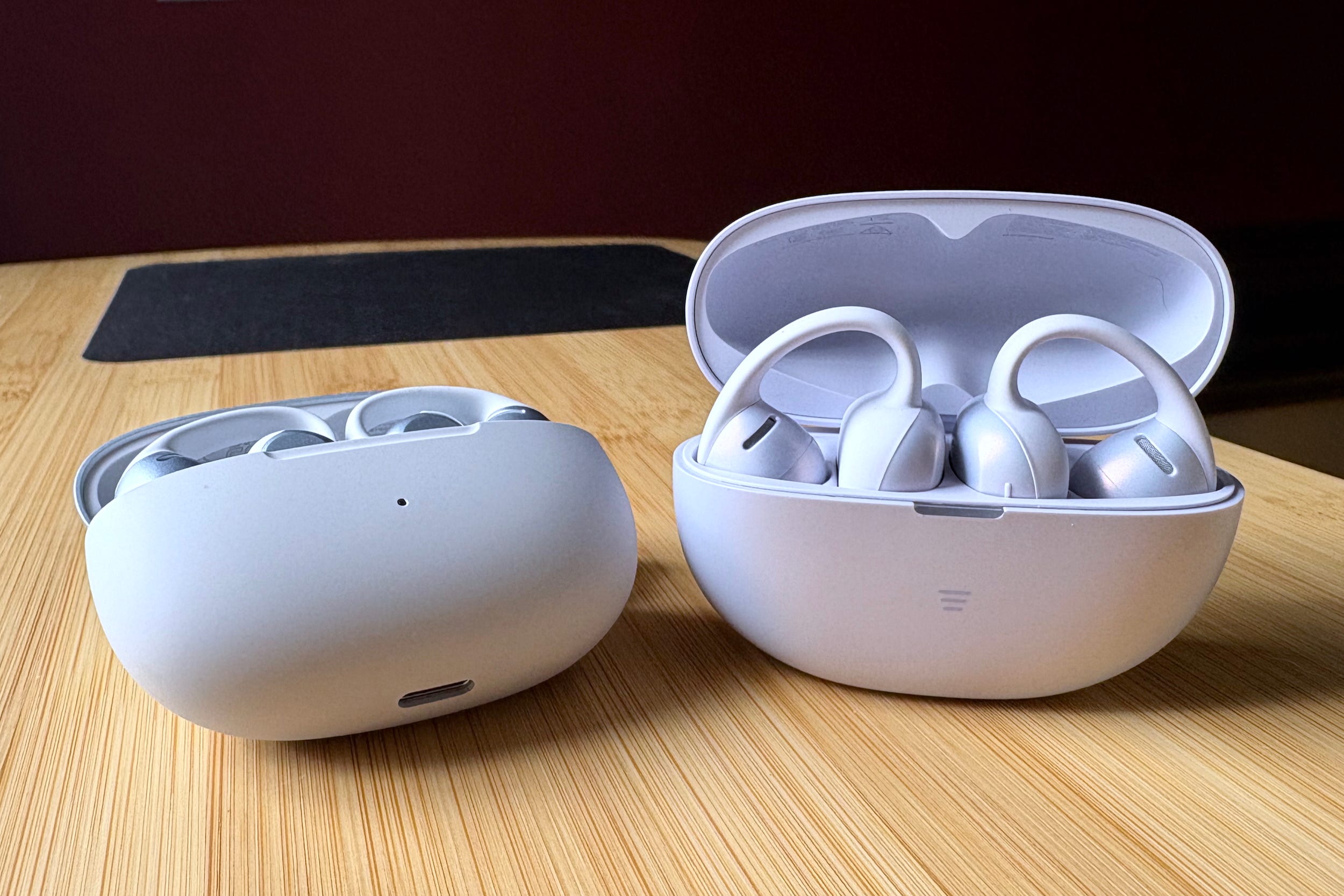
The new Shokz OpenDots Air, on the other hand, deserve serious consideration if you like the OpenDots formula, but don’t want such a spendy price tag: they’re just $129.95.
The Air capture the key ingredients: super comfy, clip-style shape, great sound, solid battery life, Multipoint connections, swappable left/right earbuds, wear sensors, and multiple, customizable control gestures.
So what’s missing? No wireless charging (just USB-C), one less hour per charge (9 vs. 10), slightly slower fast charging (10 minutes for two extra hours vs. 5 minutes), less water and dust resistance on the buds (IP55 vs. IP57) and no protection for the case, and you get the same mic system as the OpenDots One, which I don’t think makes that much difference (check the samples above). Oh, also, no Dolby Audio.
This leaves buyers with three Shokz options:
The flagship OpenDots 2, offering small but helpful improvements over the OpenDots One
The OpenDots One themselves, but this one only makes sense once Shokz starts to discount them (hasn’t happened yet, but will soon, according to Shokz)
The OpenDots Air, a much more affordable pick that preserves the essential clip-style experience while foregoing features that most people won’t miss
Are you an open-ear earbuds fan? Leave a comment below with which ones you’re using and what you think of the new Shokz models.
If you enjoyed this Loudmouth article, please consider subscribing. It supports my work and ensures you won’t miss out on future coverage.
Disclosure: If you buy through links on this page, I may earn a small commission at no extra cost to you. As an Amazon Associate, I earn from qualifying purchases.