


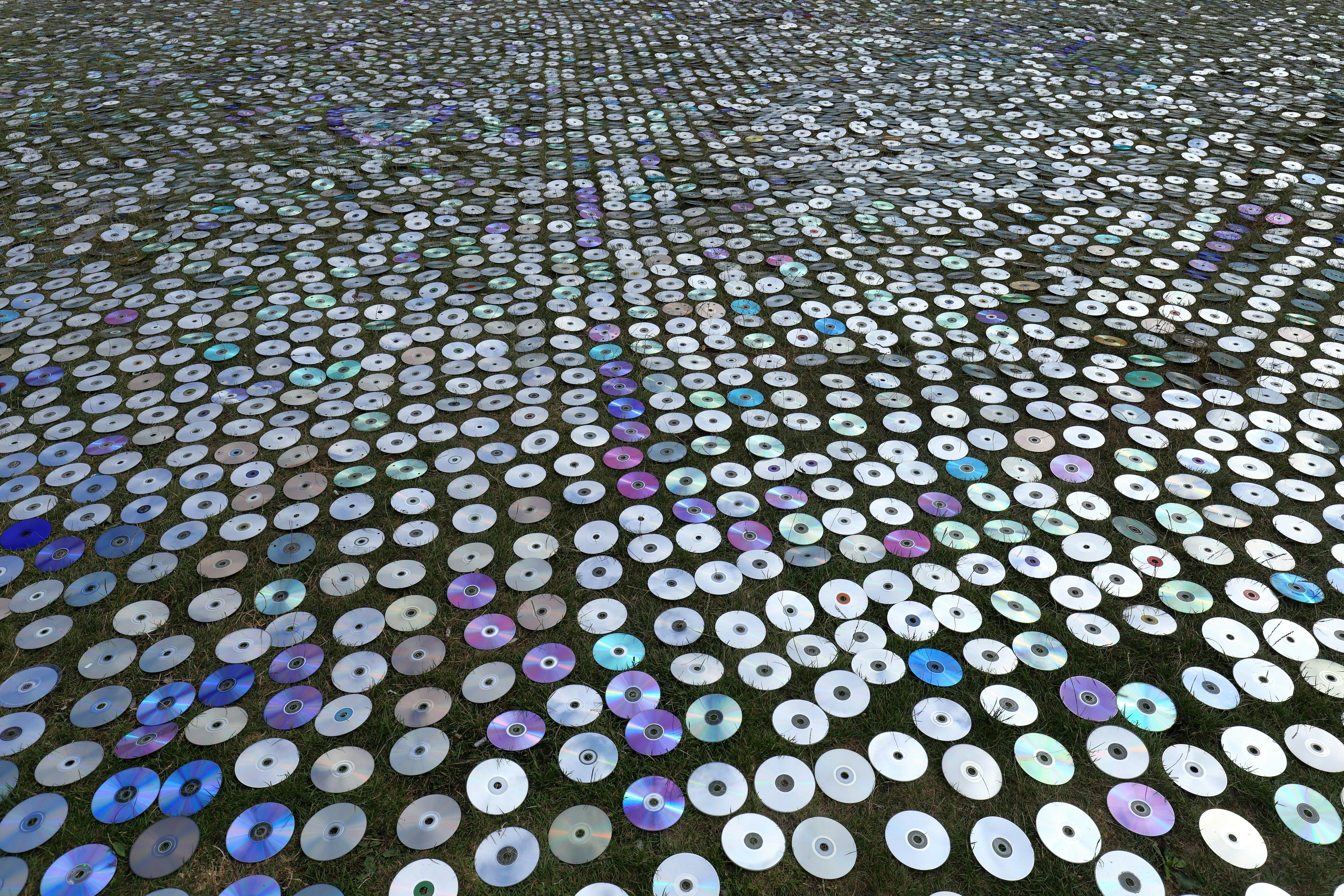
Last month, entertainment insights firm, Luminate, published its 2026 midyear trends report and one stat got a lot of attention: Sales of CDs in the U.S. are going up, not down, and it’s happening while vinyl sales continue to grow.
We’re not just talking about a small, statistically irrelevant increase. CD sales increased 16% to 16.3 million units during the first half of 2026.
When I saw this, my immediate reaction was to pat myself on the back. See, I’ve been cultivating a theory I call Music Sovereignty, and it rests on the notion that, after a decade of living with monthly music subscriptions, people now want more ownership and more control over their music. A big bump in CD sales — especially one that doesn’t cannibalize vinyl purchases — is exactly the kind of signal that would validate my theory.
And then I learned about K-pop.
K-pop loves the CD
That spike in sales, as it turns out, wasn’t caused by a sudden desire to stick it to the streaming services by leaning into physical media. When you look at the numbers at a more granular level, 58% of that growth was driven by one genre: K-pop. And within that genre, one album dominated: BTS’ ARIRANG. Of the 7 K-pop albums in Luminate’s top-10 list of CDs, ARIRANG was responsible for 32% of the total.
I knew that K-pop fans love BTS; I didn’t realize they were such dedicated CD listeners. But hey, a stat that helps is a stat that helps, so once again, I took this as a signal that K-pop fans were simply ahead of the curve when it comes to Music Sovereignty.
Except that they aren’t. Or at least, not in the way I was expecting.
Even in South Korea, the home of the K-pop phenomenon, only 8% use physical albums to listen to music, according to the Korea Creative Content Agency’s 2024 white paper on the music industry.
In the U.S., Luminate’s report claims that half of Gen Z and Millennial CD buyers don’t even own a CD player. So if they aren’t listening to CDs, why are they buying them?
Parasocial relationships

Being profoundly ignorant about K-pop, I turned to my former colleague, Andy Boxall, for answers. Andy and I both contributed to Digital Trends from 2018-2025. Over the course of many weekly editorial meetings, I discovered that in addition to being a top-notch tech writer, Andy is a huge J- and K-pop fan (J-pop being the Japanese-specific genre of pop).
Andy was more than happy to fill in the cavernous gaps in my K-pop knowledge.
“K-pop (and j-pop) are built on parasocial relationships,” he began — a concept that, as I discovered, is key to understanding a lot more about K-pop than just CD sales. “Buying a lightstick, attending a concert, taking part in a streaming push on YouTube, subscribing to the private messaging apps, and watching your favourite member’s livestreams,” are all ways that fans show their idols that they appreciate them. “Buying the CD is just one part of the fandom.”
For K-pop lovers, the CD is less about the musical ones and zeros embedded on a plastic disc, and often more about what comes packaged with the CD.
“Most k-pop releases are presented really well,” Andy explains. “They can come with photobooks, stickers, access to digital content, posters, and exclusive photocards. They’re genuinely cool for fans to buy.”
A culture of collecting and voting

The packaged content can become a strong motivation to buy the same CD multiple times, somewhat akin to buying packs of baseball or hockey cards in the hopes of scoring a rare item among the many duplicates. “It’s not uncommon for some fans to buy say 10 [of the same] CDs,” according to Reuters’ Minwoo Park and Daewoung Kim.
The other reason for buying CDs again and again reflects the parasocial relationships Andy describes. Some purchases enter the buyer into a lottery, with a chance to win a meet-and-greet with their favorite K-pop idol.
However, sales also determine whether artists get on music charts and increase their chances of winning prizes at awards shows, according to Areum Jeong, an assistant professor of Korean culture at Arizona State University.
This concept of CD-buying as a support mechanism is older than the current K-pop craze. It finds its roots in Japan’s music scene, where fans could influence the roles and opportunities of individual members of J-pop groups.
From 2009 to 2018, the all-female group AKB48 held so-called general elections, known as senbatsu sousenkyo. The stakes for the performers and the fans were high: The winner got to headline the group’s next single — a massive boost in profile, exposure, and marketability.
To vote in these elections, fans typically needed to buy an AKB48 single on CD, which contained a unique web code. That mechanism, as you’d expect, drove a lot of CD sales that had nothing to do with owning the music itself. In an unconfirmed report, one fan apparently spent US$6,700 to secure 2,700 votes during the 2012 election.
We’re still streaming … for now
So should we chalk up 2026’s surge in CD sales to little more than K-pop-induced collection behavior? And should I reconsider my Music Sovereignty theory?
Ian White, editor-in-chief of eCoustics.com puts some much-needed context around the numbers. “Nobody should mistake this for a revolt against streaming,” White points out, noting that while physical sales are doing well, streams are increasing too: The Luminate report shows that they rose by 4.8% to 732.7 billion in the U.S. during the same first half of 2026.
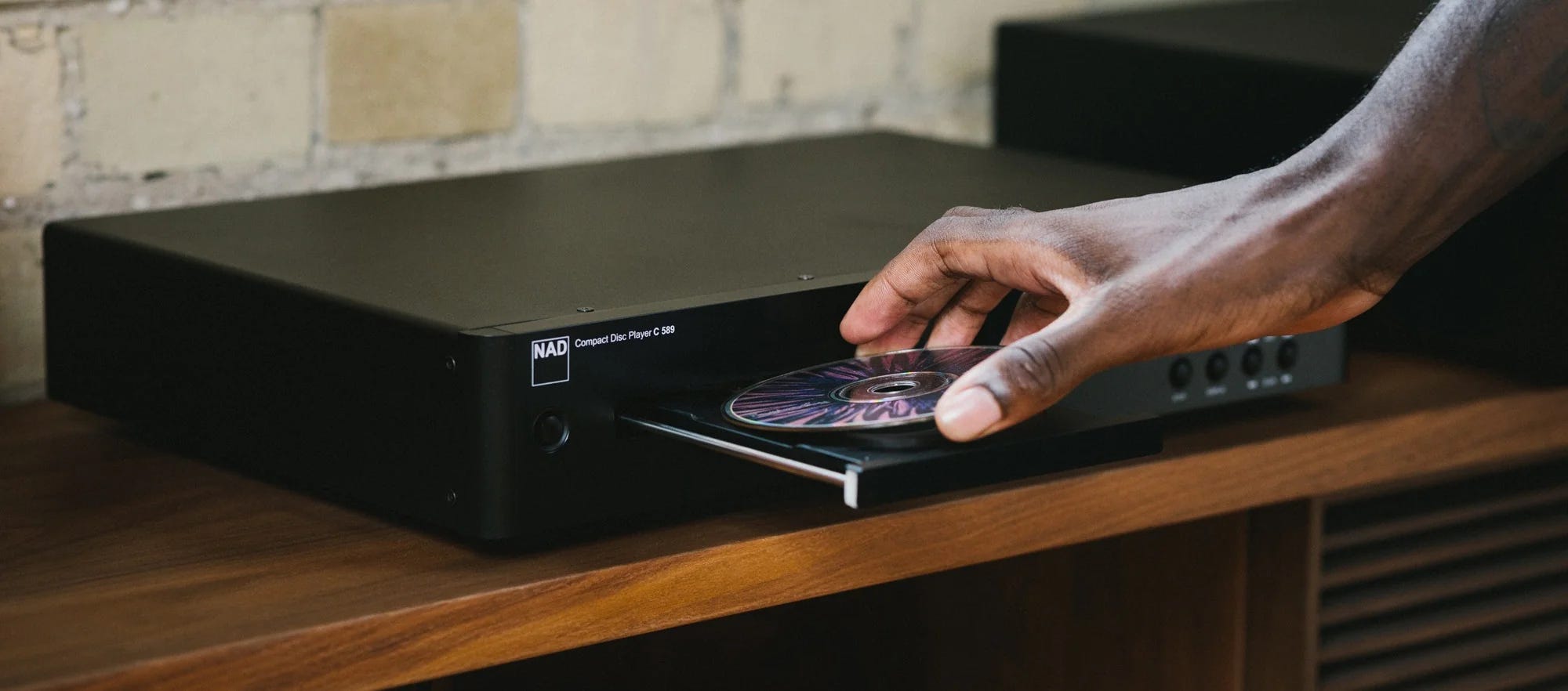
He also notes that although CDs are a far more affordable way than vinyl for people to physically collect music, the sales increase shouldn’t be seen as a buy-it-and-never-play-it phenomenon. As evidence, he points to the recent surge in the availability of new CD players, from ultra-affordable portable units like the $105 USD FIIO SNOWSKY Beatbox All-in-One CD Player, to the decidedly high-end, $1,399 USD NAD C 589 hi-fi component.
“Manufacturers do not make these products because three editors and someone’s uncle in Ohio refuse to discard their copies of Brothers in Arms,” he quips. “They see a market.”
That’s a solid argument that at least some of this demand is about playback, not just fandom support. It gets stronger still when you consider that even if you remove K-pop’s heavy influence, sales nonetheless saw a 6.7% growth.
Still small in the grander scheme, but it’s something I’ll be keeping an eye on as streaming music services continue to raise prices.
If you enjoyed this Loudmouth article, please consider subscribing. It supports my work and ensures you won’t miss out on future coverage.
I love all this! Another sociological theory that might help explain this is called ‘embodied posthumanism’, which is somewhere between your specific k/j-pop example, and your sovereignty theory — it’s a partial rejection of the abstraction of streaming music, to take haptic delight in the physicality of hard media: CDs, vinyl, cassettes; even VHS tapes are popular in this way. It’s fascinating that this love of the physical is strong enough to override any appreciation for the fidelity of the media . . . Because nobody in their right mind would choose a cassette or a VHS tape for fidelity!
I’ve been citing Luminate’s previous study to people for some time now, and I’m delighted to learn through your article that they’ve released a 2026 update. Thank you!
Great article Simon. I'm wondering though, based on the numbers, do you know what countries are leading the purchasing of physical CDs? You mentioned South Korea, but there wasn't an indication of what country has the most CD-purchasing individuals. Is it the US? China? Have the numbers changed over the last couple of years with different countries coming out on top? Just curious.